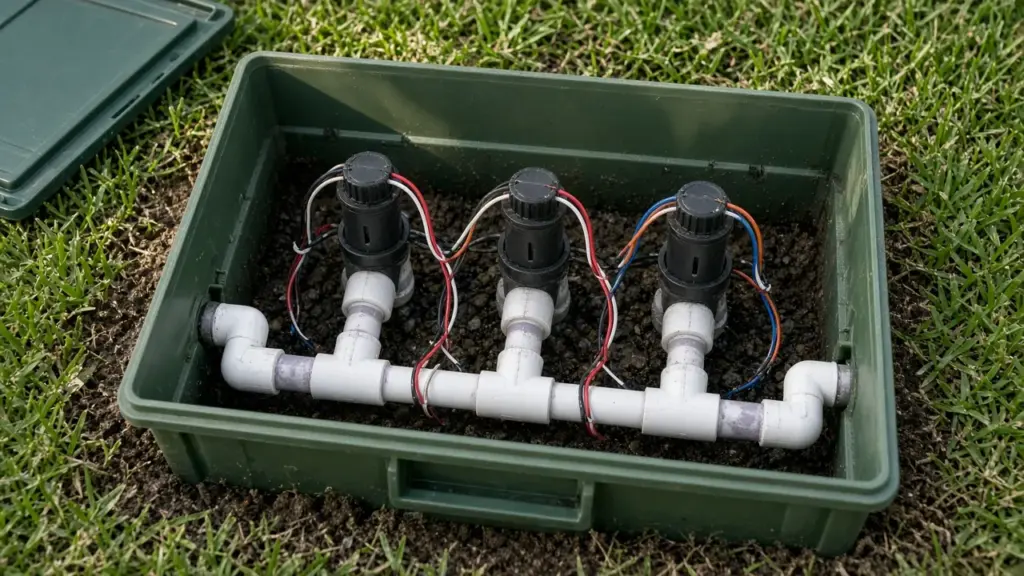
If a whole section of your yard stops watering, will not stop watering, or suddenly runs weak, the problem is rarely a single sprinkler head. It is usually the zone valve, the solenoid that opens it, or the low-voltage wire that connects it to the controller. Valves sit out of sight in buried boxes, so they get ignored until something goes wrong.
This guide explains how zone valves work, the failure patterns we see in Dallas systems, how technicians narrow down the cause, and when a valve should be rebuilt or replaced. It connects to our deeper guides on heads, controllers, and leaks.
What a Zone Valve Does
Most home irrigation systems split the yard into zones. Each zone has its own electric valve, usually grouped with others in a green valve box somewhere near the backflow preventer or along a bed edge. When the controller starts a zone, it sends a low-voltage signal (typically 24 volts AC) to that valve’s solenoid.
The solenoid lifts a small plunger. That lets water escape from the chamber above a rubber diaphragm, the pressure balance changes, and the diaphragm lifts so water flows to the heads. When the signal stops, the plunger drops, pressure builds above the diaphragm again, and the valve closes.
That design is reliable, but it depends on a few small parts: a clean plunger and spring, an intact diaphragm, clear bleed ports, and a good electrical connection. When any of them fail, the zone acts up.
The Three Classic Valve Problems
A zone that will not turn on
When the controller shows a zone running but nothing happens in the yard, check these in order:
- Water supply. Make sure the main irrigation shutoff and the backflow preventer valves are open. If no zones work, the issue is upstream.
- Controller output. A controller fault on one station, or a blown fuse, can stop one or all zones. Our controller repair guide covers this side.
- Solenoid and wiring. A failed solenoid coil or a broken wire is the most common single-zone cause. Technicians test the circuit with a multimeter at the controller and at the valve.
- Manual flow control. Many valves have a flow control handle on top. If it has been screwed all the way down, the valve cannot open.
If turning the valve’s manual bleed screw or the solenoid a quarter turn opens the zone, the valve’s hydraulics work, which points back to the electrical side.
A zone that will not shut off
A zone that keeps running after the controller stops it, or that weeps constantly, usually has debris lodged under the diaphragm, a torn diaphragm, or a clogged bleed port. Sand, pipe shavings, and small rocks get into lines after nearby repairs or breaks. Turn off the irrigation supply to stop the water, then have the valve cleaned or rebuilt.
It is worth ruling out the controller too. If the controller is still sending voltage, the valve is doing exactly what it is told. Unplugging the controller briefly is a quick test: if the zone shuts off, the controller or its programming is the problem.
A zone that runs weak
Low pressure on only one zone typically comes from a partially closed flow control, a diaphragm that does not fully open, a leak somewhere on that zone’s lateral line, or simply too many heads on the zone for the available flow. If every zone is weak, look at the supply, the backflow preventer, or a mainline leak instead. Our sprinkler leak detection guide explains how to test for hidden leaks with your water meter.
Other Valve Symptoms
Two zones running at once
This usually means a valve on one zone is not closing fully, or a wiring fault is energizing two solenoids together. A shared common wire with a damaged splice can create odd behavior as well.
Water hammer or chatter
A loud bang when a valve closes or a buzzing chatter while it runs can come from high pressure, a worn diaphragm, or a valve that is too large for the flow. Over time, hammering can crack fittings.
A soggy valve box
A valve box full of water may simply be collecting rain and runoff, which is common in low spots with clay soil. But if it refills after you empty it, a valve bonnet, fitting, or manifold joint is leaking. Our Dallas clay soil guide explains why boxes in heavy soil collect water.
Wiring Problems in Dallas Yards
Irrigation wire runs underground from the controller to each valve. It gets cut by fence posts, landscapers, cable crews, and root growth. Splices that were not sealed with waterproof connectors corrode in wet clay. The symptom is usually one or more zones that work intermittently or not at all.
Finding a broken wire can take specialized locating equipment. A licensed technician can trace the wire path, find the break, and make a properly sealed splice so the fix lasts.
Rebuild or Replace?
Many valve problems can be solved by cleaning or replacing internal parts: the diaphragm, the solenoid, or the spring. A rebuild makes sense when the valve body is sound and parts are available. Replacement makes sense when:
- The valve body is cracked, often after a freeze.
- Parts are no longer made for that model.
- The manifold is leaking at multiple joints.
- You are upgrading the system anyway and want consistent, serviceable valves.
Common residential valves from Rain Bird, Hunter, and Toro are widely supported, so replacement parts are usually easy to find for newer systems.
Freeze Damage to Valves and Manifolds
North Texas freezes are usually brief, but a hard freeze can crack valve bodies, bonnets, and PVC fittings that hold water near the surface. Damage often shows up weeks later during spring startup. Our seasonal maintenance calendar includes steps to take before and after a freeze.
Making Valve Repairs Faster
A few things help any technician fix zone problems faster and for less labor:
- A zone map. Note which valve serves which area and where each valve box is.
- Accessible boxes. Keep boxes clear of mulch, sod, and shrubs.
- Labels. Tag each valve with its zone number during the next service visit.
- Notes. Record when the problem started and whether it follows rain, recent landscaping, or a power outage.
When to Call a Professional
Texas requires anyone repairing irrigation systems for hire to be licensed by the TCEQ. You can safely check whether the supply is on, whether the flow control is open, and whether the controller is sending a signal. Call a professional when a valve needs to be opened up, when wiring must be traced, when valves need to be added or relocated, or when the problem involves the backflow preventer. See our backflow and irrigation code guide for why that part should be handled by licensed professionals.
More Valves & Zones Guides
- A Zone That Will Not Turn Off: Diaphragm, Solenoid, or Debris?
- A Zone That Will Not Turn On: Step-by-Step Diagnosis
- Finding Buried Valve Boxes in Established Dallas Yards
- Replacing a Sprinkler Solenoid Without Replacing the Valve
- Flooded Valve Boxes: Why Water Collects and How to Fix It
- Weak Pressure on Only One Zone: The Usual Suspects
- “Two Zones Running at Once: Wiring and Valve Causes”
- “Rain Bird DV vs. JAR-TOP vs. PGA Valves: Repair Differences”
- Hunter PGV Valve Troubleshooting for Dallas Homeowners
- “Manual Bleed Screws and Flow Controls: What They Do”
Frequently Asked Questions
Why does my sprinkler zone keep running after the timer ends?
Most often, debris is holding the valve diaphragm open or the diaphragm is torn. Less often, the controller is still sending power. Shut off the irrigation supply and have the valve cleaned or rebuilt.
How can I tell whether the valve or the controller is the problem?
If turning the solenoid or bleed screw at the valve opens the zone, the valve’s hydraulics work and the problem is electrical or at the controller. A multimeter test at both ends confirms it.
Can one bad valve affect other zones?
Yes. A valve that leaks through can keep a zone weeping, lower pressure for other zones, and make two zones appear to run together.
How long do irrigation valves last?
It varies with water quality, pressure, and freezes. Many valves run for years with only occasional diaphragm or solenoid replacement. A cracked body or unavailable parts usually means replacement.
Why is my valve box always full of water?
Low spots in clay soil collect rain and runoff. If the box refills quickly after being pumped out when it has not rained, a valve or fitting is likely leaking.
Schedule Valve and Zone Repair in Dallas
If a zone will not turn on, will not shut off, or has lost pressure, our technicians can trace the cause and make a lasting repair. Read about our Dallas sprinkler repair service, or contact us to book a visit.
Request Service or call 214-227-7444
We serve homes throughout Dallas and nearby North Texas communities.