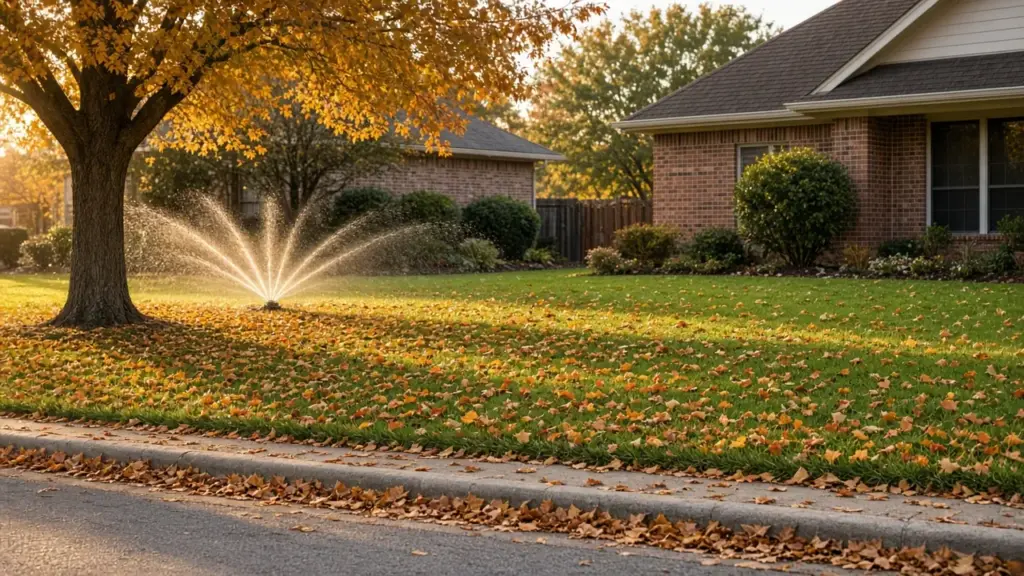
Dallas weather is hard on irrigation systems. Summers bring long stretches of high heat, spring brings storms and hail, and winter can deliver a sudden hard freeze after weeks of mild days. A system that is checked on a regular schedule handles all of that better, uses less water, and is less likely to surprise you with a leak or a dead zone.
This calendar lays out what to do in each season. It is written for typical Dallas homes with warm-season grass such as St. Augustine or Bermuda, and it links to our detailed guides on heads, valves, controllers, leaks, and watering rules.
Why Seasonal Maintenance Matters in Dallas
- Water rules are strict. Dallas allows automatic irrigation only twice per week, and never between 10 a.m. and 6 p.m. When watering days are limited, every drop needs to land where it should.
- Clay soil moves. Expansive clay shifts heads and stresses pipes as it dries and swells through the year.
- Freezes are short but damaging. Exposed backflow preventers and shallow fittings can crack in a single cold night.
- Heat exposes weaknesses. Small coverage gaps turn into brown patches quickly in July and August.
Late Winter to Early Spring: Startup and Inspection
As lawns begin to green up, it is time to bring the system back into full use.
Spring startup checklist
- Inspect the backflow preventer for cracks, leaks, or missing parts before opening the supply. If it was not protected during a freeze, check it carefully.
- Open the supply slowly. Filling lines gradually reduces pressure surges that can damage fittings.
- Run each zone manually and watch it. Look for broken heads, geysers, weak zones, and bubbling soil.
- Clean clogged nozzles and straighten tilted heads.
- Reset sunken heads that sank over winter. Our sprinkler head repair guide explains how.
- Check valve boxes for water, which may signal a leaking valve or fitting.
- Test the rain and freeze sensor.
- Update the controller: confirm the date and time, clear any old programs, and set a modest seasonal adjust percentage.
Spring startup is when winter damage usually appears. A crack in a fitting may not show until the system is pressurized. Our leak detection guide helps if you find wet spots or weak zones.
Watch out for late freezes
North Texas can get a freeze after a warm spell. Keep the freeze sensor enabled and be ready to protect the backflow preventer again if a cold night is forecast.
Late Spring: Coverage and Efficiency
Before summer arrives, make sure water is landing evenly.
- Do a catch-cup test on your largest lawn zones to find uneven coverage.
- Adjust arcs and radii so heads water turf instead of driveways and sidewalks.
- Look for misting heads, a sign of high pressure.
- Check drip zones in beds for clogged emitters or damaged tubing. See our drip irrigation guide.
- Consider upgrades such as high-efficiency nozzles or a smart controller before peak demand.
Summer: Heat Management
Summer is when your system works hardest and when problems do the most damage.
Monthly summer checks
- Walk every zone while it runs at least once a month. Mowers and foot traffic break heads regularly in the growing season.
- Raise the seasonal adjust as temperatures climb, while staying within your two assigned days.
- Use cycle and soak so clay soil can absorb water instead of shedding it.
- Water early in the morning, finishing before 10 a.m.
- Watch for dry spots, which usually mean coverage or pressure problems rather than too little run time.
- Keep foundation watering separate, using drip or a soaker hose, which Dallas allows any day.
Our Dallas watering schedule guide covers programming within the city’s rules.
Heat-related failures to watch for
- Controllers in hot garages or in direct sun can malfunction.
- Summer storms can bring lightning and power surges that damage controllers.
- Clay shrinkage can crack rigid fittings near heads.
Fall: Tune-Up and Scale Back
As temperatures drop, lawns need less water.
- Reduce the seasonal adjust gradually through fall.
- Clean leaves and debris away from heads and out of valve boxes.
- Inspect for summer damage and repair broken heads while the soil is still workable.
- Check the rain and freeze sensor before the first cold front.
- Plan upgrades or zone changes during the cooler months, when lawn recovery is easier and demand is lower.
If you overseed with cool-season ryegrass for winter color, note that new seedings need frequent light watering to establish, and cool-season grasses are excluded from the city’s new-landscape variance.
Winter: Freeze Preparation
Dallas does not usually need a full blow-out winterization like colder climates, because the ground rarely freezes deeply. But exposed components are vulnerable.
Before a hard freeze
- Protect the backflow preventer. Wrap it with insulation designed for backflow assemblies or use an insulated cover. Leave test cocks and valves accessible.
- Consider shutting off and draining the backflow if a prolonged hard freeze is forecast. Follow the manufacturer’s procedure or have a professional do it.
- Make sure the freeze sensor works so the system does not run and ice up sidewalks and streets.
- Turn the controller to off or rain mode during extended freezes.
After a freeze
- Inspect the backflow preventer before turning water back on.
- Open the supply slowly and watch for leaks.
- Run each zone and check for cracked heads and fittings.
Freeze damage to backflow preventers is common after severe cold snaps. Because backflow assemblies protect the drinking water supply, repairs should be made by licensed professionals. See our backflow and irrigation code guide.
Quick Reference by Season
- Late winter / early spring: inspect the backflow preventer, restart slowly, walk every zone, reset sunken heads, test the sensor, set the clock and program.
- Late spring: catch-cup test, adjust arcs, fix misting heads, check drip filters, plan upgrades.
- Summer: monthly zone walks, raise seasonal adjust within your two days, cycle and soak, finish before 10 a.m., watch for surge damage after storms.
- Fall: lower seasonal adjust, clear leaves from heads and boxes, repair summer damage, schedule larger projects.
- Winter: insulate or drain the backflow before hard freezes, keep the freeze sensor active, inspect before restarting after a cold snap.
Keeping this list near the controller makes it easy to stay on track, even in a year when the weather does not follow the usual pattern.
Year-Round Habits
- Keep a simple zone map and note repairs.
- Mark sprinkler lines before digging or fencing.
- Keep valve boxes and the backflow preventer accessible.
- Schedule a professional inspection at least once a year, ideally at spring startup.
More Seasonal Care Guides
- Winterizing a Sprinkler System in Dallas: What North Texas Really Needs
- Protecting Backflow Preventers Before a Hard Freeze in Dallas
- Freeze Damage Checklist After a North Texas Cold Snap
- Spring Sprinkler Startup in Dallas Step by Step
- Summer Heat Stress: Irrigation Adjustments for July and August
- Fall Sprinkler Tune-Up Before Cooler Weather
- Why Pipes Burst in Dallas Even Though Freezes Are Short
- Insulating Exposed Irrigation Components
- What to Do When Ice Forms on Your Sprinklers
Frequently Asked Questions
Do I need to winterize my sprinkler system in Dallas?
A full blow-out is not usually necessary, but you should protect the backflow preventer and any exposed piping before hard freezes and keep the freeze sensor working.
When should I turn my sprinklers back on in spring?
Once lawns begin to green up and the risk of hard freezes has mostly passed. Inspect the system as you restart it, and stay ready for a late cold snap.
How often should my system be inspected?
At least once a year, plus a quick walk-through of each zone monthly during the growing season.
Should I water in winter?
Dormant warm-season lawns need much less water. Occasional watering during long dry spells can help, but always follow the city’s schedule and avoid watering before a freeze.
What is the most common problem found at spring startup?
Broken or sunken heads and leaks from freeze-cracked fittings or backflow preventers.
Schedule a Seasonal Tune-Up
Our team can handle spring startup, summer coverage checks, fall tune-ups, and freeze recovery for Dallas homes. Learn about our sprinkler repair service, or contact us to book a visit.
Request Service or call 214-227-7444
We serve homes throughout Dallas and nearby North Texas communities.