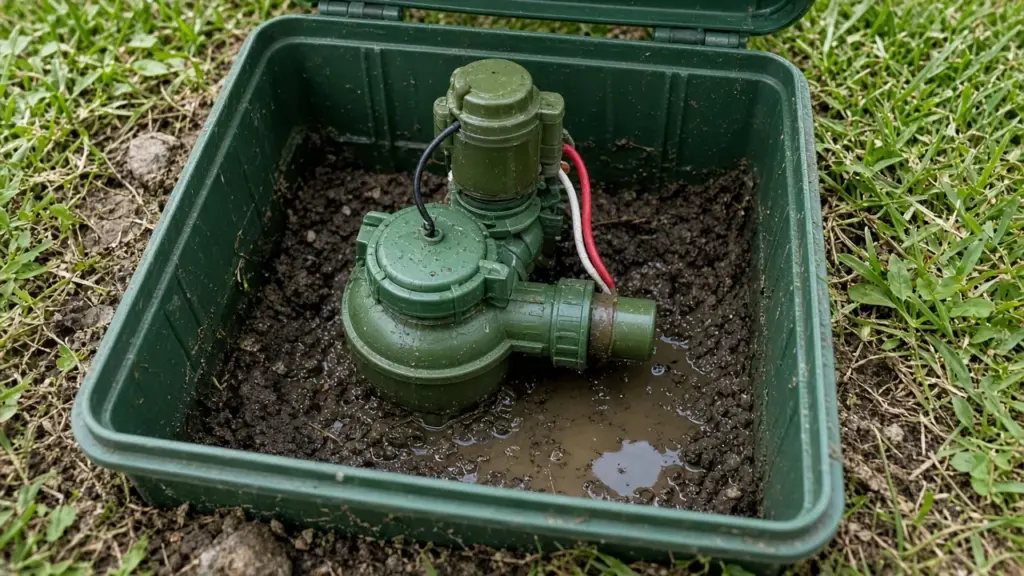
Few irrigation problems waste water faster than a zone that will not shut off. It might keep running after the controller stops, weep steadily all day, or turn on by itself. On a Dallas lot with clay soil, that can mean soggy turf, water running down the gutter, and a much higher water bill, not to mention a watering-rule violation if it runs during restricted hours.
This guide explains how to stop the water right away, how to tell whether the problem is the controller or the valve, and the common causes inside the valve itself.
First: Stop the Water
Before you troubleshoot, shut the water off.
- Turn the controller to off. If the zone stops, the problem may be the controller or its program.
- If it keeps running, close the irrigation shutoff valve. This is often near the backflow preventer. Closing it stops water to every zone without affecting the house.
- If there is no separate irrigation shutoff, close the main water shutoff at the meter, then find a better long-term solution.
Our leak detection guide includes more on emergency shutoff.
Is It the Controller or the Valve?
A valve opens when the controller energizes its solenoid. If the controller keeps sending power, the valve keeps running exactly as designed.
Quick test
- Unplug the controller or turn it off completely.
- If the zone shuts off within a minute or so, the controller is sending a signal it should not. Check for extra programs, extra start times, or a stuck manual run.
- If the zone keeps running with the controller off, the valve is the problem.
A controller fault is less common than a valve problem, but it is the fastest thing to rule out. Our controller guide covers programming mistakes that cause extra runs.
How a Valve Closes
Most residential irrigation valves close using water pressure. A small amount of water flows into the chamber above a rubber diaphragm through a tiny port. When the solenoid plunger is down, that water is trapped and the pressure above the diaphragm pushes it closed. When the solenoid lifts, water escapes, pressure drops, and the diaphragm opens.
Anything that keeps water from building up above the diaphragm, or keeps the diaphragm from sealing, will keep the valve open.
Common Causes
Debris under the diaphragm
This is the most frequent cause. Sand, small stones, pipe shavings, or clay particles lodge between the diaphragm and the valve seat. The valve cannot seal, so water keeps flowing, sometimes full force and sometimes as a steady weep. Debris often enters after a nearby pipe repair or break, when soil gets into the mainline.
A torn or worn diaphragm
Diaphragms are flexible rubber, and over time they can tear, stiffen, or develop pinholes. A damaged diaphragm lets water pass even when the valve should be closed.
A clogged bleed or supply port
The small port that feeds water to the top of the diaphragm can clog with grit. Without water building up above the diaphragm, the valve cannot close properly.
A stuck solenoid plunger
If the plunger inside the solenoid sticks in the up position, from debris, corrosion, or a damaged spring, the valve stays open even without power.
The manual bleed screw or solenoid left open
Many valves can be opened manually by loosening a bleed screw or turning the solenoid a quarter turn. If someone did this to test a zone and did not close it, the zone keeps running.
Low-head drainage mistaken for a stuck valve
Sometimes water keeps coming from the lowest head after a cycle ends. That is water draining out of the pipe, not a stuck valve. It stops once the line empties. Heads with check valves prevent it. Our sprinkler head repair guide explains low-head drainage.
How the Repair Is Done
- Shut off the irrigation supply and relieve pressure.
- Open the valve bonnet by removing its screws or unscrewing the top.
- Inspect the diaphragm and seat for debris, tears, or wear.
- Clean the ports and flush debris from the valve.
- Check the solenoid plunger and spring and replace the solenoid if needed.
- Replace the diaphragm if it is damaged.
- Reassemble and test by running the zone from the controller and confirming it shuts off completely.
If debris came from a recent break, flushing the mainline is important. Otherwise, the next grain of sand can cause the same problem again.
When to Replace the Valve
Replacement makes sense when the valve body is cracked, often from a freeze, when parts are not available, or when several valves in an old manifold are failing. Our valve repair guide discusses rebuild-or-replace decisions in more detail.
Why It Matters in Dallas
A zone stuck on wastes water and can run during hours when sprinkler watering is prohibited. Dallas does not allow sprinkler watering between 10 a.m. and 6 p.m. on any day, and automatic irrigation is limited to two days a week. A zone that weeps constantly also keeps clay soil saturated, which can contribute to soggy areas and fungal disease in turf. See our Dallas watering schedule guide for the rules.
Preventing Stuck Valves
- Flush lines after any pipe repair.
- Keep valve boxes clean so soil does not get into valves during service.
- Replace aging diaphragms before they fail if a valve has had repeated issues.
- Make sure manual bleed screws and solenoids are closed after testing.
- Consider a master valve, which closes the mainline when no zone is scheduled.
What to Tell Your Technician
A few details speed up diagnosis and can save a second visit:
- Whether the zone runs at full force or just weeps
- Whether it stops when the controller is unplugged
- Whether any pipe repairs, digging, or freezes happened recently
- Whether other zones also seem to run at odd times
- Where the valve box for that zone is, if you know
If the valve box is buried under mulch or sod, uncover it before the appointment if you can do so safely.
Frequently Asked Questions
Why does my sprinkler zone keep running with the controller off?
Debris under the diaphragm, a torn diaphragm, a clogged port, or a stuck solenoid can hold the valve open. Shut off the irrigation supply and have the valve cleaned or rebuilt.
My zone keeps dripping from one head after it stops. Is the valve bad?
Not necessarily. Water draining out of the lowest head after a cycle is common. If it stops after a few minutes, it is low-head drainage, not a stuck valve.
Can I clean a sprinkler valve myself?
Some homeowners can, with the supply off and the right parts. If the valve is buried in mud or the problem keeps returning, professional service is the better choice.
Can a stuck valve raise my water bill?
Yes. A zone running or weeping when it should be off can use a large amount of water before it is noticed.
Why did this start right after a pipe repair?
Soil and debris often enter the pipe during a break or repair and lodge in the next valve downstream. Flushing the line helps prevent it.
Get a Stuck Zone Fixed
If a zone will not shut off, our team can find the cause and repair or replace the valve. Learn about our sprinkler repair service, or contact us to schedule a visit.
Request Service or call 214-227-7444
We serve homes throughout Dallas and nearby North Texas communities.