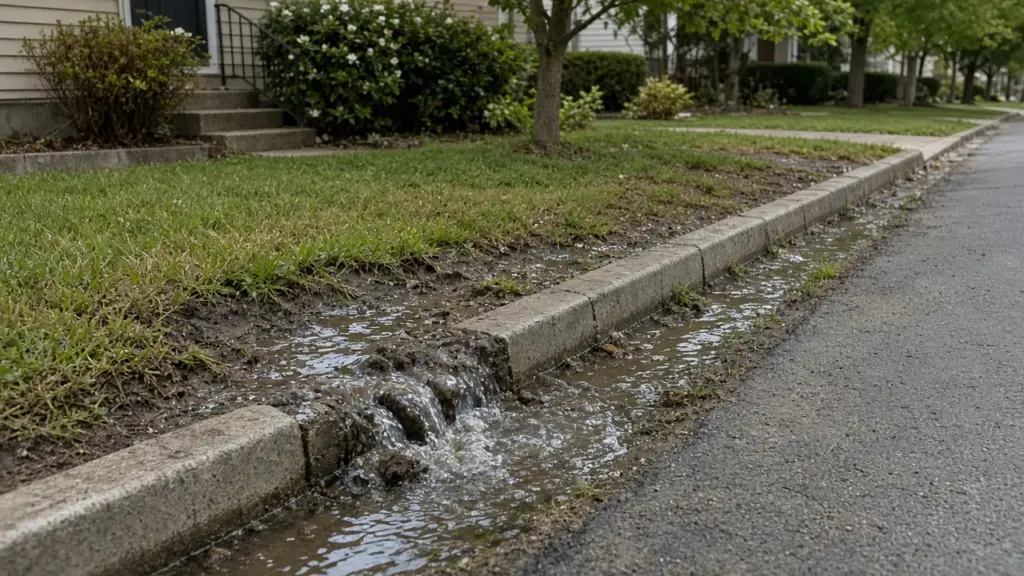
An irrigation leak can waste a surprising amount of water before anyone notices. In Dallas, where heavy clay soil holds moisture and hides what is happening below, a broken pipe may show up only as a spot that never dries, a zone that looks weak, or a water bill that is higher than it should be.
This guide explains how irrigation leaks happen, the warning signs to watch for, how to test for a leak with your own water meter, and how professionals locate and repair broken pipes without tearing up the whole yard.
Why Sprinkler Pipes Break in Dallas
Shrinking and swelling clay
Much of Dallas sits on expansive clay. It shrinks and cracks during dry spells and swells when it gets wet. That movement puts stress on buried PVC and fittings, especially rigid connections at tees, elbows, and heads. Our Dallas clay soil guide explains this process in more detail.
Freezes
North Texas freezes are usually short, but pipes and fittings near the surface, along with the backflow preventer, can crack when water inside them freezes. The damage is often invisible until the system is turned back on.
Roots
Tree roots are drawn to moisture. They can wrap around lines, lift them, or crack fittings, which is common in older neighborhoods with mature trees.
Digging and construction
Fence posts, landscape edging, new beds, cable and fiber installations, and patio projects regularly cut or crack sprinkler lines.
Age and pressure
Older poly pipe can develop pinholes, glued joints can fail, and high water pressure or water hammer stresses the entire system.
Warning Signs of a Hidden Leak
- A soggy or muddy area that stays wet between watering days.
- Unusually green, fast-growing grass in one strip.
- Water bubbling up around a head or from the soil when a zone runs.
- Weak spray or heads that do not pop up on one zone, a sign water is escaping somewhere on that line.
- Water running down the curb when the system is supposed to be off.
- A sunken area or depression where soil has washed out.
- A higher water bill without a change in watering habits.
Mainline vs. Lateral Line Leaks
Understanding the two kinds of pipe helps explain what you are seeing.
- The mainline runs from the water supply, through the backflow preventer, to the zone valves. It is under pressure all the time while the irrigation supply is open. A mainline leak leaks constantly, whether any zone is running or not.
- Lateral lines run from each zone valve to the heads. They are pressurized only while that zone runs. A lateral leak shows up only during that zone’s cycle.
That difference is the basis for a simple test.
How to Test for an Irrigation Leak With Your Water Meter
- Make sure no water is being used inside or outside the house.
- Find your water meter and note the reading, or watch the leak indicator, which is often a small triangle or dial that spins when water flows.
- If the indicator moves with everything off, you have a leak somewhere on the property.
- Close the irrigation system’s shutoff valve (often near the backflow preventer).
- If the indicator stops, the leak is on the irrigation mainline or at a valve that leaks through. If it keeps moving, the leak is more likely in the home’s plumbing.
To check laterals, run each zone manually and walk it, watching for bubbling, pooling, or weak heads.
How Professionals Find Leaks
A technician starts with the same observations: which zones are affected, whether the leak is constant or only during a cycle, and where water is surfacing. From there, they may:
- Isolate sections by closing valves or capping lines to narrow the location.
- Use pressure testing to confirm whether a section holds pressure.
- Trace pipe routes using valve locations, head layouts, and pipe-locating tools.
- Probe the soil to find the wettest point, which is not always directly above the break because water travels along the pipe trench.
The goal is to dig one small, accurate hole instead of several guesses.
How Sprinkler Pipes Are Repaired
Most repairs involve exposing the damaged section, cutting out the broken pipe or fitting, and joining new pipe with glued couplings or slip-fix repair couplings. A good repair also:
- Flushes debris out of the line before heads are reinstalled.
- Uses flexible swing pipe at heads so soil movement is less likely to crack fittings.
- Restores the soil and turf over the trench.
- Tests the zone under pressure before closing up.
Repairs under driveways and sidewalks are more complicated. Sometimes the best option is to reroute the line around the concrete or to bore a new sleeve underneath rather than breaking the slab.
Leaks Near Foundations
A leak near the house deserves prompt attention. Excess water near a slab can contribute to uneven soil moisture, which is a concern in expansive clay. Dallas rules allow foundations to be watered on any day with a hand-held hose, soaker hose, or drip, but a steady leak is not a substitute for controlled foundation watering. Our drip irrigation guide covers dedicated foundation watering.
Emergency Shutoff
If a pipe breaks and water will not stop, close the irrigation shutoff valve near the backflow preventer. If you cannot find it or it will not close, the main water shutoff at the meter will stop all water to the property. Then turn the controller off so it does not keep trying to run zones.
Preventing Future Leaks
- Mark sprinkler lines before digging or installing fences.
- Ask contractors to locate irrigation before they work.
- Protect the backflow preventer before hard freezes.
- Reset sunken heads using swing pipe.
- Consider a pressure regulator if pressure is high.
- Walk each zone monthly while it runs, and schedule an annual inspection as part of your maintenance calendar.
A smart controller with a flow sensor can also alert you to abnormal flow. See our controller guide for details.
More Leaks & Pipe Repair Guides
- Signs of a Hidden Sprinkler Leak in Clay Soil
- Mainline vs. Lateral Line Breaks: Why It Matters in Dallas
- PVC vs. Poly Pipe in Older Dallas Systems
- Repairing Sprinkler Pipe Under Sidewalks and Driveways
- A Soggy Spot That Never Dries: Finding the Source
- Using Your Water Meter to Test for Irrigation Leaks
- Why Sprinkler Pipes Crack When Clay Shrinks and Swells
- Slip Fix Couplings vs. Glued Repairs
- Root Intrusion Near Sprinkler Lines
- Leaks After Landscaping or Fence Installation
Frequently Asked Questions
How do I know if my high water bill is from the sprinklers?
Use the meter test: with all water off, check whether the meter moves, then close the irrigation shutoff and check again. If the meter stops when irrigation is closed, the leak is on the sprinkler side.
Why is my yard wet in one spot when the sprinklers are off?
A constant wet spot usually points to a mainline leak or a valve that is leaking through. Close the irrigation shutoff and see if the area dries.
Can a sprinkler leak damage my foundation?
A persistent leak adds uneven moisture near the slab, which can be a concern in expansive clay. It is best to repair leaks near the house promptly.
Do I have to tear up the yard to find a leak?
Not usually. Careful isolation and testing let a technician narrow the leak down so only a small area needs to be opened.
Can I fix a broken sprinkler pipe myself?
A simple lateral repair is manageable for some homeowners. Mainline breaks, repairs under concrete, and anything involving the backflow preventer are better left to a licensed irrigator.
Schedule Sprinkler Leak Detection in Dallas
If you suspect a hidden leak, our technicians can test the system, find the break, and repair it cleanly. Learn more about our sprinkler repair service, or contact us to book an appointment.
Request Service or call 214-227-7444
We serve homes throughout Dallas and nearby North Texas communities.