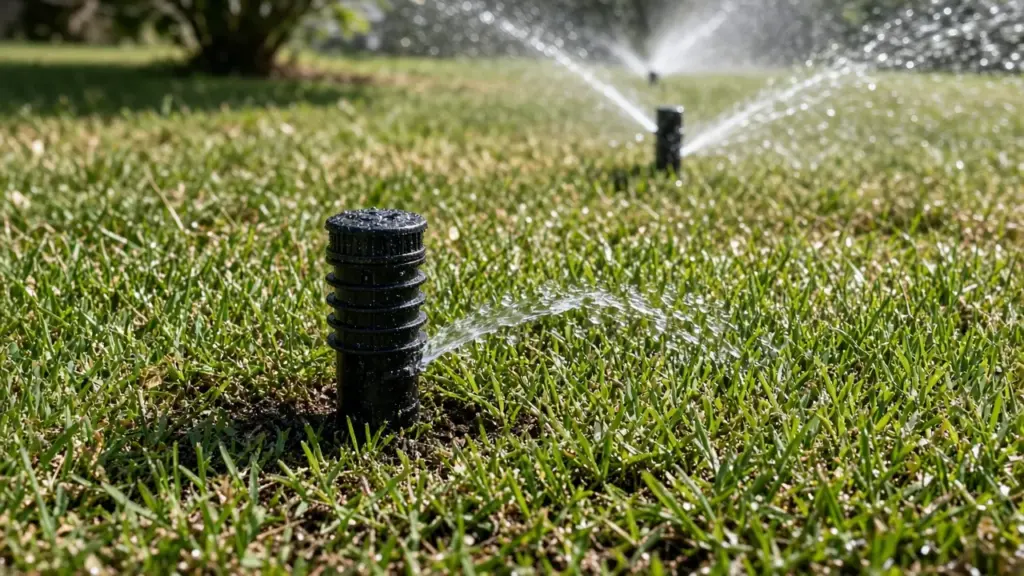
When every zone in your sprinkler system has weak pressure, the cause is usually upstream: the water supply, the backflow preventer, a partly closed main shutoff, or a mainline leak. When only one zone is weak and the rest spray normally, the problem is almost always on that zone. That narrows the search a lot.
This guide walks through the usual suspects for weak pressure on a single zone and how to check each one.
Symptoms of Low Zone Pressure
- Spray heads that barely pop up or do not pop up fully
- Rotors that turn slowly, stall, or do not reach their normal radius
- Dry rings and gaps between heads
- Heads at the end of the zone weaker than those near the valve
- Water bubbling somewhere in the zone
Suspect 1: The Flow Control Is Partly Closed
Many irrigation valves have a flow control handle or stem on top. Turning it down restricts flow through the valve. Flow controls sometimes get turned down by accident during service, or by someone trying to reduce misting. Open the valve box and check. Turning the flow control back toward open often restores pressure immediately.
Suspect 2: A Leak on the Zone
A broken lateral, a cracked fitting, or a missing head lets water escape before it reaches the rest of the zone. Signs include:
- A geyser from a broken head or riser
- Water bubbling from the ground where there is no head
- A soggy area along the zone’s pipe route
Our guide to signs of a hidden sprinkler leak in clay soil covers the clues, and our leak detection and pipe repair guide explains repairs.
Suspect 3: Debris in the Valve
Sand, pipe fragments, or scale can lodge in the valve and keep it from opening fully. A valve that opens partway delivers reduced flow to the zone. Cleaning the valve, and sometimes replacing the diaphragm, fixes it. Our guide to a zone that will not turn off explains how debris affects valves.
Suspect 4: A Failing Diaphragm or Solenoid
A torn diaphragm or a sticky solenoid plunger can keep the valve from opening fully. If the zone is weak when started from the controller but stronger when opened with the manual bleed, the solenoid or its circuit may be involved. Our guide to replacing a sprinkler solenoid covers testing.
Suspect 5: Too Many Heads
If heads have been added over the years, the zone may simply be asking for more water than the pipe and supply can deliver. Adding heads to fix dry spots is a common cause. The heads farthest from the valve suffer most. The fix is to split the zone into two with a new valve, or to reduce the number of heads.
Suspect 6: Mismatched Nozzles
A single high-flow nozzle, or a full-circle nozzle where a quarter belongs, can draw more than its share of water and reduce pressure for the rest. Replace mismatched nozzles with the correct series and pattern. Our guide to matched precipitation explains why.
Suspect 7: Clogged Nozzles and Screens
Individual heads with clogged nozzles or filter screens spray weakly even when the zone’s pressure is fine. If only a few heads are weak and the rest are normal, pull and clean those nozzles and screens.
Suspect 8: Crushed or Kinked Pipe
Pipe crushed by vehicles, construction equipment, or tree roots restricts flow. This often shows up after nearby construction or landscaping. Poly pipe can also kink.
Suspect 9: Elevation
Heads uphill from the valve have less pressure than heads downhill. On sloped yards, a zone may perform well at the bottom and poorly at the top. Zoning by elevation and pressure-regulated bodies help.
A Diagnostic Order
- Check the flow control on the valve
- Walk the zone while it runs, looking for geysers and bubbling
- Compare heads near the valve with heads at the end
- Clean clogged nozzles and screens
- Try the manual bleed to compare with controller operation
- Inspect the valve for debris and diaphragm condition
- Count heads and check for mismatched nozzles
- Check pressure at a head if you have a gauge
Using a Pressure Gauge
A gauge that threads onto a riser or fits in place of a nozzle shows the pressure at that point while the zone runs. Comparing readings at the start and end of a zone, and between zones, helps pinpoint the problem. A large drop from one end of the zone to the other suggests a leak, a restriction, or too many heads.
When Weak Pressure Comes and Goes
Pressure that varies from day to day can mean the zone is competing with household water use, such as a washing machine or shower running at the same time. Neighborhood demand in early mornings can also lower pressure. If a zone is borderline, small changes push it into poor performance. Staggering start times or reducing the zone’s demand helps.
Why It Matters
Weak pressure leaves dry spots that tempt homeowners to add run time, which overwaters the rest of the zone. It can also signal a leak that wastes water every cycle. Fixing the cause restores coverage and often lets you shorten run times. Our sprinkler valve repair guide explains how valves work.
A Real-World Example
A homeowner notices the back yard zone has gotten weaker over a few weeks. Heads near the valve pop up, but those near the fence barely rise. Walking the zone reveals a soggy patch halfway down the run. Digging exposes a cracked fitting, likely stressed by clay movement. After the repair, every head pops up fully, and the dry arc near the fence greens up within a couple of weeks.
Checking the Valve Box First
Because several suspects live in the valve box, it is worth opening it early. Look at the flow control position, check for water in the box, which can indicate a leaking valve, and listen for the valve opening when the zone starts from the controller. A valve that hums but opens slowly, or that opens fully only with the manual bleed, points you toward the solenoid, diaphragm, or debris. Clear mud from the box before opening the valve so dirt does not fall inside.
After the Fix
Once pressure is restored, walk the zone again and adjust arcs and radius, since heads that were underperforming may now throw farther than expected. Then revisit run times; with full pressure and coverage, the zone may need less time than before.
Frequently Asked Questions
Why does only one sprinkler zone have low pressure?
Common causes include a partly closed flow control, a leak on that zone, debris in the valve, a failing diaphragm or solenoid, too many heads, or crushed pipe.
How do I increase pressure on one zone?
Find and fix the cause: open the flow control, repair leaks, clean the valve, match nozzles, or split an overloaded zone.
Can too many heads cause low pressure?
Yes. If the zone demands more water than the pipe and supply can deliver, the farthest heads suffer.
Is low pressure on one zone a leak?
Often, but not always. Walk the zone while it runs to look for geysers, bubbling, and soggy areas.
Get Help With Weak Zones
We diagnose low pressure, repair leaks and valves, and rebalance zones. See our sprinkler repair service, or contact us to schedule.
Request Service or call 214-227-7444
We serve homes throughout Dallas and nearby North Texas communities.