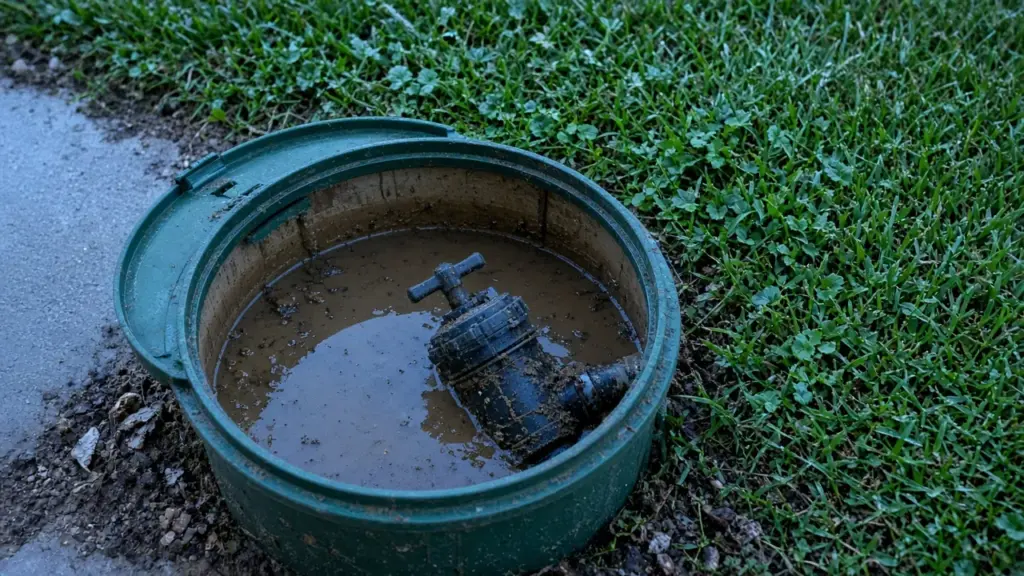
You open a valve box to check a zone and find it full of muddy water. It is a common sight in Dallas yards, and it is worth paying attention to. Water in a valve box can be harmless runoff after rain, or it can be a sign of a leaking valve, a cracked fitting, or water draining from the system. A box that stays flooded also shortens the life of valves, solenoids, and wire connections.
This guide explains why valve boxes flood, how to find the cause, and how to fix it.
Why Valve Boxes Flood
A leak in the valve or fittings
A cracked valve body, a leaking bonnet, a failed diaphragm seal, or a loose fitting can leak water into the box. If the leak is on the pressurized side of the valve, it can leak constantly, not just when the zone runs.
Low-head drainage
When a zone shuts off, water drains out of the lowest point. If a valve box sits at a low point, water from the pipe can seep into it.
Surface water
Rain and irrigation runoff flow to low spots. A box at a low spot collects water from the surrounding yard.
Poor drainage beneath the box
Valve boxes are open at the bottom. In heavy clay, water that enters the box does not drain away easily. Without gravel beneath, the box can hold water for days.
A nearby pipe leak
A leak in the mainline or a lateral near the box can fill it, even if the valve is fine.
How to Find the Cause
- Bail out the box. Use a cup, a small pump, or a wet vacuum to remove the water.
- Watch it with the system off. If the box refills while no zones are running, the leak is likely on the mainline or the pressurized side of a valve.
- Run each valve in the box. If the box fills while a particular zone runs, look at that valve and its outlet fittings.
- Check after the zone stops. If water seeps in after the zone shuts off, low-head drainage is likely.
- Check after rain. If the box fills only after rain, surface drainage is the issue.
Fixing Leaks
- Tighten or replace leaking bonnets and fittings
- Replace the diaphragm if it is leaking around the seal
- Replace the valve if the body is cracked
- Repair the pipe if a nearby line is leaking
If the box refills with the system off, the mainline or a valve inlet may be leaking. Shut off the irrigation supply and schedule a repair. Our guide to mainline versus lateral line breaks explains why mainline leaks matter.
Fixing Low-Head Drainage
- Add check valves to heads on the zone to hold water in the pipe
- Relocate the box away from the low point if practical
Fixing Drainage Around the Box
- Add gravel beneath the box. A layer of gravel under an open-bottom box gives water somewhere to go.
- Raise the box so its lid sits slightly above the surrounding grade, with extensions if needed.
- Improve grading so surface water does not flow toward the box.
Our guide to standing water after watering helps sort out irrigation versus drainage.
Why a Flooded Box Is a Problem
- Corroded wire splices lead to intermittent zone failures
- Solenoids fail faster in constant moisture
- Soil enters valves during repairs, causing leaks and sticking
- Hidden leaks waste water
- Mosquitoes can breed in standing water
Waterproof Connections
Wire connections in valve boxes should use waterproof connectors rated for direct burial. Standard wire nuts corrode quickly in wet boxes. If you find corroded splices, replace them. Our guide to replacing a sprinkler solenoid covers connections.
Keeping Valves Clean During Repairs
When working on a valve in a flooded box, bail out the water and remove mud before opening the valve. Soil entering the valve can damage the diaphragm or clog the solenoid port. Our guide to a zone that will not turn off explains how debris causes problems.
Buried and Hidden Boxes
Boxes that sit below grade collect soil and water. If you cannot find a box at all, our guide to finding buried valve boxes can help.
Maintenance
- Check valve boxes during spring startup and after heavy rain
- Clear soil and debris
- Replace cracked lids
- Keep lids at grade
A Common Dallas Scenario
A homeowner notices that the front valve box near the driveway is always full of water, even in dry weather. After bailing it out and waiting, it refills slowly with the system off. That points to a leak on the pressurized side. A technician finds a cracked fitting on the mainline just outside the box, repairs it, adds gravel beneath the box, and replaces the corroded wire connectors. The box stays dry, and the water bill drops.
Seasonal Patterns
Boxes that are dry most of the year but flood in spring or fall often point to surface drainage, since those seasons bring heavier rain in North Texas. Boxes that flood mainly in summer, when rain is scarce but irrigation runs often, point toward the system itself: low-head drainage, a weeping valve, or a leak that only shows under regular use. Noting when a box floods is one of the easiest clues to gather.
When to Call for Help
Call a technician if the box refills with the system off, if you cannot find the source, or if the valve or pipe needs replacing. A mainline leak wastes water continuously and should be addressed promptly.
Tools for Clearing a Flooded Box
A few simple tools make valve box work easier: a plastic cup or small bucket for bailing, a wet-dry vacuum for larger boxes, a hand trowel for removing mud, gloves, and a flashlight. Before reaching into a box, check for insects, spiders, and snakes, which sometimes shelter in valve boxes. Once the box is clear, rinse mud off the valve before inspecting it so you can see cracks and leaks.
Choosing the Right Box
Valve boxes come in round and rectangular shapes and several sizes. A box that is too small for the valves inside makes repairs difficult and lets soil fall onto the valves. When a box is replaced, choosing one large enough for the valves, with room to work, pays off at every future repair. Box extensions can raise a box without replacing it.
A Quick Checklist for Each Box
- Is the lid intact and flush with the grade?
- Is there standing water or mud?
- Do the valves show cracks or leaks?
- Are wire connections waterproof and free of corrosion?
- Is there gravel beneath the box?
- Is the box labeled with the zone numbers it controls?
Working through this list once or twice a year keeps boxes dry and valves reliable.
Frequently Asked Questions
Why is my sprinkler valve box full of water?
Common causes are a leaking valve or fitting, low-head drainage, surface water collecting at a low spot, poor drainage beneath the box, or a nearby pipe leak.
Is water in a valve box normal?
A little after heavy rain can be normal. A box that stays full or refills with the system off suggests a leak.
How do I stop my valve box from flooding?
Fix any leaks, add check valves to stop low-head drainage, add gravel beneath the box, and raise the box to grade.
Can water in the valve box damage my system?
Yes. It corrodes wire splices, shortens solenoid life, and can hide leaks.
Get Help With Flooded Valve Boxes
We find the source of water in valve boxes and repair valves, fittings, and drainage. See our sprinkler repair service, or contact us to schedule. Our sprinkler valve repair guide covers valves in depth.
Request Service or call 214-227-7444
We serve homes throughout Dallas and nearby North Texas communities.