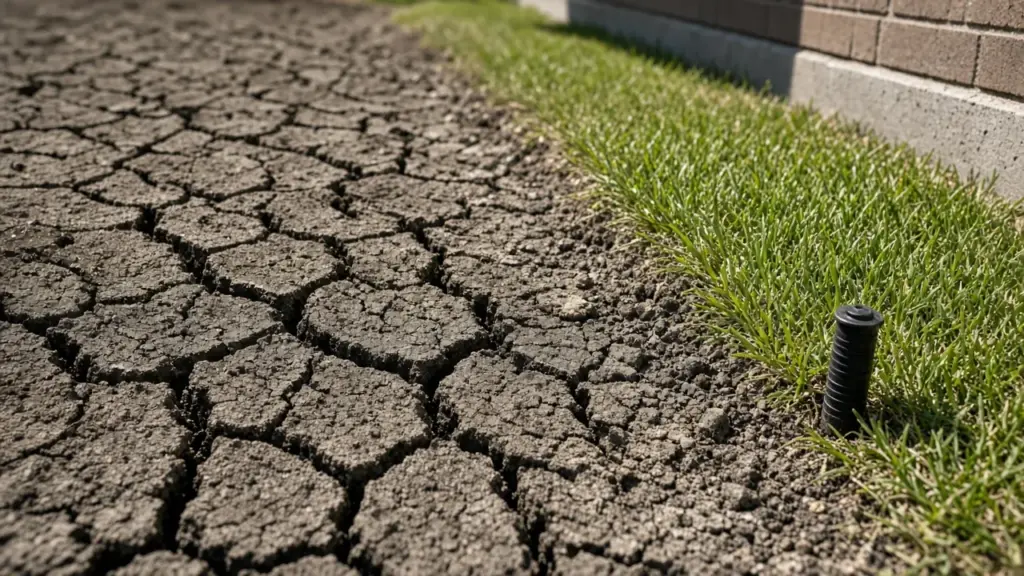
If you have dug a hole in a Dallas yard, you know the soil. Much of the city sits on dark, heavy clay that is sticky when wet and hard as brick when dry. Soils across the Blackland Prairie region, which includes much of Dallas County, are known for high shrink-swell potential. That affects how water soaks in, how pipes and heads hold up, and how you should program your sprinkler system.
This guide explains what makes Dallas clay different, the irrigation problems it causes, and the watering and repair practices that work with it instead of against it.
What Makes Dallas Clay Different
Clay soils are made of very fine particles packed closely together. That gives them two important traits:
- Slow infiltration. Water enters clay slowly. When water arrives faster than the soil can absorb it, the excess runs off.
- High water-holding capacity. Once water soaks in, clay holds it for a long time.
Many Dallas clays are also expansive. They swell when wet and shrink when dry, sometimes enough to open wide cracks during summer droughts. That seasonal movement is what causes many irrigation and foundation concerns in North Texas.
How Clay Affects Your Sprinkler System
Runoff and wasted water
Spray heads apply water quickly. On clay, a long spray cycle often puts down more water than the soil can take in, and the extra flows onto sidewalks and into the street. That wastes water and can draw attention from neighbors or code enforcement.
Sunken and tilted heads
As clay swells and shrinks, heads get pushed up, pulled down, or tipped sideways. A head that sits too low sprays into the grass. A tilted head throws water onto the fence or the house. Our sprinkler head repair guide covers resetting heads correctly.
Cracked pipes and fittings
Soil movement stresses rigid PVC connections, especially at tees and risers where a pipe changes direction. Over time, that can crack fittings or pull joints apart. See our sprinkler leak detection guide for signs of hidden breaks.
Flooded valve boxes
Valve boxes set in low spots fill with water because clay drains slowly. A little water after rain is normal. A box that refills without rain usually means a leaking valve. Our valve repair guide explains how to tell the difference.
Soggy areas and standing water
Clay holds water, and flat lots drain slowly. Some wet areas are caused by overwatering or leaks, but others are grading and drainage problems that need a drainage solution rather than an irrigation fix.
Watering Strategies That Work in Clay
Cycle and soak
The single most effective change for clay is cycle and soak programming. Instead of one long run per zone, split the time into two or three shorter cycles with rest periods between them. Each cycle wets the surface; the rest period lets water move downward before the next cycle adds more. Most modern controllers support multiple start times or a built-in cycle-and-soak feature. Our controller guide explains how to set it up.
Deep, infrequent watering
Because clay stores water well, it suits the twice-weekly schedule Dallas requires. Water thoroughly on your two assigned days so moisture reaches the root zone, then let the surface dry between cycles. Frequent shallow watering keeps roots near the surface and wastes water. Our Dallas watering schedule guide covers the rules.
Lower application rates
Rotors and multi-stream rotary nozzles apply water more slowly than traditional spray nozzles, which gives clay more time to absorb it. Converting high-runoff spray zones to rotary nozzles can reduce runoff noticeably.
Aeration
Core aeration pulls plugs of soil out of the lawn, which loosens compacted surface layers and helps water enter. Many Dallas lawns benefit from periodic aeration, followed by watering on the next allowed day. Mark heads before aerating so the equipment does not damage them.
Check soil moisture before adding time
Before increasing run times, push a screwdriver or soil probe into the ground a day after watering. If it slides in easily several inches deep, the soil is moist and more water is unlikely to help. Dry spots with moist soil around them usually mean a coverage problem.
Repair Practices for Clay Soil
- Use flexible swing pipe or swing joints at heads so they can move with the soil instead of cracking.
- Set heads at the correct height with firm backfill so they stay level longer.
- Seal wire splices with waterproof connectors. Wet clay corrodes unprotected connections.
- Flush lines after repairs. Clay particles that get into pipes clog nozzles and valves.
- Restore soil carefully over trenches to avoid depressions that collect water.
Signs Your Clay Lawn Is Getting the Wrong Amount of Water
Because clay holds water so well, overwatering is as common in Dallas as underwatering, and the symptoms can look similar at first glance.
Signs of too much water: soft, spongy turf; mushrooms; water running off within minutes of a zone starting; fungal problems such as brown patch in St. Augustine; algae or moss in low spots; and a valve box or low area that stays wet.
Signs of too little water: grass that turns a blue-gray color, footprints that stay visible after you walk across it, leaf blades that fold or curl, and soil that has pulled away from sidewalks and curbs with visible cracks.
Signs of a coverage problem: brown patches in the same spots every summer surrounded by healthy grass, and dry arcs between heads. More run time will not fix these; adjusting or repairing heads will.
Clay Soil and Foundations
Uneven soil moisture around a slab is a common concern in expansive clay. The City of Dallas allows foundations to be watered on any day, at any time, using a hand-held hose, soaker hose, drip irrigation, or bucket. A dedicated drip line along the foundation, run on its own schedule, is a common way to keep moisture more consistent during dry weather. Our drip irrigation guide covers foundation drip setups. For specific foundation concerns, consult a foundation professional.
When Wet Spots Are a Drainage Problem
Not every soggy area is an irrigation issue. If water collects after rain even when the system is off, or runs toward the house from neighboring lots, the fix may be grading, surface drains, or a French drain. Fixing irrigation leaks and overspray helps, but it will not solve a drainage problem. Learn about our drainage solutions in Dallas.
More Clay Soil & Drainage Guides
- Why Black Clay Makes Sprinkler Repair Harder in Dallas
- Standing Water After Watering: Irrigation or Drainage Problem?
- French Drains and Sprinkler Lines: Working Around Each Other
- Foundation Watering With Drip Lines in Dallas
- Soil Cracks in Summer and What They Do to Pipes
- Compacted Soil and Poor Water Absorption
- Aerating Clay Lawns for Better Irrigation Results
- Yard Grading and Sprinkler Runoff
- Downspouts, Gutters, and Irrigation Overlap
Frequently Asked Questions
Why does water run off my lawn so fast?
Clay absorbs water slowly, and spray heads apply water quickly. Cycle and soak programming or lower-rate nozzles give the soil time to absorb water.
Why do my sprinkler heads keep sinking?
Clay shrinks and swells with moisture changes, pulling heads out of position. Resetting them with swing pipe and firm backfill helps them stay put longer.
Is twice-weekly watering enough for clay soil?
For most established warm-season lawns, yes, when you water deeply and use cycle and soak. Clay holds moisture well between watering days.
Should I water my foundation?
Many Dallas homeowners use a soaker hose or drip line to keep soil moisture more even around the slab during dry periods, which the city allows any day. Ask a foundation professional about your specific home.
How do I know if I have a drainage problem instead of an irrigation problem?
If water pools after rain with the system off, or the same area stays wet despite repaired leaks and reduced run times, drainage is likely the issue.
Get Help With Clay Soil Irrigation Problems
Whether you are dealing with runoff, sunken heads, cracked pipes, or soggy areas, our team can repair the system and recommend drainage fixes when needed. Call or contact us to schedule a visit.
Request Service or call 214-227-7444
We serve homes throughout Dallas and nearby North Texas communities.