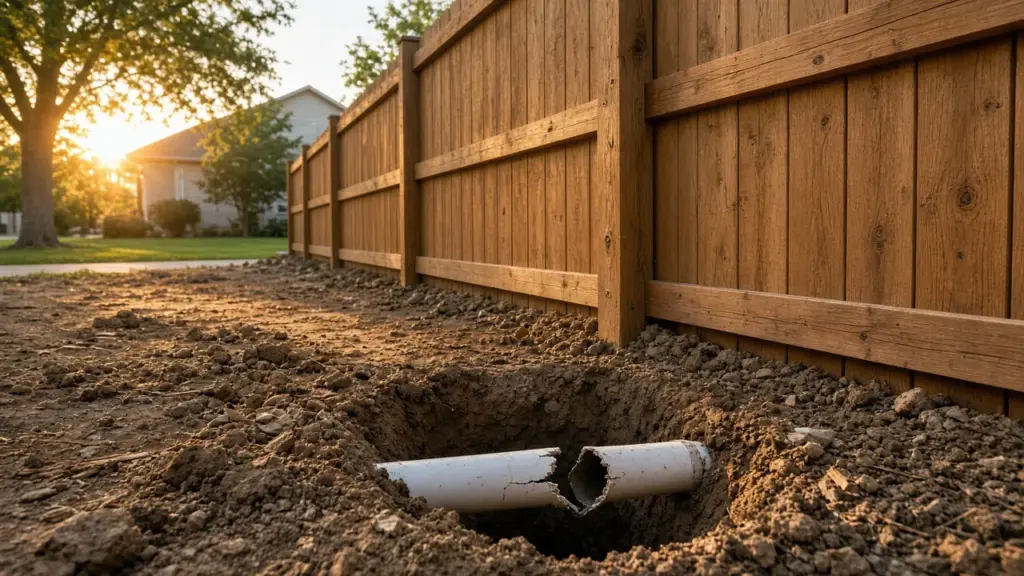
A new fence, fresh landscaping, or a patio project can transform a yard. It can also leave behind a hidden problem: damaged sprinkler lines. Post-hole diggers, trenchers, shovels, and edging tools regularly strike irrigation pipe, wiring, and heads, and the damage may not show up until the next time the system runs.
This guide explains where to look for damage after a project, how to confirm and repair leaks, and how to protect your system next time.
Why Projects Damage Irrigation
Sprinkler pipe in residential yards is typically buried fairly shallow, and wire runs alongside it. Pipe routes are rarely marked, and many homeowners do not have a map of their system. Utility locating services such as 811 mark public utilities, but they generally do not mark private sprinkler lines. So crews digging for fence posts, planting holes, or footings often have no way of knowing where irrigation lines run.
Common Types of Damage
Fence Installation
- Post holes drilled or dug through pipe
- Concrete poured around pipe or into broken lines
- Heads removed or buried along the fence line
- Wire cut during digging
Landscaping
- Planting holes that cut pipe or drip lines
- Tree planting with larger holes that hit laterals
- Bed edging installed through pipe or wire
- Grading that buries heads or changes the soil level around them
- Tilling that shreds drip tubing
Patios and Hardscape
- Excavation that cuts through lines
- Compaction that cracks shallow pipe
- Heads covered by pavers or concrete
Signs of Project Damage
- Geysers or bubbling when a zone runs
- Zones that no longer work, often from cut wire
- Weak pressure on a zone
- Soggy areas near the project area
- Heads that no longer pop up or are missing
- Water pooling around new fence posts or plantings
- A higher water bill after the project
Finding the Damage
- Run each zone and walk the yard, paying close attention to the project area.
- Look for water bubbling around fence posts, new plants, and edging.
- Check for missing or buried heads.
- If a zone does not run, check for cut wire, especially where the project crossed wire routes.
- Check the water meter with all zones off to see whether the mainline was damaged. Our guide to using your water meter to test for irrigation leaks explains how.
Repairing the Damage
- Cut pipe: cut out the damaged section and install a coupling or slip fix. Our guide to slip fix couplings vs. glued repairs explains the options.
- Pipe encased in concrete: reroute around the post rather than trying to repair inside the concrete.
- Cut wire: splice with waterproof connectors designed for direct burial.
- Buried heads: raise to the new grade with risers or swing joints.
- Heads under hardscape: cap the line and relocate heads.
- Damaged drip: replace cut sections of tubing.
Rerouting Along a New Fence
If a fence now runs along or across an irrigation line, rerouting the line away from the fence may prevent future problems. Heads along the fence line may also need adjustment so they do not spray the fence, which wastes water and can stain or damage the wood.
Who Pays for Damage?
Responsibility for damaged sprinkler lines depends on your agreement with the contractor. Some contracts address irrigation damage; others do not. Before a project, ask how the contractor handles damage to sprinkler lines. After a project, document damage with photos and notify the contractor promptly.
Preventing Damage on Your Next Project
- Map your system before the project, including heads, valves, pipe routes, and wire routes.
- Flag heads and mark lines with paint or flags along pipe routes.
- Share the map with the contractor.
- Call 811 so public utilities are marked.
- Ask for hand digging near known lines.
- Plan irrigation changes as part of the project, not after.
- Run each zone after the project before the crew leaves, if possible.
Our guide to finding buried valve boxes helps locate hidden components.
Coordinating Irrigation With New Landscaping
New landscaping often changes irrigation needs. New beds may need drip; new trees may need drip rings; areas converted from lawn may need heads capped. Planning irrigation changes alongside the landscape design avoids damage and gives new plants the right water. Our guide to adding irrigation after a landscape redesign covers the planning.
Damage That Shows Up Later
Not every strike causes an immediate leak. A post hole digger may nick a pipe without breaking it, or compaction from equipment may crack a fitting that holds for a while before failing. Concrete around a fence post can put pressure on nearby pipe as clay soil shrinks and swells through the seasons. Keep an eye on the project area for several months afterward. A soggy spot that appears weeks later near a new post or plant is a strong clue.
Mainline Damage Is Urgent
If a project damaged the mainline, the pipe that stays pressurized between the backflow preventer and the valves, water leaks continuously, not just when zones run. A meter test with everything off will reveal it. Close the irrigation shutoff until repairs are made. Our guide to mainline vs. lateral line breaks explains why mainline breaks waste so much water.
Wiring Damage Can Be Hard to Find
Cut or nicked wire causes zones to fail completely or intermittently. When several zones stop working after a project, the common wire may have been cut. Wire runs often follow pipe routes, so start where digging crossed known pipe. Wire tracing tools can pinpoint breaks along a route. Once found, splice with direct-burial connectors and keep the splice accessible if possible.
Updating Your Map After the Project
After repairs, update your system map to show any rerouted lines, relocated heads, and new splices. Mark where fence posts and new trees sit relative to irrigation lines. The next project will go more smoothly, and future repairs will be faster. Our leak detection and pipe repair guide covers how technicians find hidden leaks.
Watering New Plants While Repairs Wait
If a damaged zone must stay off until repairs are made, new plants from the landscaping project still need water. Hand watering is allowed on any day in Dallas, as are soaker hoses and drip connected to a hose bib with proper backflow protection. Water new plants deeply at the root ball until the zone is back in service, and check them daily in hot weather.
A Final Walk-Through With the Crew
Before a contractor leaves, run each zone together and look at the work area. Problems found while the crew is still on site are far easier to resolve.
Frequently Asked Questions
Why do I have sprinkler leaks after installing a fence?
Post holes and concrete often hit shallow irrigation pipe and wire that were not marked.
Does 811 mark sprinkler lines?
Generally no. 811 marks public utilities. Private sprinkler lines usually are not marked.
How do I find sprinkler damage after landscaping?
Run each zone and walk the project area, looking for bubbling, soggy spots, missing heads, and zones that do not work.
How do I prevent damage to sprinkler lines during a project?
Map and mark your system, share the map with the contractor, and request hand digging near lines.
Get Help After a Project
We find and repair sprinkler damage from fences, landscaping, and hardscape projects. See our sprinkler repair service, or contact us to schedule.
Request Service or call 214-227-7444
We serve homes throughout Dallas and nearby North Texas communities.