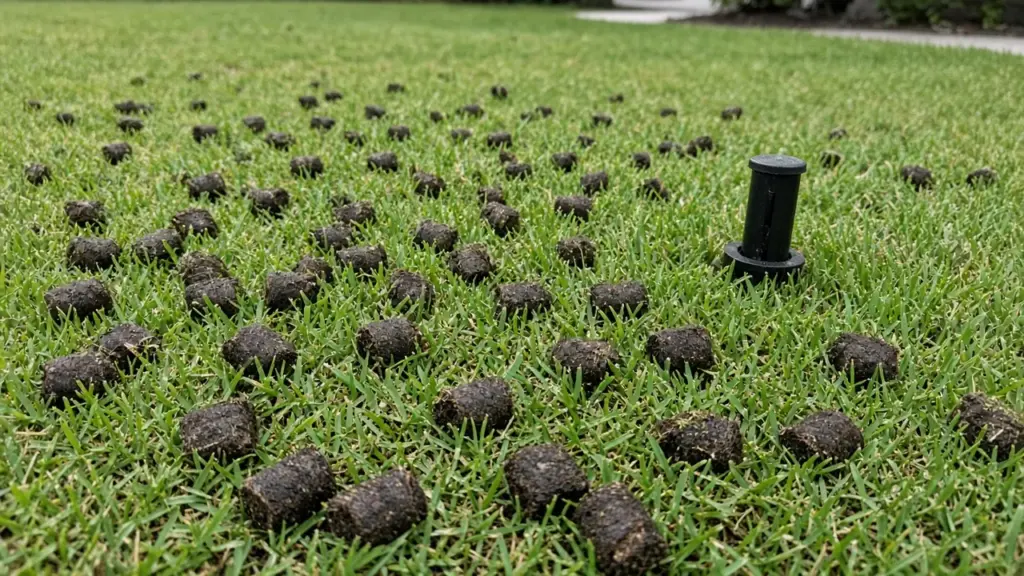
Dallas lawns grow on some of the most challenging soil in Texas. Heavy clay absorbs water slowly, compacts easily, and can leave sprinkler water sitting on the surface or running down the sidewalk. Core aeration is one of the most effective ways to help clay take in water, and it pairs naturally with good irrigation practices.
This guide explains how aeration helps, when to do it in Dallas, and how to keep your sprinkler system safe while the aerator is working.
Why Clay Lawns Need Aeration
Clay particles are extremely small and pack tightly, leaving little room for water and air. Foot traffic, mowing, construction, and even heavy rain on bare soil compress clay further. The result is a dense surface layer that sheds water.
When soil is compacted:
- Sprinkler water runs off before it soaks in
- Roots stay shallow because they cannot penetrate dense soil
- Grass thins in high-traffic areas
- Puddles form after watering or rain
- The lawn needs more frequent water to stay green
Our guide to compacted soil and poor water absorption covers how to recognize compaction.
How Core Aeration Works
A core aerator uses hollow tines to pull small plugs of soil out of the lawn. Each hole creates a channel that lets water, air, and nutrients reach the root zone. The plugs are left on the surface, where they break down over the following weeks.
Spike aerators, which simply poke holes, are generally less effective in clay because they can compress soil around each hole. Core aeration removes soil, which relieves compaction rather than adding to it.
How Aeration Improves Irrigation
After aeration, water from sprinklers has thousands of small entry points into the soil. That means:
- Less runoff during each watering cycle
- Deeper water penetration into the root zone
- Better results from deep, infrequent watering
- More effective cycle-and-soak programs
Our guide to deep and infrequent watering for clay soil explains the watering approach that aeration supports.
When to Aerate in Dallas
Warm-season grasses common in Dallas, such as St. Augustine, Bermuda, and Zoysia, recover best when they are actively growing. In North Texas, that generally means late spring through early summer. Aerating then gives the lawn time to fill in the holes and benefit from improved water movement through the hottest months.
Avoid aerating:
- When the lawn is dormant in winter
- During extreme heat and drought, when grass is already stressed
- When soil is bone dry, because tines cannot penetrate hard clay
- When soil is saturated, because tines smear wet clay and the machine can compact it further
The ideal soil condition is moist but not soggy. Watering on your assigned day before the aeration appointment can soften the soil.
How Often to Aerate
Many Dallas lawns benefit from aeration once a year. Heavily used lawns or those with severe compaction may benefit from more frequent aeration. Lawns in good condition may need it less often. Watch how water behaves: if runoff is increasing and a screwdriver is hard to push into the soil, it may be time.
Protecting Your Sprinkler System
Aerator tines can puncture sprinkler heads, crack shallow pipe, and cut drip lines. Before the aerator arrives:
- Run each zone and place a flag next to every head.
- Mark valve boxes, which can be cracked by heavy equipment.
- Flag shallow pipe you know about, especially near sidewalks and driveways where lines often run shallow.
- Mark drip lines in beds bordering the lawn.
- Point out the backflow preventer and any above-ground components.
Tell the operator to avoid flagged areas. After aeration, walk each zone and look for damaged heads, leaks, and new soggy spots.
Clay Soil and Pipe Depth
Sprinkler pipe in older Dallas yards is sometimes shallower than expected, due to settling, erosion, or original installation. Aeration tines typically penetrate a few inches. If you have had pipe damage from aeration before, those lines may be shallow and worth marking carefully or reburying.
After Aeration: Adjusting Irrigation
After aerating, you may notice that water soaks in more readily. Take advantage of it:
- Water on your next assigned day to help the lawn recover.
- Watch for runoff. You may be able to lengthen cycles slightly now that water soaks in better.
- Leave the plugs. They break down and return soil and organic matter to the surface.
Remember that Dallas limits automatic sprinklers to two assigned days per week and prohibits sprinkler watering between 10 a.m. and 6 p.m. year-round.
Topdressing After Aeration
Spreading a thin layer of compost after aeration lets organic matter fall into the holes. Over repeated seasons, this can gradually improve clay structure. Avoid thick layers that smother grass.
Aeration and Overseeding
Aeration creates good seed-to-soil contact for overseeding. In Dallas, overseeding is more common with Bermuda than St. Augustine, which is usually established by sod or plugs. Newly seeded areas have their own watering needs. See our guide to watering new sod under Dallas rules for information on establishment and variances.
Aeration Near Foundations and Trees
Take care aerating near foundations, where beds and drip lines are common, and near shallow tree roots. Tines generally do not harm trees, but large surface roots can damage equipment.
Signs Aeration Is Working
- Less runoff during sprinkler cycles
- A soil probe or screwdriver pushes in more easily
- Thicker turf in formerly thin areas
- Fewer puddles after watering or rain
- Grass that holds color longer between watering days
Aeration Is One Tool
Aeration helps, but it does not fix irrigation problems. If certain areas stay dry, check sprinkler coverage, head height, and nozzle condition. Our clay soil sprinkler guide covers other ways to manage irrigation in clay.
Choosing an Aeration Service
If you hire an aeration service, ask whether they use core aerators, whether they will avoid flagged heads, and what happens if a head is damaged. A careful operator will slow down near flags and work around valve boxes. Many sprinkler damages from aeration happen at heads hidden in turf, so thorough flagging is the best protection.
Aeration and Standing Water
If water stands in the same spots after every watering, aeration may help, but it is worth confirming the cause first. Low spots, poor grading, and downspouts can all create persistent wet areas that aeration alone will not solve. A broken head or leaking lateral can do the same. Our guide to standing water after watering helps sort out irrigation problems from drainage problems.
Doing It Yourself
Core aerators can be rented from many equipment rental shops. They are heavy and take some strength to maneuver, especially on slopes. If you aerate yourself, make two passes in different directions for more even coverage, go slowly around flagged heads, and never aerate over drip lines or near the backflow preventer. Clean the tines if they clog with sticky clay, which can happen if the soil is too wet.
Frequently Asked Questions
Does aeration help Dallas clay soil absorb water?
Yes. Core aeration creates channels that let water soak into dense clay instead of running off.
When should I aerate my lawn in Dallas?
Generally in late spring through early summer, when warm-season grasses are actively growing and the soil is moist but not saturated.
Can aeration damage my sprinkler system?
Yes, if heads and shallow lines are not marked. Flag every head, valve box, and known shallow line before aerating.
Should I water before aerating?
Moist soil aerates best. Watering on your assigned day before aeration can soften hard clay.
Get Help After Aeration
We repair heads and lines damaged during aeration and adjust irrigation for better results in clay. See our sprinkler repair service, or contact us to schedule.
Request Service or call 214-227-7444
We serve homes throughout Dallas and nearby North Texas communities.