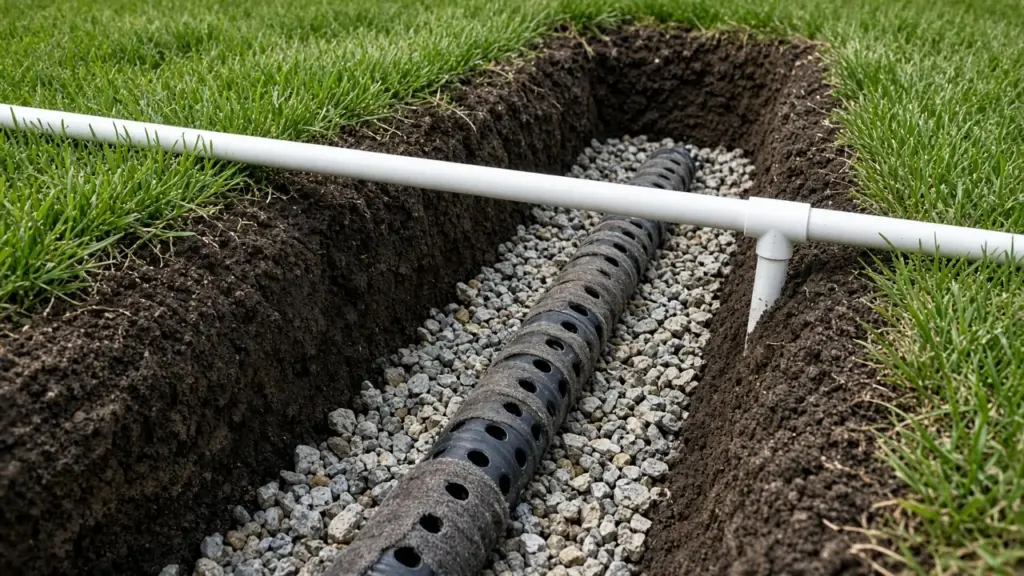
French drains are a common fix for soggy yards in Dallas. A gravel-filled trench with a perforated pipe collects excess water and carries it away. But most Dallas yards that need a French drain already have a sprinkler system, and the two share the same few feet of soil. Trenching for a drain can cut sprinkler pipe and wire, and a poorly planned drain can end up collecting mostly irrigation water.
This guide explains how French drains and sprinkler lines interact, how to plan a drain around an existing system, and how to keep both working well.
What a French Drain Does
A French drain is a trench lined with fabric, filled with gravel, and fitted with a perforated pipe. Water in the surrounding soil moves into the gravel and pipe, then flows downhill to an outlet such as a pop-up emitter, a dry creek, or another approved discharge point. In heavy clay, water moves slowly, so drains work best when they intercept surface and near-surface water in problem areas.
Our drainage service page explains the drainage solutions we offer.
Why Dallas Yards Need Both
Dallas clay absorbs water slowly and swells when wet. Flat or poorly graded yards can hold water for days after heavy rain. At the same time, lawns need irrigation during hot, dry stretches. So many yards need both a way to add water and a way to remove excess water. Our guide to standing water after watering explains how to tell which problem you have.
Step 1: Rule Out Irrigation First
Before adding a drain, make sure the sprinkler system is not causing the soggy area. A broken head, a leak, a valve that weeps, or run times that are too long can all create wet spots that look like drainage problems. Fixing the irrigation issue may solve the problem without a drain. Our guide to signs of a hidden sprinkler leak in clay soil can help.
Step 2: Map the Sprinkler System
Before digging, locate:
- The mainline route from the backflow preventer to the valves
- Valve locations
- Lateral pipe routes to heads
- Valve wire routes
- Drip lines in beds
A system map, if you have one, helps. If not, a technician can locate valves and trace wire. Heads show where laterals run: pipe usually runs in fairly straight lines between heads and back to the valve.
Step 3: Plan the Drain Route
- Cross pipe at right angles where possible, so only a short section of each line is affected.
- Avoid running a drain parallel and directly over a sprinkler line.
- Mark crossings so the crew hand digs at those points.
- Plan for the outlet. The drain needs somewhere to go, and that route can cross more lines.
Step 4: Dig Carefully at Crossings
Trenching machines cut pipe and wire easily. At known crossings, hand dig to expose the sprinkler line. Sprinkler pipe can often pass over or under the drain. If the drain trench must be deeper than the pipe, the sprinkler pipe can be supported across the trench or rerouted under the drain.
Step 5: Repair Anything Cut
Even with care, lines sometimes get cut. Repair them properly before backfilling:
- Replace damaged pipe with new pipe and proper fittings
- Splice cut valve wire with waterproof connectors
- Flush and test each affected zone
Our guide to mainline versus lateral line breaks explains why mainline damage is more urgent.
Step 6: Adjust Heads Near the Drain
Heads that spray directly onto a French drain can send irrigation water straight into the drain, wasting it. Adjust arcs so water lands on turf and beds. If the drain sits in a bed, consider drip instead of spray.
Step 7: Revisit Run Times
Once the drain is working, the soil in that area may dry faster. You may need to adjust run times for nearby zones.
Common Mistakes
- Trenching without locating sprinkler lines. Leads to cut pipe and wire.
- Burying a cut wire without a proper splice. Water gets in and the zone fails later.
- Running a drain directly over a sprinkler line. Makes future repairs difficult.
- Leaving heads aimed at the drain. Wastes water.
- Skipping the irrigation check. A drain cannot fix a leak.
Drains, Downspouts, and Irrigation
Downspouts that empty onto flat ground add a lot of water to small areas during storms. Many drainage plans tie downspouts into solid pipe that carries water away, separate from the perforated drain. Keep irrigation heads from spraying into gutters and downspout areas.
Grading and Irrigation
Sometimes regrading is part of a drainage fix. Raising or lowering soil changes head heights. Heads that end up too low spray into turf, and heads too high get hit by mowers. After regrading, reset heads to the new grade. Our guide to raising sunken sprinkler heads covers how.
Foundations and Moisture
In Dallas, soil moisture near foundations matters because clay shrinks and swells. Drains and irrigation both affect moisture near the house. A drain that removes too much water next to the foundation, or an irrigation zone that soaks one side, can contribute to uneven moisture. Plan drains and irrigation together, and consult a qualified professional about foundation concerns.
Maintaining Both Systems
- Keep drain outlets clear of debris
- Check that sprinkler heads near the drain spray where they should
- Watch for wet spots that could mean a leak near a crossing
- Clean gutters so downspouts do not overflow
Who Should Do the Work
Drainage work and irrigation work overlap. Having one team handle both, or at least coordinate, reduces the chance of cut lines and unplanned repairs. Whoever does the work should locate and protect the sprinkler system before digging. Texas 811 should be contacted before digging to mark public utility lines; private irrigation lines are not marked by 811.
Timing the Work
Drainage projects are easiest when the soil is not saturated. Wet clay is heavy, sticky, and hard to trench cleanly, and it makes it harder to see pipe and wire. Late summer and early fall often offer drier soil, but schedules depend on the weather. If the drain is going in during a wet spell, expect slower progress and extra care around sprinkler crossings.
Signs a Crossing Was Damaged
Sometimes a sprinkler line is nicked during drain installation and the damage does not show right away. In the weeks after drainage work, watch for:
- A zone near the drain that loses pressure
- A wet spot near a crossing point
- A zone that no longer turns on, which can mean a cut or damaged wire
- Water flowing from the drain outlet when it has not rained, which may mean irrigation water or a leak is reaching the drain
If you notice any of these, have the crossing checked promptly.
Frequently Asked Questions
Can a French drain be installed without damaging my sprinkler system?
Yes, with planning. Locate lines first, cross at right angles, hand dig at crossings, and repair anything damaged before backfilling.
Should sprinkler heads spray on a French drain?
No. Adjust heads so irrigation water lands on turf and beds, not in the drain.
What if the soggy area is caused by my sprinklers?
Fix the irrigation issue first. A leak, broken head, or excessive run times may be the real cause.
Do I need to adjust my sprinklers after drainage work?
Often. Grade changes affect head height, and nearby zones may need shorter run times.
Get Help With Drainage and Irrigation
We handle drainage and sprinkler work together so neither gets in the way of the other. See our drainage service, or contact us to schedule an evaluation.
Request Service or call 214-227-7444
We serve homes throughout Dallas and nearby North Texas communities.