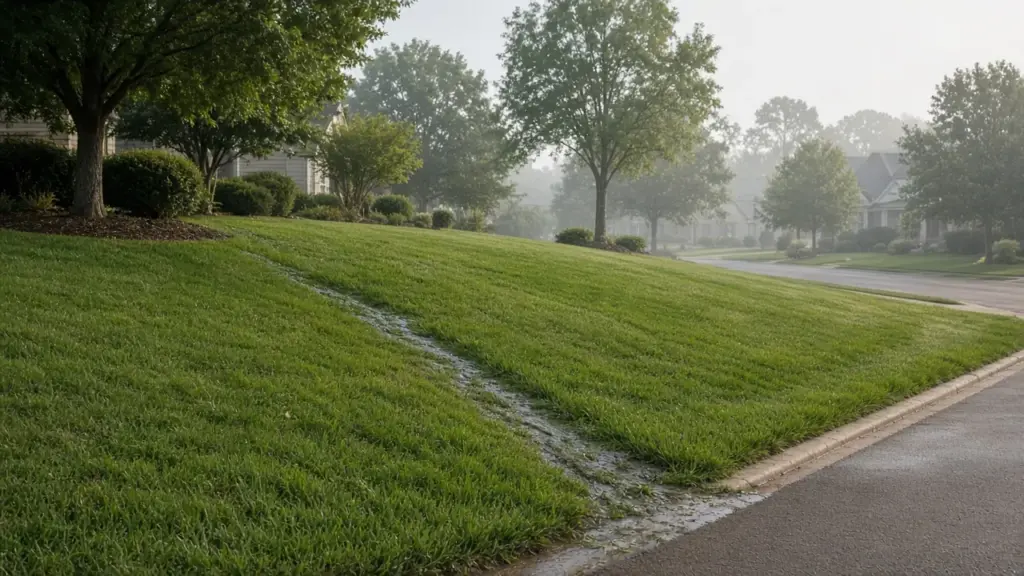
Sprinkler water should soak into the lawn and beds, not race down the driveway, pool against the foundation, or stream into the gutter. How your yard is graded, meaning how the ground slopes, plays a big role in where irrigation water ends up. On Dallas clay, which absorbs water slowly, even a gentle slope can turn a sprinkler cycle into runoff.
This guide explains how grading affects sprinkler runoff and practical ways to keep water where it belongs.
Why Grading Matters
Water follows gravity. When sprinklers apply water faster than the soil absorbs it, the excess flows downhill. Where it goes depends on the grade:
- Toward the street: runoff into gutters wastes water and can lead to a violation under Dallas water waste rules.
- Toward the house: water pooling near the foundation can cause moisture problems and uneven soil movement.
- Into low spots: soggy areas, mosquitoes, and dead grass.
- Onto neighboring properties.
Proper grading directs water away from the house and allows it to soak into the landscape. Our guide to standing water after watering helps diagnose where water is collecting.
Clay Makes Runoff Worse
Dallas clay absorbs water slowly, particularly when compacted or already wet. Spray heads can apply water faster than clay can absorb it, so runoff often begins within minutes, especially on slopes. Our guide to compacted soil and poor water absorption covers soil-related causes.
Recognizing Grading-Related Runoff
- Water flows off the lawn within minutes of a zone starting
- Streams of water on sidewalks and driveways during watering
- Erosion channels or bare soil on slopes
- Mulch washing out of beds
- Soggy strips at the bottom of slopes
- Water pooling against the foundation
Irrigation Fixes for Sloped Yards
Cycle and Soak
The most effective fix for runoff is splitting each zone’s run time into shorter cycles with soak periods between them. On slopes, you may need more cycles of shorter duration than on flat ground. Our guide to deep and infrequent watering for clay soil explains how to set it up.
Lower Application Rate Nozzles
Rotary nozzles apply water more slowly than traditional spray nozzles, giving clay more time to absorb it. Converting spray zones on slopes to rotary nozzles can greatly reduce runoff. Keep nozzle types consistent within each zone.
Separate Zones by Slope Position
Tops of slopes dry out faster, while bottoms collect water from above. If possible, put the top and bottom of a slope on separate zones so each can be watered appropriately. Our guide to Kessler Park sloped yard watering discusses slope strategies in hilly Dallas neighborhoods.
Check Valves
On slopes, the lowest heads may drain the pipe after each cycle, adding to soggy spots. Heads with check valves prevent this. Our guide to check valves in sprinkler heads explains how they work.
Adjust Heads Along Hardscape
Heads spraying pavement at the bottom of a slope add directly to runoff. Adjust arcs and radius to keep water on the lawn.
Grading Fixes
Sometimes the grade itself needs correction:
- Regrading to create a gentle slope away from the foundation
- Filling low spots with soil
- Swales, shallow channels that guide water across the yard
- French drains to collect and move water from persistent wet areas
Our guide to French drains and sprinkler lines explains how drainage and irrigation can coexist.
Grading Near the Foundation
Soil next to the foundation should generally slope away from the house so water drains outward. Over time, soil can settle, beds can be built up, or mulch can pile up, changing the grade. If sprinkler water pools against the foundation, the grade may need correction, and heads near the house may need adjustment. Consistent soil moisture near foundations matters in Dallas clay, but pooling water is not the goal.
Downspouts and Irrigation
Roof downspouts discharge large amounts of water during storms. If they empty onto sloped lawns or near the foundation, they can compound runoff and erosion. Extensions, splash blocks, or connections to drainage systems help.
Protecting Irrigation During Grading
Regrading can damage sprinkler lines and bury heads. Before grading work:
- Flag heads and mark valve boxes
- Locate pipe routes
- Plan to raise or lower heads to the new grade
After grading, adjust every head to the new soil level and test each zone.
When to Call for Help
If runoff persists after irrigation adjustments, or if water pools near the foundation, the grade may need professional attention. Our drainage service addresses grading and drainage problems.
Measuring How Fast Runoff Starts
A simple test tells you how long each zone can run before runoff begins. Start a zone and watch the lowest edge of the area it covers. Note the time when water first begins flowing onto pavement or collecting in a low spot. That time is roughly the longest single cycle the zone should run. If total run time needs to be longer, split it into multiple cycles of that length, separated by soak periods of at least as long.
Repeat the test for each zone, since slope, soil, and head type vary across the yard. Record the results with your controller notes. You may find a flat backyard zone can run twice as long per cycle as a sloped front yard zone.
Mulch and Groundcover on Slopes
Steep slopes are hard to keep in healthy turf and hard to irrigate without runoff. Some homeowners convert steep areas to beds with groundcovers, shrubs, and mulch, watered by drip. Drip applies water slowly at each plant, producing little runoff. Mulch protects soil from erosion and slows water movement across the surface. If you convert a slope, secure mulch with a coarse material that stays in place, and install drip before planting.
Rain Sensors Help With Runoff Too
Watering wet soil almost guarantees runoff, especially on slopes. Dallas requires working rain and freeze sensors on automatic systems, and a working sensor skips cycles after rain when soil is already saturated. Test the sensor periodically and keep it clear of leaves and debris.
Talk With Neighbors
In neighborhoods with sloped lots, water from one yard sometimes flows onto another. If your yard receives runoff from uphill, a conversation with the neighbor about their sprinkler schedule and nozzle adjustments can help both properties. Swales or drains along property lines may be worth discussing if the problem persists.
Edges Where Lawn Meets Pavement
Runoff often starts at the lowest edge, where lawn meets a sidewalk, driveway, or curb. Soil there may have settled below the pavement, or thatch may have built up above it. Either condition changes how water leaves the lawn. Leveling the edge and keeping heads adjusted away from the pavement reduces runoff at the point where it usually begins.
Frequently Asked Questions
Why does my sprinkler water run off the lawn?
Clay absorbs water slowly, and slopes send excess water downhill. Spray nozzles often apply water faster than clay can absorb.
How do I stop sprinkler runoff on a slope?
Use cycle and soak, switch to lower application rate nozzles, separate top and bottom of slopes into different zones, and adjust heads along hardscape.
Should soil slope away from my foundation?
Generally yes. Soil near the foundation should slope away so water drains outward.
Can grading work damage my sprinkler system?
Yes. Flag heads and mark lines before grading, then adjust heads to the new grade afterward.
Get Help With Runoff
We adjust irrigation for slopes and address drainage and grading problems. See our drainage service, or contact us to schedule.
Request Service or call 214-227-7444
We serve homes throughout Dallas and nearby North Texas communities.