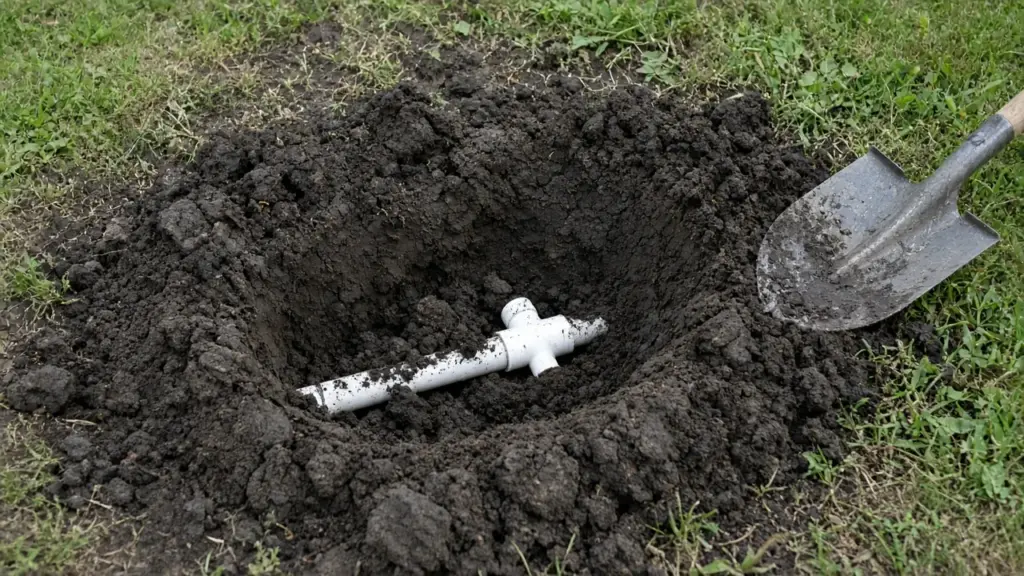
Ask anyone who has dug a hole in much of Dallas and they will describe the same soil: dark, dense clay that sticks to the shovel after a rain and turns nearly as hard as concrete in August. This black clay is common across the Blackland Prairie region, which includes much of Dallas County. It is excellent at holding water and nutrients, and it is a big reason Dallas lawns can look so good. It also makes sprinkler repair slower, messier, and more demanding than it is in sandy or loamy soils.
This guide explains why black clay complicates irrigation repair and what a good repair looks like in these conditions.
What Makes Black Clay Different
Clay soils are made of extremely fine particles. Many Dallas clays also contain minerals that swell when they absorb water and shrink when they dry. That gives them a few defining traits:
- Sticky and heavy when wet. Wet clay clings to tools, boots, and pipe, and it is heavy to move.
- Hard when dry. In summer droughts, clay can become extremely hard and open wide cracks.
- Slow to drain. Water moves through clay slowly, so holes fill with water and stay wet.
- Constantly moving. Seasonal swelling and shrinking pushes and pulls on everything buried in it.
Our Dallas clay soil guide covers how these traits affect watering. This article focuses on repairs.
How Clay Complicates Common Repairs
Digging takes longer
In wet clay, every shovelful sticks and has to be scraped off. In dry clay, digging can feel like chipping rock. Either way, exposing a broken pipe or a buried valve takes more time and care than in sandy soil. Technicians often wet very dry clay slightly to make it workable, or wait for better conditions for large jobs.
Holes fill with water
When a pipe breaks in clay, the water has nowhere to go. The repair hole becomes a muddy pool that must be bailed or pumped out before the break can be seen. Clean, dry pipe surfaces matter for glued repairs, so this step cannot be skipped.
Leaks are harder to find
Water in clay tends to travel along the loose soil of the original pipe trench instead of soaking straight down. The visible wet spot may be several feet from the actual break. Our guide to signs of a hidden leak in clay soil explains how to narrow it down.
Debris gets into the system
Clay particles are fine enough to get into open pipe during a repair. Once inside, they can clog nozzle screens and lodge in valve diaphragms. That is why flushing lines after any repair is essential in Dallas. A zone that will not shut off right after a pipe repair is often a sign that debris reached the valve; see our guide to a zone that will not turn off.
Heads do not stay put
Heads set in clay are pushed and pulled as the soil swells and shrinks. A head that was perfectly level in spring may tilt or sink by fall. Rigid connections crack under that movement.
Wire splices corrode
Wet clay holds moisture against buried wire splices. Splices made without proper waterproof connectors corrode, causing zones to fail intermittently.
What a Good Repair Looks Like in Clay
Flexible connections at heads
Using flexible swing pipe or swing joints between the lateral and the head lets the head move with the soil instead of cracking a fitting. This is one of the most important long-term improvements for Dallas systems. Our sprinkler head repair guide covers resetting heads this way.
Proper backfill and compaction
Backfilling around heads and pipes in layers, and firming the soil as it goes back in, helps prevent settling and depressions that collect water.
Clean pipe work
Pipe ends are kept clean and capped while work is underway. Glued joints are made on dry, clean surfaces. Repair couplings are chosen for the conditions.
Flushing before heads go back on
After a repair, the line is flushed with heads removed or nozzles off until water runs clear. That prevents clay from clogging nozzles and valves.
Sealed wire connections
Waterproof, gel-filled connectors are used on all splices.
Soil and turf restoration
Clay is replaced carefully and sod is laid back so the area recovers. Some settling is normal, but good restoration reduces it.
Timing Repairs Around the Weather
Clay behaves very differently depending on moisture:
- After heavy rain: holes flood and clay is sticky. Urgent repairs can still be made, but they take longer.
- In long dry spells: clay is hard and cracked. Digging is slower, and cracks can hide how pipes have moved.
- Moderate conditions: spring and fall often offer the easiest digging.
Emergency repairs cannot wait for ideal soil, but larger projects such as retrofits, zone additions, or reroutes are often easier to schedule in moderate conditions. Our installation and retrofit guide covers larger projects.
When Wet Clay Is a Drainage Problem
Sometimes the repair reveals that water is collecting because of grading or drainage, not because of a leak. If soil stays saturated after rain even with the system off, a drainage solution may be needed. Learn about our drainage solutions in Dallas.
Clay and the Rest of Your System
Black clay does not just affect the pipe at the point of repair. It shapes how the entire system performs.
- Valve boxes set in low spots fill with water and mud, burying valves and wire connections. Raising the box or adding gravel beneath it helps.
- Zones on clay need cycle and soak programming so water can soak in. Our controller programming guide explains how to set it up.
- Spray heads apply water faster than clay can absorb it, so lower-rate rotary nozzles or rotors often reduce runoff after a repair or retrofit.
- Drip lines in beds work well with clay because they apply water slowly, but they still need filters to keep fine particles out of emitters.
Thinking about the whole system, rather than just the broken part, is what keeps the same repair from being needed again next season.
Tips for Homeowners
- Mark heads and pipe routes before aerating, edging, or installing fences.
- Keep valve boxes clear so they can be opened without digging.
- Report wet spots early, before clay becomes saturated over a large area.
- Ask for flexible connections and line flushing when repairs are made.
- Expect minor settling over repair holes and top it off as needed.
Frequently Asked Questions
Why does my sprinkler repair area sink after a few weeks?
Clay settles as it dries and compacts. Proper layered backfill reduces settling, and topping off low spots with soil after a few weeks is normal.
Why did my nozzles clog right after a pipe repair?
Fine clay particles can enter the pipe during a repair. Flushing the line before reinstalling heads helps prevent this.
Is it better to wait for dry weather to repair a leak?
Urgent leaks should be repaired promptly, since they waste water and saturate the soil. Larger planned projects are often easier in moderate conditions.
Why do my heads keep tilting?
Expansive clay shifts heads as it wets and dries. Flexible swing pipe and firm backfill help heads stay level longer.
Do repairs cost more in clay?
Repairs in clay can take longer because of digging, water removal, and flushing. A good repair done once is still less costly than repeated fixes.
Get Clay-Smart Sprinkler Repairs
Our team repairs Dallas systems with flexible connections, careful flushing, and proper backfill so repairs last. Learn about our sprinkler repair service, or contact us to schedule.
Request Service or call 214-227-7444
We serve homes throughout Dallas and nearby North Texas communities.