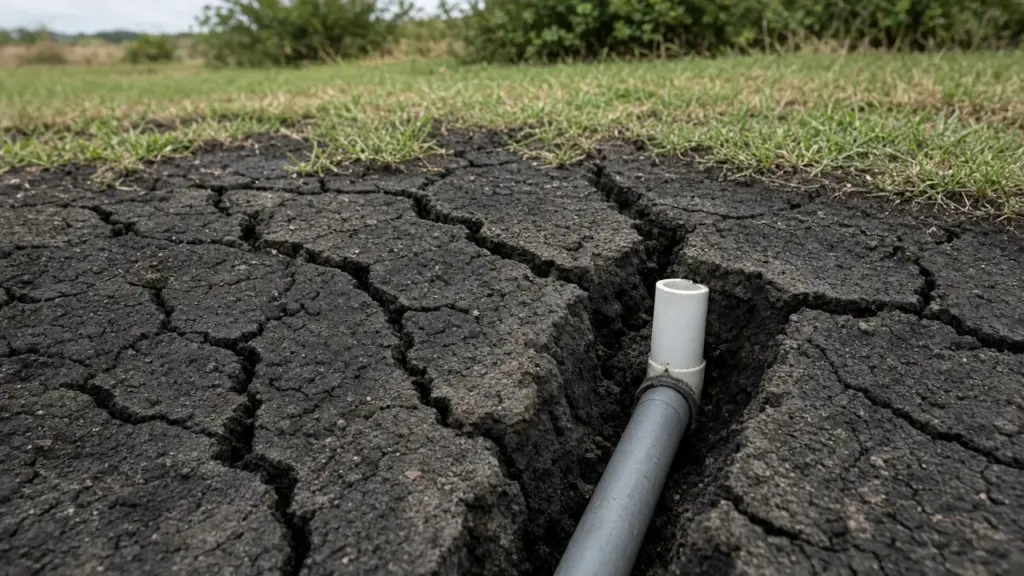
Anyone who has lived in Dallas through a dry summer has seen the cracks: gaps in the lawn and beds wide enough to slip a finger into, sometimes much deeper than they look. Those cracks are a sign of expansive clay shrinking as it dries. They affect more than appearance. As clay shrinks and swells, it moves everything buried in it, including sprinkler pipe, fittings, heads, and valve boxes.
This guide explains why Dallas soil cracks, what that movement does to your irrigation system, and how to reduce the damage.
Why Dallas Clay Cracks
Much of Dallas sits on expansive clay, sometimes called blackland clay. These soils contain clay minerals that absorb water and swell, then release water and shrink. During long, hot, dry stretches, the soil loses moisture, shrinks, and pulls apart into cracks. When rain or irrigation returns, the soil swells and the cracks close.
The cycle repeats year after year. Our complete guide to Dallas clay soil explains the science in more detail.
What Cracking Does to Pipe
Shifting and bending
As soil shrinks, it pulls away from pipe and can leave sections unsupported. When it swells, it pushes back. Over many cycles, pipe shifts slightly up, down, and sideways. Rigid PVC does not bend easily, so stress concentrates at joints and fittings.
Cracked fittings
Elbows, tees, and couplings are the weak points. A fitting that has been stressed many times can crack. The leak may start small and grow.
Separated joints
A glued joint that was not made well can pull apart under repeated movement.
Stress at heads and risers
Heads connected with rigid risers transfer soil movement straight to the fitting below. Swing joints absorb some of that movement.
Our article on PVC versus poly pipe in older Dallas systems explains how each material handles movement.
What Cracking Does to Heads
- Tilted heads spray unevenly
- Sunken heads get blocked by turf
- Raised heads get hit by mowers
- Misaligned arcs spray sidewalks and walls
Our guide to raising sunken sprinkler heads covers height corrections.
What Cracking Does to Water Delivery
Water applied to cracked soil can run straight down the cracks, bypassing much of the root zone, or run off the hardened surface. Either way, less water reaches the grass roots where it is needed. That is one reason lawns can look stressed in late summer even when the system runs on schedule.
Signs of Crack-Related Damage
- New wet spots after the first rains of fall, when swelling soil stresses weakened fittings
- Weak pressure on a zone
- Heads that suddenly tilt or sink
- Water bubbling near fittings
- Rising water bills
Our guide to signs of a hidden sprinkler leak in clay soil covers more clues.
Reducing Damage
Keep moisture more consistent
Extreme swings between very dry and very wet soil cause the most movement. Deep, regular watering on your assigned days during dry periods helps limit extreme drying. Cycle and soak helps water soak in rather than run off cracked surfaces.
Water foundations with drip
Dallas allows foundations to be watered any day with drip, soaker hoses, hand-held hoses, or buckets. Consistent foundation moisture also protects pipe near the house. Our guide to foundation watering rules explains what is allowed.
Use swing joints
Swing joints between laterals and heads absorb movement that would otherwise crack fittings.
Repair leaks promptly
A leak softens surrounding clay, which swells unevenly and increases stress on nearby pipe.
Use proper backfill
After repairs, backfill in layers and firm each layer. Loose backfill settles and leaves pipe unsupported.
After the First Fall Rains
Late summer and early fall often bring the first significant rains after a dry stretch. As soil swells, weakened fittings that survived the summer may fail. Watch for new wet spots and weak zones in the weeks after the first good rains. Our year-round maintenance calendar includes fall checks.
Should You Fill Cracks?
Some homeowners fill cracks with soil or compost. That can help reduce water loss down cracks and improve the lawn surface. Avoid filling cracks with materials that do not behave like soil. The best long-term approach is managing moisture so cracks do not open as wide in the first place.
Aeration and Organic Matter
Core aeration can help water penetrate clay. Over time, topdressing with compost can improve surface soil structure. These practices help irrigation work better and may reduce the severity of surface cracking.
When to Replace Pipe
If a zone has repeated breaks, especially at fittings, or the pipe is old and brittle, replacing a section may be more practical than patching repeatedly. A professional can evaluate whether the pipe material, depth, or layout is contributing to repeated failures.
The Role of Drainage
Poor drainage leads to soil that stays saturated after rain, then dries dramatically in summer. Improving drainage can reduce extreme swings between wet and dry. Poorly drained low spots often show the widest summer cracks and the most pipe trouble.
A Seasonal Picture
Here is how the cycle often plays out in a Dallas yard. In spring, rains keep soil swollen and pipe supported. By midsummer, the soil dries, cracks open, and pipe loses support in places. Heads tilt, and a fitting or two begins to weep. In early fall, the first heavy rains swell the soil quickly, and those weakened fittings finally fail. Knowing this pattern helps you watch for problems at the right times: coverage checks in midsummer and leak checks after the first fall rains.
What Homeowners Can Do Today
If cracks are already open in your yard, start with a zone-by-zone walk during a manual cycle. Fix tilted and sunken heads, note any wet spots, and confirm your controller uses cycle and soak. Water deeply on your assigned days rather than lightly more often. Add or check a foundation drip line. These steps will not stop clay from moving, but they reduce the extremes that do the most damage.
Cracks Near Hardscape
Cracks often open widest along sidewalks, driveways, and patios, where concrete shades one side of the soil and radiant heat dries the other. Pipe that runs parallel to concrete edges is especially exposed to this movement. Heads along those edges tilt more often, and fittings near slab corners crack more often. If one edge of your lawn keeps producing leaks, the soil movement along that concrete is a likely contributor, and rerouting a short section of pipe a little farther from the slab can help.
Frequently Asked Questions
Why does my yard crack in summer?
Dallas clay shrinks as it dries, pulling apart into cracks during hot, dry weather.
Can soil cracks break sprinkler pipes?
Repeated shrinking and swelling stresses pipe, especially at fittings, and can lead to cracks and separated joints.
How can I reduce soil cracking?
Keep moisture more consistent with deep watering on assigned days, cycle and soak, drip along foundations, aeration, and organic matter.
Why do leaks appear after the first fall rain?
Swelling soil stresses fittings that were weakened during summer shrinkage, and some fail.
Get Help With Clay-Related Repairs
We repair pipe, fittings, and heads damaged by shifting clay and help set schedules that reduce extreme moisture swings. See our drainage service, or contact us to schedule.
Request Service or call 214-227-7444
We serve homes throughout Dallas and nearby North Texas communities.