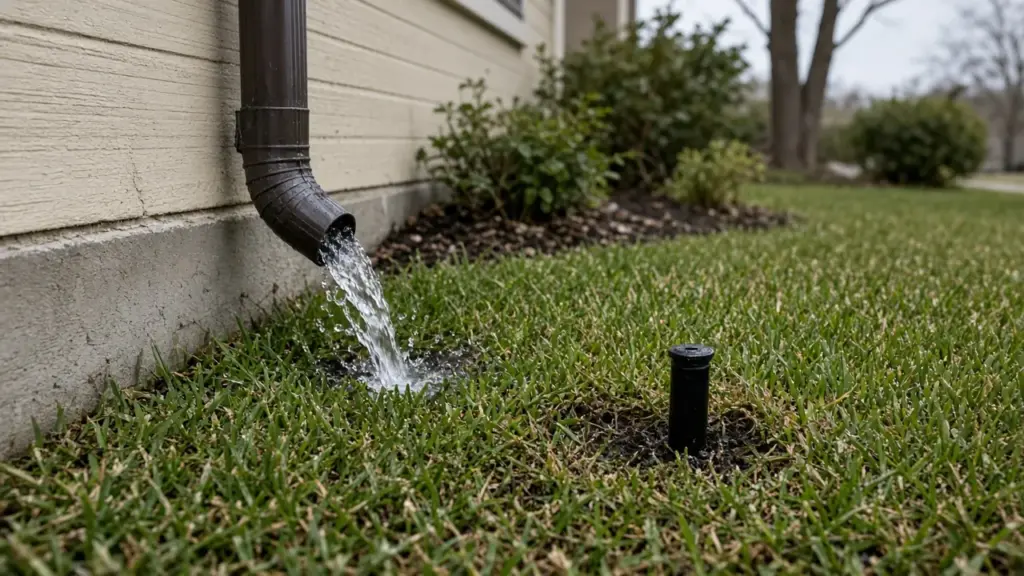
A typical Dallas roof sheds a remarkable amount of water during a storm, and gutters channel all of it to a handful of downspouts. Where those downspouts discharge, the soil gets far more water than the rest of the yard. If a sprinkler zone also waters that area, the result is often a soggy bed, eroded soil, dying plants, or water pooling against the foundation.
This guide explains how downspouts and irrigation overlap, the problems it causes, and how to fix them.
How Much Water Downspouts Deliver
Every inch of rain on a roof becomes a large volume of water concentrated at the downspouts. A single downspout can discharge many gallons during a moderate storm. That water hits a small patch of ground, often a bed right next to the foundation.
Problems Caused by Overlap
Double Watering
When a sprinkler zone waters the same area as a downspout, that area receives irrigation plus concentrated roof runoff. Even with a rain sensor, the soil near downspouts may stay wet long after the rest of the yard dries, and the next irrigation cycle adds more.
Soggy Beds and Root Rot
Constantly wet soil deprives roots of oxygen. Shrubs near downspouts often decline, with yellowing leaves and dieback.
Erosion
Downspout discharge can wash out mulch and soil, exposing drip lines and sprinkler heads, and creating channels in beds.
Foundation Concerns
Water pooling near the foundation can cause uneven soil moisture. In Dallas clay, which swells when wet and shrinks when dry, consistent moisture is better than cycles of saturation and drying. Downspouts discharging directly against the foundation concentrate water where it can do the most harm.
Sprinkler Damage
Heads and drip lines near downspouts can be buried by soil washed from beds, or exposed by erosion and then damaged.
Recognizing Overlap Problems
- Beds near downspouts that stay wet for days after rain
- Plants declining near downspouts but thriving elsewhere
- Mulch washed away
- Standing water near the foundation
- Mosquitoes breeding in pooled water
- Heads or drip tubing exposed or buried
Our guide to standing water after watering helps sort out irrigation versus drainage issues.
Fixing the Downspout Side
- Extensions: extend downspouts to discharge several feet from the foundation, onto a surface that slopes away.
- Splash blocks: spread and direct discharge away from the house.
- Underground drain lines: connect downspouts to buried pipe that carries water to a suitable outlet, such as a lower area of the yard or the curb where allowed.
- Rain barrels: capture some roof runoff for later use.
- Regrading: make sure soil slopes away from the foundation.
Our guide to French drains and sprinkler lines covers how drainage systems and irrigation can coexist, and our drainage service addresses persistent water problems.
Fixing the Irrigation Side
- Reduce or remove irrigation near downspouts. Cap spray heads or remove drip emitters in areas that receive regular roof runoff.
- Separate zones so areas near downspouts can be watered less.
- Convert to drip so you can control water plant by plant.
- Check the rain sensor so the system skips cycles after rain.
Rain Barrels and Dallas Rules
Captured rainwater can supplement irrigation. Dallas’s watering schedule applies to potable city water; according to Dallas Water Utilities, residents using non-potable water such as rainwater for irrigation are not required to follow the watering schedule, though permanently installed alternate-source systems require a permit and signage. Check current city guidance before installing a permanent system.
Underground Drain Lines and Sprinkler Pipe
When installing underground downspout drains, be careful not to damage irrigation lines, which often run through the same beds. Locate and mark sprinkler pipe before digging. Keep drain pipe and irrigation pipe separate and clearly identified. Call 811 before digging.
Downspouts and Drip Lines
Drip tubing in beds near downspouts is especially vulnerable to erosion. Secure tubing with stakes and a good layer of mulch. Consider routing drip around the downspout discharge area.
Gutters Matter Too
Clogged gutters overflow along their length, dumping water on beds and heads that are not near downspouts. Keep gutters clean, especially after fall leaf drop, so water goes where the downspouts direct it.
Foundation Watering
Downspout water arrives in bursts, not consistently. Consistent foundation moisture matters in Dallas clay, which is why many homeowners use soaker hoses or drip in foundation beds. Dallas allows foundation watering any day and at any time with a hand-held hose, soaker hose, drip irrigation, or bucket. Our guide to foundation watering with drip lines explains setups.
A Quick Assessment
- Locate every downspout and note where it discharges
- Check which sprinkler zones water those areas
- Look for soggy soil, erosion, and plant decline
- Extend or redirect downspouts away from the foundation
- Reduce irrigation in areas that receive roof runoff
- Test the rain sensor
Clay Soil Makes Overlap Worse
Dallas clay absorbs water slowly. When a downspout empties a large volume of water onto a small area of clay, most of it cannot soak in quickly, so it pools or runs across the surface. Compacted soil near the house, common after construction, makes this worse. Our guide to compacted soil and poor water absorption explains how compaction limits absorption, and our clay soil sprinkler guide covers clay-specific irrigation strategies.
Watching During a Storm
The best way to understand how water moves around your house is to watch during a steady rain. Put on a raincoat and walk the perimeter. Note where each downspout discharges, where water flows next, and where it collects. Look for gutters overflowing at corners and for water running toward the foundation. A few minutes of observation often reveals problems that are invisible on a dry day, and it shows which sprinkler zones share those areas.
Plants That Tolerate Wet Spots
If an area near a downspout will always receive extra water, consider plants that tolerate periodically wet soil, rather than plants that need sharp drainage. A local nursery can suggest options suited to North Texas conditions. Combined with reduced irrigation, the right plant choice turns a problem spot into a healthy bed.
Seasonal Differences
Spring storms in North Texas can bring heavy rain in short periods, while summer may pass with little rain at all. During wet seasons, reduce irrigation near downspouts further and let the rain sensor skip cycles. During dry stretches, areas near downspouts may need normal watering again. Adjusting zone run times with the seasons keeps these areas balanced.
Frequently Asked Questions
Can downspouts cause soggy flower beds?
Yes. Downspouts concentrate roof runoff, and if sprinklers also water the area, beds can stay saturated.
Should I water beds near downspouts?
Beds that receive regular roof runoff may need less irrigation. Consider reducing or removing emitters and heads there.
How far should downspouts discharge from the foundation?
Extend them far enough that water discharges onto ground sloping away from the house. Several feet is a common goal.
Do Dallas watering rules apply to rain barrel water?
According to Dallas Water Utilities, non-potable sources such as rainwater are not subject to the watering schedule, though permanent systems require a permit and signage.
Get Help With Soggy Areas
We adjust irrigation near downspouts and address drainage problems. See our drainage service, or contact us to schedule.
Request Service or call 214-227-7444
We serve homes throughout Dallas and nearby North Texas communities.