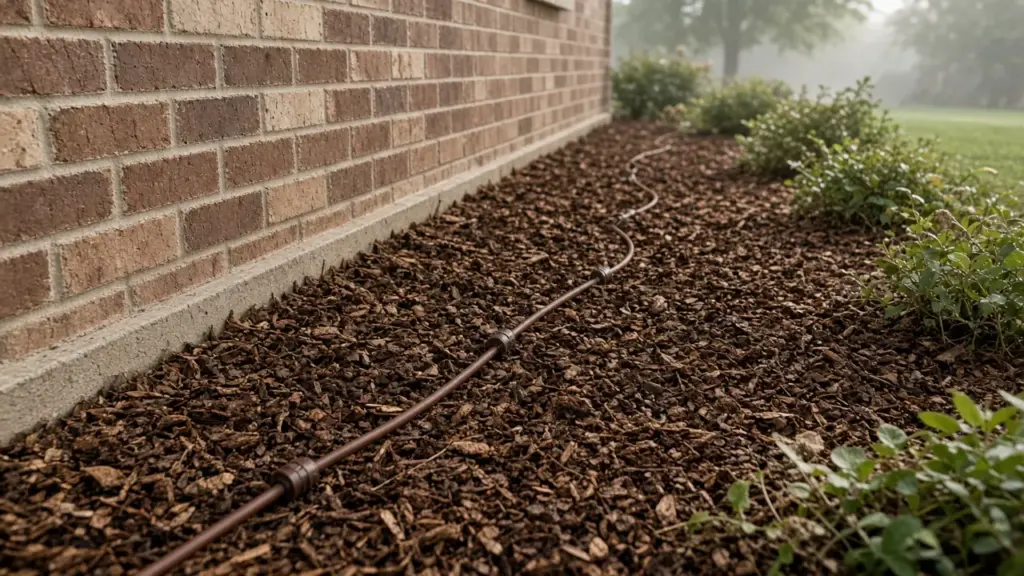
Many Dallas homes sit on slab foundations over expansive clay. Clay swells when wet and shrinks when dry, and dramatic swings in soil moisture around a foundation are something homeowners and foundation professionals try to avoid. A foundation drip line is one of the most consistent ways to add water around the perimeter during dry periods, and Dallas rules allow foundations to be watered with drip on any day, at any time.
This guide focuses on the practical side: how to lay out a foundation drip line, how to zone it, and how to keep it working. For the rules themselves, see our guide to foundation watering rules for Dallas homeowners. For advice on your specific foundation, consult a qualified foundation professional.
Why Drip Instead of Spray
Spray heads near the foundation mostly wet walls, windows, and walkways. Water that hits brick runs down and pools unevenly. Spray also loses water to wind and evaporation, and spray zones are limited to your assigned days and allowed hours.
Drip line delivers water slowly and evenly into the soil. It is quiet, efficient, and hidden under mulch. On clay, slow application means water soaks in instead of running off.
Our complete guide to Dallas clay soil explains how clay absorbs water.
Components of a Foundation Drip Zone
- Valve: a dedicated zone valve so the foundation line can run on its own schedule
- Filter: keeps debris out of emitters
- Pressure regulator: reduces pressure to the range drip tubing needs
- Supply tubing: solid tubing that carries water to the start of each run
- Inline emitter tubing: tubing with emitters built in at regular spacing
- Fittings and stakes: to connect runs and hold tubing in place
- Flush caps or valves: at the ends of runs for cleaning
Our drip irrigation repair and design guide covers these head-of-zone components in more detail.
Placement
Foundation lines are usually installed a short distance out from the slab rather than directly against it, then covered with mulch. The aim is to moisten the soil near the foundation evenly. Avoid placing tubing where water will pond against the slab or run toward the house. Specific distances vary by recommendation, so follow guidance from a foundation professional where available.
Emitter Spacing and Flow
Inline emitter tubing comes in different emitter spacings and flow rates. Closer spacing and lower flow produce a more continuous wetted strip in clay, where water spreads sideways slowly. Keep emitter flow consistent throughout the zone so every part of the perimeter gets similar water.
Zoning by Exposure
The sides of a house do not dry at the same rate. South- and west-facing sides get more sun and heat, while north sides and areas under trees stay cooler. If the whole foundation runs on one zone, shaded sides may stay wetter than sunny sides.
Options include:
- Separate zones for sunny and shaded sides
- Different emitter spacing on different sides
- Adjusting run times seasonally based on observation
Working Around Beds and Hardscape
Most foundations have beds along some sides, walkways or patios along others, and sometimes driveways or AC pads.
- Beds: the foundation line can double as bed irrigation, or run alongside a separate bed drip zone.
- Walkways and patios: tubing may need to pass under or around. A sleeve under concrete makes this easier.
- AC pads and utilities: route tubing carefully around them.
- Downspouts: avoid adding drip right where downspouts already discharge a lot of water.
Scheduling
Because Dallas allows foundation watering with drip any day and any time, you can set the foundation zone on its own program. The right schedule depends on weather, soil, and your foundation professional’s advice. The goal is consistency: avoiding extreme drying in long dry spells without keeping soil soggy.
Seasonal adjust helps. Run the zone more in hot, dry months and less or not at all in cool, wet months.
Watching the Soil
Check the soil along the foundation periodically:
- A gap between soil and slab, or deep cracks, suggests drying
- Muddy soil or standing water suggests too much water
- Differences between sides suggest zoning or run-time adjustments
Maintenance
- Clean the filter a few times a year
- Flush the lines in spring
- Check for leaks and damaged tubing, especially after landscaping work
- Keep mulch covering tubing to protect it from sun
- Inspect for rodent or pet damage
Our guide to drip emitters clogging covers finding and clearing clogs.
Converting Existing Spray Heads
If your foundation beds are watered by spray heads, converting that zone to drip is often straightforward. The spray heads can be capped or fitted with drip conversion parts, and drip tubing laid through the bed. Our guide to converting spray zones in flower beds to drip walks through it.
Common Mistakes
- Tubing right against the slab where water can pond
- One zone for all sides regardless of sun exposure
- No filter or regulator, leading to clogs and blowouts
- Leaving the zone on the same schedule year-round
- Forgetting the zone exists until a problem appears
Sprinkler Leaks Near the Foundation
A leaking sprinkler line near the house can add a lot of uncontrolled water. If you see a soggy area near the foundation that does not match your drip schedule, look for a leak. Our guide to standing water after watering helps sort out the source.
Mulch and Grading Around the Line
Mulch protects drip tubing from sun and helps hold moisture in the soil, but piling it high against the house can cover weep holes and invite pests. Keep mulch at a reasonable depth and pulled back from siding. Soil around the foundation should slope away from the house so rain and any excess irrigation water move outward, not toward the slab. If the grade slopes toward the house, address that as part of any drainage plan before relying on a drip line.
When to Involve a Professional
A foundation drip system is a straightforward drip zone, but it ties into your irrigation manifold and controller. A professional can add a valve, install the filter and regulator, route tubing under hardscape, and set the schedule. If you already have foundation concerns, coordinate with a foundation professional first.
Testing a New Foundation Line
After installation, run the zone and walk the perimeter. Water should appear as small damp spots along the tubing within a short time, gradually spreading into a continuous strip. Look for any fitting that sprays, any section that stays dry, and any place where water runs toward the slab. Check the pressure regulator and filter for leaks. After a few hours, dig a small test hole with a trowel in a couple of spots to see how deep and wide the moisture has spread. That tells you whether run times are reasonable for your soil.
Frequently Asked Questions
How far from the foundation should a drip line be?
Typically a short distance out from the slab, not against it. Follow a foundation professional’s guidance for your home.
Should the foundation drip line be on its own zone?
Yes. A dedicated zone lets you schedule it separately from lawn zones, which is useful since Dallas allows drip any day.
Do all sides of the house need the same water?
No. Sunny sides dry faster than shaded sides, so separate zones or different emitter spacing can help.
Can I use my existing bed drip for foundation watering?
Often yes, if it runs along the foundation. Make sure coverage is even around the perimeter.
Get Help With a Foundation Drip Zone
We design and install foundation drip lines and convert spray zones to drip. See our drainage service, or contact us to schedule.
Request Service or call 214-227-7444
We serve homes throughout Dallas and nearby North Texas communities.