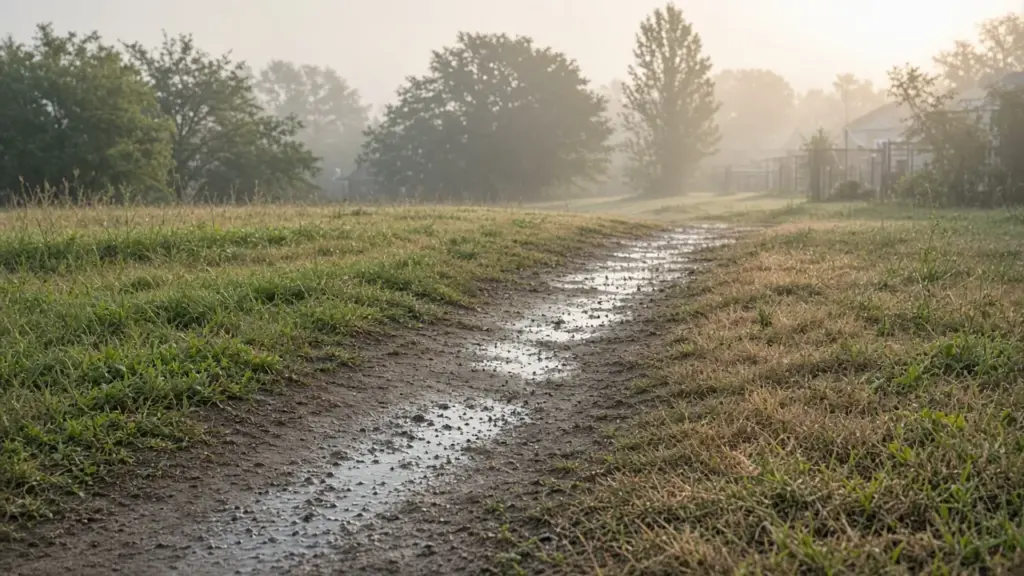
If your sprinklers run and the water seems to sit on the surface, run down the sidewalk, or puddle in low spots while the grass still looks thirsty, compacted soil may be the problem. Dallas clay is already slow to absorb water. When it is compacted, water intake can slow further, leaving roots dry even when the system runs normally.
This guide explains what compaction is, how to recognize it, and what you can do about it.
What Compaction Is
Healthy soil has pore spaces between particles that hold air and water. Compaction squeezes those spaces closed. Water cannot move into the soil easily, air cannot reach roots, and roots struggle to grow through dense soil.
Clay is especially prone to compaction because its particles are tiny and pack tightly, particularly when wet.
Common Causes in Dallas Yards
- Construction. Heavy equipment during building or remodeling compacts soil, often deeply. New construction lots commonly have compacted soil beneath a thin layer of topsoil.
- Foot traffic. Paths worn across the lawn, play areas, and pet runs compact the surface.
- Vehicles. Parking on grass or driving equipment across the yard.
- Working wet soil. Walking, mowing, or digging when clay is saturated compresses it.
- Lack of organic matter. Soils low in organic matter tend to compact more easily.
Signs of Compacted Soil
- Water puddles or runs off quickly during watering
- Thin, weak grass, especially along paths and high-traffic areas
- Hard ground that resists a screwdriver or soil probe
- Shallow roots
- Weeds that tolerate compaction, such as some broadleaf weeds and sedges, gaining ground
- Standing water after rain in areas that are not low spots
A simple test: push a long screwdriver into the soil a day after watering. In healthy soil, it should push in several inches with moderate pressure. If it stops at an inch or two, the soil may be compacted.
Compaction or Irrigation Problem?
Poor absorption can look like other issues. Runoff might come from sprinklers applying water too fast, a broken head, or excessive run times. Dry grass might mean poor coverage. Before treating compaction, check that the system is working properly. Our guide to standing water after watering helps sort out whether the cause is irrigation or drainage.
Adjust Irrigation First
Whether or not compaction is present, a few irrigation changes help water soak into clay:
- Use cycle and soak. Split run times into shorter cycles with breaks. See our guide to why black clay makes sprinkler repair harder for more on how clay behaves.
- Consider lower-precipitation nozzles. Rotary nozzles apply water more slowly than traditional spray nozzles, giving clay more time to absorb it.
- Fix runoff sources. Adjust heads that spray pavement and repair broken heads.
Core Aeration
Core aeration is the most common treatment for compacted lawns. An aerator pulls small plugs of soil from the lawn, creating holes that let water, air, and nutrients move into the root zone. The plugs break down on the surface over time.
A few tips:
- Timing: Warm-season grasses are best aerated during active growth, generally late spring through early summer in Dallas, so the lawn can recover quickly.
- Moisture: Aerate when soil is moist but not saturated. Dry clay is too hard; wet clay smears.
- Mark sprinkler heads first. Aerator tines can damage heads, shallow pipes, and drip lines. Flag every head and avoid areas with shallow lines.
Adding Organic Matter
Topdressing with compost after aeration adds organic matter to the soil. Over time, organic matter improves soil structure and water absorption. Leaving grass clippings on the lawn also returns organic matter.
Reducing Traffic
Look for ways to reduce ongoing compaction:
- Add stepping stones or a path where people regularly walk
- Avoid parking on the lawn
- Keep off wet soil when possible
- Rotate play areas if practical
Compaction in Beds
Compaction affects planting beds too, especially near foundations and in new construction. Loosening bed soil and adding compost before planting helps roots establish. Mulch protects the surface and adds organic matter as it breaks down. Drip irrigation delivers water slowly, which suits clay well.
When Drainage Is the Real Issue
Sometimes water pools because it has nowhere to go. Low spots, poor grading, or downspouts discharging onto the lawn can cause persistent wet areas even without compaction. In those cases, drainage improvements such as regrading or a French drain may be needed. Our guide to French drains and sprinkler lines explains how drainage and irrigation can work together, and our drainage service addresses persistent water problems.
Compaction and Foundations
Soil near foundations can be compacted from construction. Consistent moisture near foundations matters in Dallas clay. Drip lines and soaker hoses apply water slowly, allowing better absorption in dense soil. Dallas allows foundation watering on any day and at any time with a hand-held hose, soaker hose, or drip irrigation. Our guide to foundation watering with drip lines covers setup.
New Construction Lots
Many newer homes sit on soil that was graded and compacted during construction, sometimes with only a thin layer of topsoil over dense subsoil. Lawns on these lots often struggle with runoff and shallow roots. Aeration, organic matter, and patient cycle-and-soak watering help over time. If you are planning irrigation for a newer home, design choices such as lower-precipitation nozzles can make a real difference.
What Not to Do
- Do not simply water more. Longer run times on compacted soil mostly increase runoff.
- Do not till an established lawn. Tilling destroys turf and can make compaction worse below the tilled layer.
- Do not aerate over unmarked sprinklers. Tines and heads do not mix.
- Do not add sand alone to clay. Small amounts of sand mixed into clay can create a denser, concrete-like soil rather than improving drainage.
Be Patient
Improving compacted clay is a gradual process. One aeration will help, but meaningful improvement in soil structure usually comes from repeated aeration, added organic matter, and reduced traffic over several seasons. Meanwhile, cycle-and-soak irrigation makes the most of the water you apply.
Protecting Irrigation During Aeration
Before an aeration service arrives, run each zone briefly and place a flag next to every head, including heads hidden in turf. Mark valve boxes, drip lines in beds that border the lawn, and any spots where you know pipe is shallow, such as near sidewalks and driveways. Afterward, walk each zone again to catch damaged heads or new leaks. A head struck by a tine may leak at its base or stop popping up properly, and it is easier to fix right away than after the damage spreads.
Measuring Improvement
Track progress with the same screwdriver test you used to diagnose compaction. Test the same spots a day after watering every few months. As aeration and organic matter take effect, the probe should push in more easily and to a greater depth. You may also notice less runoff at the end of each cycle, which can let you lengthen cycles slightly.
Frequently Asked Questions
How do I know if my soil is compacted?
Water that puddles or runs off quickly, thin grass, and hard soil that resists a screwdriver are common signs.
Does aeration help Dallas clay soil?
Yes. Core aeration creates channels for water and air and is the most common treatment for compacted lawns.
When should I aerate a warm-season lawn in Dallas?
During active growth, generally late spring through early summer, when soil is moist but not saturated.
Will aeration damage my sprinkler system?
It can if heads and shallow lines are not marked. Flag every head and avoid shallow lines before aerating.
Get Help With Runoff and Absorption
We adjust irrigation for clay soil, repair damaged heads, and address drainage problems. See our drainage service, or contact us to schedule.
Request Service or call 214-227-7444
We serve homes throughout Dallas and nearby North Texas communities.