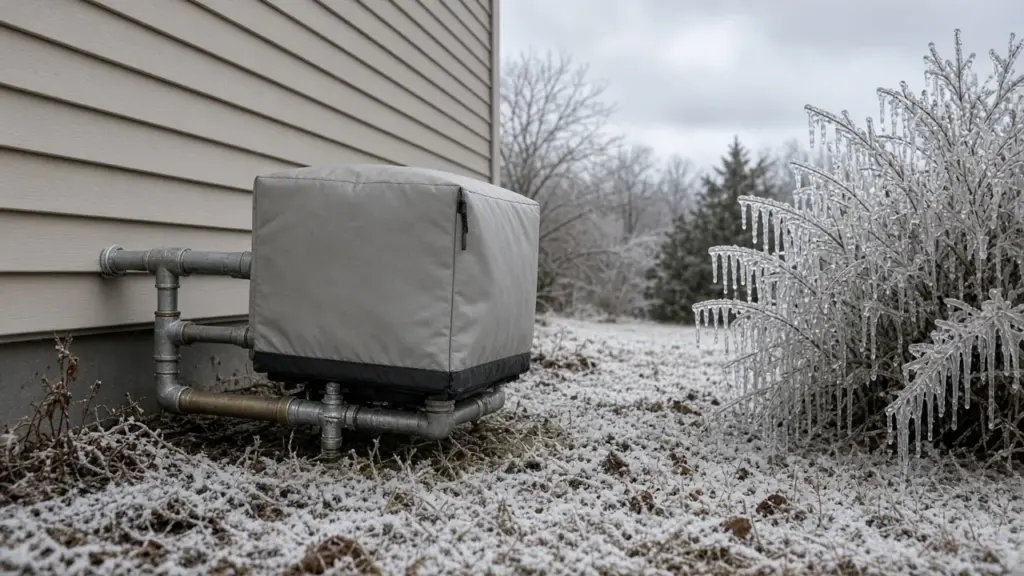
When a hard freeze is in the Dallas forecast, the part of your sprinkler system most at risk is the backflow preventer. It sits above ground, full of water, exposed to wind, and made of metal that conducts cold. A cracked backflow preventer means no irrigation until it is repaired, and because the device protects the public drinking water supply, repairs and any required testing should be handled by licensed professionals.
The good news is that a few simple steps before the cold arrives prevent most freeze damage. This guide covers insulated covers, permanent enclosures, when to shut off and drain the assembly, and common mistakes to avoid.
Why Backflow Preventers Crack
Water expands as it freezes. Inside a backflow preventer, there is little room for that expansion, so ice presses outward on the body, bonnet, and internal parts. Brass and bronze bodies can crack, and plastic or rubber internal parts can split or deform. Wind makes it worse by carrying heat away from the metal faster.
Our guide to what a backflow preventer does explains the parts inside the assembly.
Option 1: An Insulated Cover
The most common protection is an insulated cover designed for backflow assemblies. These are padded bags or jackets sized to fit over the assembly and its risers.
How to use one
- Choose a cover sized for your assembly, tall enough to cover the risers down to the ground.
- Fit it before temperatures drop, not after ice forms.
- Make sure it reaches the soil so cold air cannot flow up underneath.
- Secure it so wind cannot lift it.
- Remove it once the freeze has passed so moisture does not stay trapped against the metal.
Covers work well for typical short Dallas cold snaps. For long, severe freezes, combine a cover with shutting off and draining the assembly.
Option 2: A Permanent Enclosure
Insulated enclosures are rigid boxes that sit over the assembly year-round. Some are simply insulated shells; others are designed to hold a small heat source. Enclosures:
- Protect against both cold and physical damage from mowers and vehicles
- Hide the assembly for a cleaner look
- Stay in place, so you do not have to remember to install a cover
Enclosures must still allow access for testing and service, and installation should respect code requirements for the assembly’s position and height. A technician can recommend an option that fits your assembly.
Option 3: Shut Off and Drain
For prolonged freezes, or if you will be away, shutting off and draining the assembly offers the most protection.
- Turn the controller off so no zone tries to run.
- Close the irrigation shutoff valve that supplies the backflow preventer.
- Open the test cocks to release pressure and water, following the manufacturer’s instructions.
- Set the shutoff valves on the assembly as directed by the manufacturer. Some procedures call for leaving ball valves partially open so water does not stay trapped inside.
- Insulate the assembly as well.
If you are not comfortable with these steps or unsure of your model’s procedure, have a professional do it. Opening the wrong valve at the wrong time can spray water or leave water trapped where it can freeze.
Our guide to winterizing a Dallas sprinkler system covers the rest of the system.
Do Not Forget the Pipes
The risers leading into and out of the backflow preventer are just as exposed. Cover them along with the assembly. Any other above-ground irrigation pipe, such as pipe running along a wall to a bed, needs protection too.
Common Mistakes
- Waiting too long. Protection should go on before the freeze, while the metal is still above freezing.
- Using a wet towel or blanket. Wet fabric freezes and offers little insulation. If you must improvise, keep materials dry and wrap them with a waterproof outer layer.
- Wrapping only the top. Cold air rises from below if the cover does not reach the ground.
- Leaving test cocks open. After draining, close them before restoring water.
- Turning water back on too fast. Open the supply slowly to avoid pressure surges.
- Ignoring small leaks after the freeze. A tiny weep can become a larger crack under pressure.
After the Freeze
- Remove covers once temperatures stay above freezing.
- Inspect the body, bonnet, and risers for cracks or bulges.
- Close test cocks and set valves to their normal positions.
- Open the supply slowly and watch for leaks.
- Run each zone and check for broken heads or wet spots.
If the assembly leaks, close the irrigation shutoff and schedule a repair. Our year-round maintenance calendar includes post-freeze checks, and our backflow prevention and code guide explains testing requirements.
Your Freeze Sensor Still Matters
Protecting the backflow preventer keeps it from cracking, but the system should not run during freezes either. Dallas requires a working rain and freeze sensor on automatic systems. Make sure it is connected and active, and consider turning the controller off during extended freezes.
Choosing Between a Cover and an Enclosure
Both options have a place, and the right answer depends on your yard and habits.
A cover makes sense when:
- The assembly sits in a spot where a permanent box would look out of place or block a walkway
- You are comfortable watching forecasts and putting the cover on before each freeze
- You want a low-cost option that stores easily the rest of the year
An enclosure makes sense when:
- You travel in winter or tend to forget cold snaps until the night they arrive
- The assembly sits near a driveway, curb, or mowing path where physical damage is a risk
- You would like the assembly hidden from view year-round
Some homeowners use both: a rigid enclosure for everyday protection plus an extra insulated layer or a full shutdown during the rare deep freeze. Whatever you choose, the assembly must remain accessible for annual testing where required.
A Simple Pre-Freeze Checklist
Keep this short list handy for the next time a hard freeze shows up in the forecast:
- Controller off or rain delay set
- Freeze sensor connected and working
- Cover or enclosure in place, reaching the ground
- Exposed risers and above-ground pipes insulated
- For long freezes or travel, supply shut off and assembly drained per the manufacturer
- A reminder set to remove covers and inspect once the cold passes
Running through this checklist takes only a few minutes and can save a costly repair and weeks without irrigation in spring.
Frequently Asked Questions
When should I cover my backflow preventer?
Before a hard freeze arrives, ideally the day before, while the metal is still above freezing.
Is a cover enough for a long freeze?
For prolonged or severe freezes, combine a cover with shutting off and draining the assembly.
Can I leave an insulated cover on all winter?
Covers are best removed between freezes so moisture does not stay trapped against the metal. A rigid enclosure is designed to stay in place.
What if I am not home when a freeze hits?
Shut off and drain the assembly before you leave, or ask a technician to do it.
My backflow preventer cracked. Can I just replace the cracked part?
Sometimes a bonnet or internal part can be replaced; sometimes the whole assembly must be replaced. Testing may be required afterward.
Get Freeze Protection Help
We can inspect your backflow preventer, recommend covers or enclosures, and repair freeze damage. Learn about our sprinkler repair service, or contact us to schedule.
Request Service or call 214-227-7444
We serve homes throughout Dallas and nearby North Texas communities.