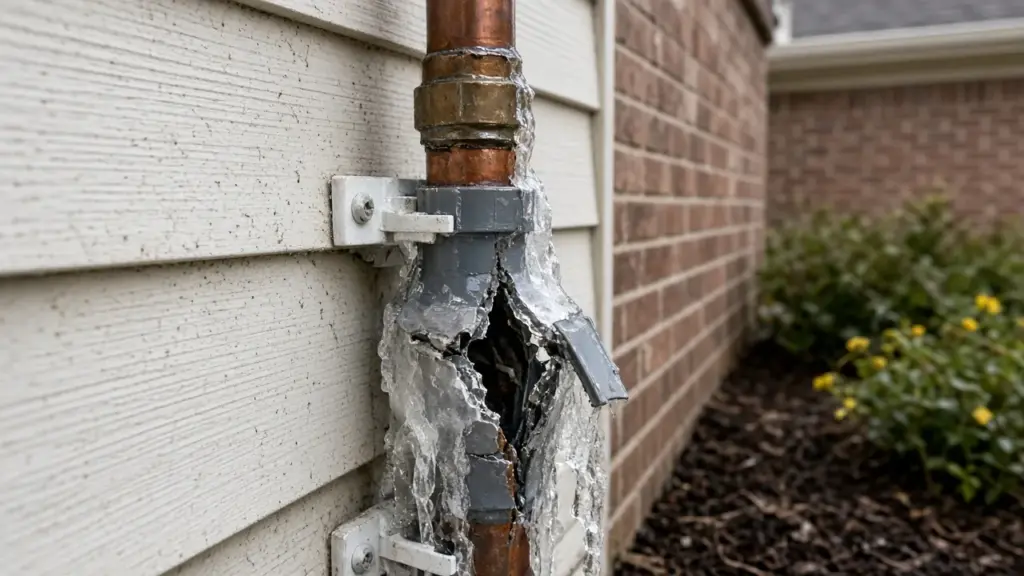
Dallas winters are usually mild. Many years bring only a handful of nights below freezing, and daytime temperatures often climb back above freezing by afternoon. So it surprises many homeowners when a short cold snap leaves them with a cracked backflow preventer or a split pipe.
The reason is that the parts of an irrigation system most vulnerable to freezing are exposed above ground, and it does not take a long freeze to damage them. This guide explains why short freezes still cause damage and how to protect your system.
Water Expands When It Freezes
Water expands as it turns to ice. In a closed pipe or valve body, that expansion has nowhere to go. The pressure can crack plastic, split copper, and break brass castings. Even a small amount of ice forming in the right spot can cause damage.
Above-Ground Parts Are Most at Risk
Most irrigation pipe in Dallas is buried, and soil insulates it. During a short freeze, the soil a few inches down usually stays above freezing. But several components are exposed:
- Backflow preventers, which sit above ground, often near the house
- Exposed pipe and fittings leading to and from the backflow preventer
- Above-ground valves on some older systems
- Risers and exposed drip components
The backflow preventer is typically the most vulnerable. It has thin passages, brass or plastic bodies, and test cocks that can crack. Our guide to protecting backflow preventers before a hard freeze explains how to protect it.
Wind Chill and Radiant Cooling
Exposed metal and plastic can lose heat faster than the surrounding air on clear, windy nights. A backflow preventer on the north side of a house, exposed to wind, may reach freezing temperatures sooner than the reported air temperature suggests. Clear skies also allow surfaces to radiate heat and cool quickly overnight.
Why Short Freezes Still Matter
- Exposed parts freeze quickly. A few hours below freezing can be enough to freeze water in small passages.
- Freeze-thaw cycles repeat the stress. Several nights of freezing and thawing can widen small cracks.
- Rare hard freezes can be severe. The February 2021 winter storm brought days of extreme cold to North Texas and damaged a great many irrigation systems. Events like that are uncommon but not impossible.
Running Sprinklers in Freezing Weather
Running sprinklers during freezing weather creates ice on lawns, sidewalks, and streets, which is a safety hazard. Dallas requires working rain and freeze sensors on automatic irrigation systems so systems do not run in freezing conditions. Our guide to rain and freeze sensors covers testing and replacement.
Simple Steps to Protect Your System
Before a freeze:
- Turn off the controller or set it to off or rain mode.
- Close the irrigation shutoff valve, typically located near the backflow preventer or on the supply line.
- Drain the backflow preventer if your device and setup allow it. Open test cocks carefully to release pressure and water, following the manufacturer’s guidance.
- Insulate the backflow preventer with an insulated cover, pipe insulation, or a similar wrap, making sure it does not block relief ports.
- Insulate exposed pipe leading to and from the device.
After the freeze:
- Let temperatures rise above freezing.
- Remove insulation and close test cocks.
- Open the shutoff valve slowly.
- Check the backflow preventer and exposed pipe for leaks.
- Run each zone and look for problems.
Our freeze damage checklist after a cold snap walks through the after-freeze inspection.
Do Dallas Systems Need Full Winterization?
In colder climates, irrigation systems are fully drained or blown out with compressed air every fall. In Dallas, many systems are not fully winterized because buried pipe rarely freezes. Protecting the backflow preventer and exposed parts is usually the priority. Our guide to winterizing a sprinkler system in Dallas explains what North Texas systems typically need.
Signs of Freeze Damage
- Water spraying or dripping from the backflow preventer
- Cracked test cocks or bonnet
- Split pipe near the device
- Low pressure on all zones
- Water pooling near exposed components
- Zones that will not operate
If the backflow preventer is damaged, close the irrigation shutoff and schedule a repair. Replacement backflow preventers typically must be tested by a certified tester. See our guide to backflow testing.
Where Is Your Shutoff?
Many homeowners do not know where their irrigation shutoff is until they need it. Locate it before winter. It may be a ball valve or gate valve near the backflow preventer, in a box near the meter, or in the basement or crawlspace in some older homes. Make sure it turns freely. If it is stuck or missing, consider having one installed.
Planning for the Next Freeze
- Buy insulated covers before winter
- Test your freeze sensor in fall
- Know how to shut off and drain the system
- Keep a simple freeze checklist near the controller
Protecting Drip and Exposed Components
Drip systems in beds often have filters, pressure regulators, and valves above or near the surface. Filters with clear bowls and plastic housings can crack when frozen. If practical, drain or remove filter bowls before a hard freeze, and insulate exposed drip components.
Checking in Spring
Some freeze damage does not show until the system runs again in spring. When you start the system for the season, check the backflow preventer and exposed components carefully and walk each zone. Our guide to spring sprinkler startup explains a thorough startup.
Why Some Homes See More Damage Than Others
Two neighbors on the same street can have very different results after a freeze. Differences often come down to:
- Location of the backflow preventer. A device on a north-facing wall or an exposed corner sees more wind and less sun than one on a sheltered south side.
- Insulation. A covered device fares far better than a bare one.
- Whether the system was shut off and drained. A device holding pressurized water has more to freeze.
- Device type and age. Older devices with worn parts may crack more easily.
- Exposed pipe length. Long runs of bare pipe above ground add more places to fail.
If your backflow preventer is in an especially exposed spot, ask about a sturdier insulated enclosure when it is next serviced.
Freeze Sensors Are Not Freeze Protection
A freeze sensor stops the controller from running zones in freezing weather, which prevents ice on lawns and pavement. It does not protect the pipes themselves. Water still sits in the backflow preventer and exposed pipe whether or not the system runs. That is why shutting off, draining, and insulating matter even when the sensor works.
Keep Supplies on Hand
Cold snaps in Dallas often arrive with only a day or two of warning, and stores can run short of insulated covers when a freeze is forecast. Keep a cover, some pipe insulation, and a roll of weatherproof tape in the garage so you can protect the system quickly. Store the items near the backflow preventer location if practical.
Frequently Asked Questions
Why did my backflow preventer crack in a short freeze?
Backflow preventers sit above ground with thin passages that freeze quickly. Water expands as it freezes, cracking the device.
Do buried sprinkler pipes freeze in Dallas?
Buried pipe rarely freezes in typical Dallas freezes, but exposed pipe and components can.
Should I turn off my sprinklers before a freeze?
Yes. Turn off the controller, close the shutoff, and protect the backflow preventer.
How do I protect my backflow preventer?
Close the shutoff, drain it if appropriate, and insulate it without blocking relief ports.
Get Help After a Freeze
We repair freeze-damaged backflow preventers and pipe and help prepare systems for winter. See our sprinkler repair service, or contact us to schedule.
Request Service or call 214-227-7444
We serve homes throughout Dallas and nearby North Texas communities.