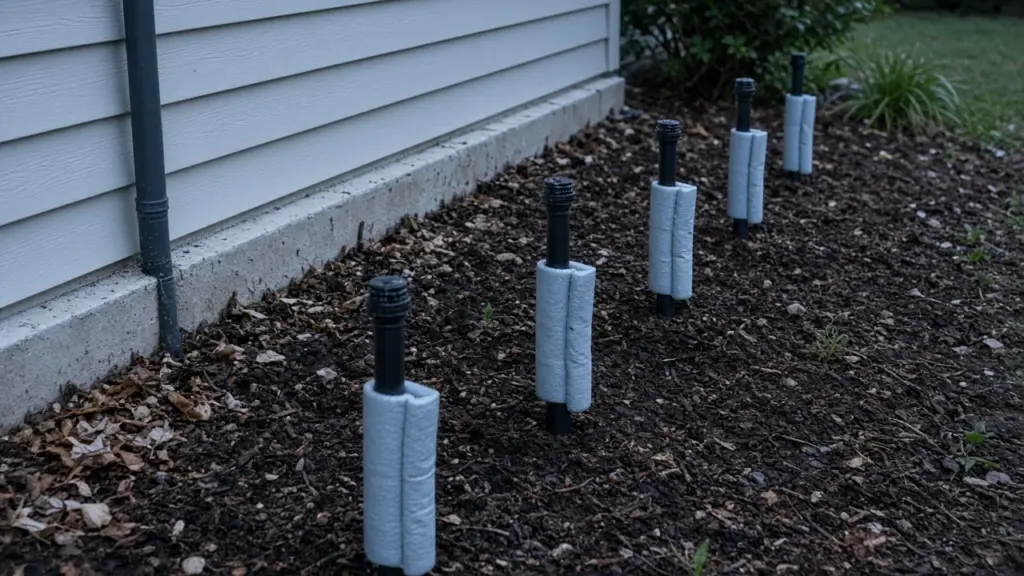
Most of a Dallas sprinkler system is buried, where soil protects it from brief freezes. The parts that sit above ground are a different story. Backflow preventers, exposed pipe, and some drip components can freeze in a single cold night. Insulating them before a freeze is one of the simplest and most effective ways to prevent costly damage.
This guide explains which components to insulate, what materials work, and the mistakes to avoid.
What Needs Insulation
- Backflow preventer: the most vulnerable component on most systems.
- Exposed pipe leading to and from the backflow preventer.
- Above-ground valves, including anti-siphon valves on some older systems.
- Drip filters and pressure regulators located above ground.
- Hose bib connections used for drip timers.
- Exposed risers in beds.
Our guide to why pipes burst in Dallas even though freezes are short explains why above-ground parts are at risk.
Before You Insulate: Shut Off and Drain
Insulation slows heat loss, but it does not generate heat. In a prolonged hard freeze, an insulated device full of water can still freeze. The best protection combines insulation with shutting off and draining:
- Turn off the controller.
- Close the irrigation shutoff valve upstream of the backflow preventer.
- Relieve pressure and drain the device according to the manufacturer’s guidance, typically by opening test cocks.
- Insulate.
Our guide to protecting backflow preventers before a hard freeze walks through the steps.
Insulation Options
Insulated Backflow Covers
Pre-made insulated covers or bags designed for backflow preventers are widely available. They slip over the device and often close with a drawstring or hook-and-loop fastener. They are quick to install and remove.
Foam Pipe Insulation
Foam tubes slit along one side fit over exposed pipe. Cut them to length and secure with weatherproof tape. Use insulation sized to the pipe diameter.
Insulated Enclosures
Rigid insulated enclosures, sometimes with a lockable lid, cover the backflow preventer year-round. Some are designed to accommodate heat sources for extreme climates. They also protect against damage and tampering.
Improvised Wraps
In a pinch, towels, blankets, or bubble wrap covered with a plastic bag to keep them dry can help. Wet insulation loses much of its value, so keep wraps dry.
What Not to Block
Some backflow devices have relief ports or air inlets that must not be sealed:
- Pressure vacuum breakers have an air inlet under the bonnet.
- RPZ assemblies have a relief valve that discharges water.
Avoid sealing these openings tightly, especially if the system will remain pressurized. Follow the device manufacturer’s guidance. If you drain and shut off the device, relief ports are less of a concern, but it is still good practice not to seal them.
Insulating Exposed Pipe
Wrap all exposed pipe from the ground to the backflow preventer and back to the ground. Pay attention to fittings, elbows, and unions, which are often missed. Wrap the pipe where it enters the soil, since the first few inches above ground are exposed.
Drip Components
Drip filters with clear bowls and plastic housings can crack in a freeze. Options include:
- Draining and removing the filter bowl before a freeze
- Insulating the filter and regulator
- Disconnecting and storing hose bib timers indoors
Hose Bibs
If your drip or container system connects to a hose bib, disconnect the timer and hoses before a freeze. Insulated faucet covers help protect hose bibs themselves.
After the Freeze
- Wait until temperatures are reliably above freezing.
- Remove insulation and let components dry.
- Close test cocks.
- Open the shutoff valve slowly.
- Inspect for leaks and cracks.
- Run each zone and check for problems.
Our freeze damage checklist walks through a full inspection.
Should You Leave Insulation On All Winter?
Some homeowners leave covers on through winter. That can be convenient, but check periodically for moisture inside, insects, and damage. Remove covers before spring startup. Rigid enclosures designed for year-round use are an option if you want permanent protection.
Keep Supplies Ready
Freezes in Dallas sometimes arrive with little warning, and stores can sell out of insulated covers before a forecast cold snap. Buy covers and foam insulation in the fall and store them in the garage.
Know Your Shutoff
Insulating is easier when you already know where the shutoff is and that it turns. Locate it in fall. If it is stuck, broken, or missing, have it repaired or installed before winter.
Freeze Sensors Still Required
Insulation protects components, but Dallas also requires automatic irrigation systems to have working rain and freeze sensors so systems do not run in freezing weather, creating icy sidewalks and streets. Test your sensor in fall. Our guide to rain and freeze sensors covers testing.
A Winter Checklist
- Buy covers and foam insulation in fall
- Locate and test the shutoff valve
- Test the freeze sensor
- Before a freeze: turn off the controller, close the shutoff, drain, and insulate
- After a freeze: remove insulation, restore water slowly, and inspect
Location Makes a Difference
Where a backflow preventer sits affects how much protection it needs. A device on the north side of the house, exposed to wind and shaded all day, is at higher risk than one on a sheltered south wall. Devices at corners of the house catch wind from multiple directions. If your device is in an exposed location, give it the most thorough protection: shut off, drain, and use a well-fitted insulated cover. Some homeowners add a windbreak, such as a small shrub or screen, set back far enough to keep access clear for testing.
Insulating Anti-Siphon Valves
Some older Dallas systems have anti-siphon valves above ground, usually in a row near the house. Each valve has its own backflow protection built in, and each is exposed. Insulate the entire manifold, including the pipe below the valves where it enters the ground. Draining these valves can be more difficult; shutting off the supply and relieving pressure still helps.
Checking Insulation Condition
Foam pipe insulation breaks down in sunlight over time and can crack, crumble, or be chewed by animals. Check it each fall and replace worn pieces. Insulated covers can tear or lose their shape. A cover that no longer fits snugly leaves gaps where cold air reaches the device. Our maintenance calendar includes fall freeze preparation among other seasonal tasks.
Protecting Controllers and Sensors
Controllers mounted outdoors are generally designed for outdoor conditions, but check that their cabinets close properly. Wireless rain and freeze sensors use batteries that may weaken in cold weather; replace them in fall if they are due.
Frequently Asked Questions
Should I insulate my backflow preventer in Dallas?
Yes, especially before hard freezes. Combine insulation with shutting off and draining the device.
Is insulation enough to prevent freezing?
Insulation slows heat loss but does not add heat. In a long, hard freeze, shutting off and draining is also important.
What parts of a sprinkler system should be insulated?
The backflow preventer, exposed pipe, above-ground valves, and exposed drip filters and regulators.
Can I cover the relief port on my backflow preventer?
Avoid sealing relief ports or air inlets tightly. Follow the manufacturer’s guidance.
Get Help Preparing for Winter
We inspect backflow preventers, repair freeze damage, and help prepare systems for cold weather. See our sprinkler repair service, or contact us to schedule.
Request Service or call 214-227-7444
We serve homes throughout Dallas and nearby North Texas communities.