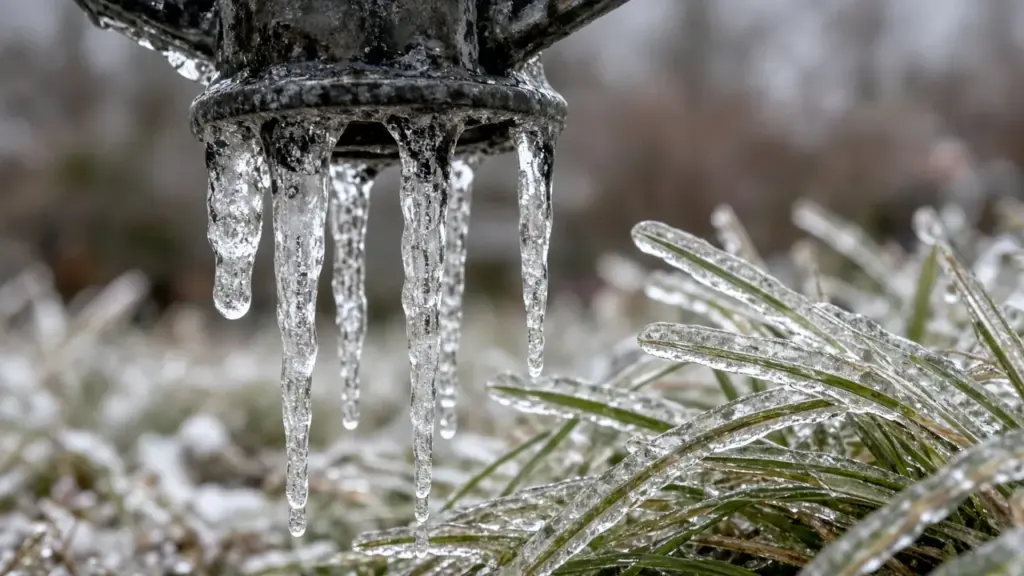
It happens every winter somewhere in Dallas: a cold front arrives overnight, the sprinkler system runs on schedule, and by morning the yard, sidewalk, and street are glazed with ice. Icicles hang from shrubs, and the gutter is a frozen sheet. Beyond looking alarming, ice from sprinklers creates real hazards for pedestrians and drivers, and it signals a problem with the system’s freeze protection.
This guide explains what to do when ice forms from your sprinklers and how to prevent it.
Why It Happens
Automatic irrigation systems run on a schedule regardless of weather unless something stops them. When temperatures are at or below freezing, water from sprinkler heads freezes on contact with grass, plants, pavement, and anything else it hits.
Dallas requires automatic irrigation systems to have working rain and freeze sensors precisely to prevent this. When ice forms, it usually means:
- No freeze sensor is installed
- The sensor has failed or its battery is dead
- The sensor is bypassed at the controller
- The sensor is set incorrectly or mounted where it does not sense the actual temperature
- A valve is stuck open, so water flows regardless of the controller
What to Do Right Away
- Turn off the controller or set it to off or rain mode.
- If water is still flowing, a valve may be stuck open. Close the irrigation shutoff valve.
- Stay off icy surfaces and warn household members.
- Do not try to chip ice off heads or valves, which can crack them.
- Treat walkways if needed for safety, using products appropriate for your surfaces and plants.
Safety and Code Concerns
Ice on sidewalks and streets creates slip and crash hazards. Dallas’s water conservation rules require working rain and freeze sensors on automatic systems, and running sprinklers during freezing weather can lead to enforcement action in addition to safety risks.
Check the Freeze Sensor
Once temperatures rise, inspect the sensor:
- Is there a sensor? Many older systems lack one.
- Is it connected? Check the controller’s sensor terminals and settings. Some controllers have a sensor bypass switch that may have been left on.
- Is the battery good? Wireless sensors need batteries.
- Is it mounted correctly? Sensors should be mounted where they are exposed to the weather, not under eaves or near heat sources.
- Does it work? Many sensors have a test function.
Our guide to rain and freeze sensors explains types, placement, and testing.
Check for a Stuck Valve
If the system kept running after you turned off the controller, a valve may be stuck open due to debris, a torn diaphragm, or a stuck solenoid. Our guide to a zone that will not turn off explains the fix.
Check for Freeze Damage
Ice forming on the system often means components were exposed to freezing water. After the thaw:
- Inspect the backflow preventer for cracks and leaks
- Check exposed pipe
- Run each zone and look for broken heads and leaks
Our freeze damage checklist walks through the inspection.
Plants and Ice
Ice can weigh down and break branches, and prolonged coating can damage tender plants. Many established Dallas landscape plants tolerate a brief icing, but avoid shaking ice-laden branches, which can break them. Assess damage after the thaw and prune broken branches cleanly.
Preventing Ice Next Time
- Install or replace the freeze sensor and test it each fall
- Replace sensor batteries on schedule
- Turn off automatic watering during winter dormancy, when warm-season lawns need little water
- Watch the forecast and switch the controller off before freezes
- Consider a smart controller that skips cycles based on weather data, in addition to the required sensor
- Protect the backflow preventer before hard freezes
Our guide to winterizing a sprinkler system in Dallas covers winter preparation.
Do Dormant Lawns Need Winter Watering?
Warm-season grasses such as St. Augustine and Bermuda are dormant in winter and need little water. Many homeowners turn off automatic watering and water only during extended dry spells. That reduces the risk of ice altogether. Evergreen shrubs and newly planted trees may still need occasional water; drip and hand watering are allowed any day.
If You See Ice at a Neighbor’s
Ice from sprinklers affects everyone who uses the sidewalk or street. If a neighbor’s system is creating ice, a friendly heads-up may help. Many homeowners are not aware their system ran. You can also report water waste issues to the city through 311.
How Freeze Sensors Decide
Most freeze sensors trigger at a set temperature a little above the freezing point of water, so they stop irrigation before surfaces actually freeze. Some models allow you to choose the shutoff temperature. When temperatures rise back above that point, the sensor allows watering to resume. Because surfaces such as bridges, sidewalks, and grass can freeze before the air temperature at the sensor reaches freezing, the sensor’s location matters. Mount it in an open spot exposed to the sky and wind, away from the warmth of the house, dryer vents, or pool heaters.
Combination Sensors
Many sensors combine rain and freeze functions in one unit. A combination sensor that stops working affects both functions, so a failed rain sensor may also mean a failed freeze sensor. If your system has been watering during rain, check the freeze function too before winter.
Controllers That Ignore the Sensor
Some controllers allow the sensor to be set to active or bypass, and some allow individual zones to ignore the sensor. Drip zones are sometimes set to ignore rain sensors. Make sure every spray and rotor zone obeys the sensor, particularly the freeze function. A single zone set to bypass can still coat the sidewalk with ice.
Smart Controllers Are Not a Substitute
Smart controllers that use forecasts and weather station data can skip cycles in cold weather, and they are a helpful addition. But forecasts can miss local conditions, and Wi-Fi outages can interrupt weather updates. Dallas requires a working rain and freeze sensor on automatic systems, so keep a physical sensor connected even with a smart controller.
Check Before Every Winter
Add a freeze sensor test to your fall routine alongside protecting the backflow preventer. Our maintenance calendar includes this and other seasonal checks.
Keep the Shutoff Accessible
In an icy morning emergency, you may need to close the irrigation shutoff quickly. Know where it is, make sure it turns freely, and keep the area around it clear. If the shutoff is in a box near the meter, keep the lid visible and free of debris so you can reach it without digging.
Frequently Asked Questions
Why did my sprinklers run when it was freezing?
The freeze sensor may be missing, failed, bypassed, or set incorrectly, or a valve may be stuck open.
What should I do if ice forms from my sprinklers?
Turn off the controller, close the irrigation shutoff if water keeps flowing, and stay off icy surfaces.
Are freeze sensors required in Dallas?
Yes. Automatic irrigation systems in Dallas must have working rain and freeze sensors.
Should I turn off my sprinklers in winter?
Many dormant lawns need little water in winter. Turning off automatic watering reduces the risk of ice.
Get Help With Freeze Sensors
We install and test rain and freeze sensors and repair freeze damage. See our sprinkler repair service, or contact us to schedule.
Request Service or call 214-227-7444
We serve homes throughout Dallas and nearby North Texas communities.