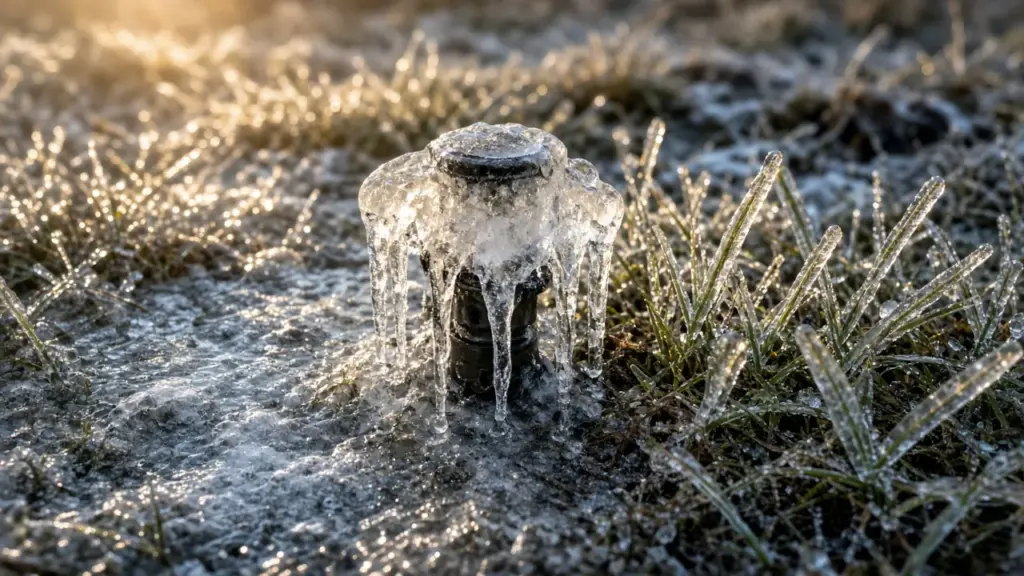
North Texas freezes usually do not last long, but even a short hard freeze can crack sprinkler components. The damage often stays hidden until the system is pressurized again, sometimes weeks later when you turn the system back on in spring. By then, a cracked fitting may have been leaking for a while.
This checklist helps you inspect your system after a freeze in an orderly way, catching problems before they waste water or damage the yard.
Wait for the Thaw
Do not turn water back on to the irrigation system until temperatures stay above freezing and any ice has melted. Pressurizing a frozen pipe or backflow preventer can make damage worse. Frozen soil also hides leaks.
Step 1: Inspect the Backflow Preventer
The backflow preventer is the most exposed part of the system and the most likely to crack.
- Look for cracks, splits, or bulges in the body and bonnet
- Check the risers above ground for cracks
- Look for displaced or broken internal parts visible through openings
- Make sure test cocks are closed if they were opened for draining
Then, if everything looks intact, slowly open the supply valve and watch for leaks. If water sprays or drips from the assembly, close the supply and schedule a repair. Our guide to protecting backflow preventers before a hard freeze explains how to prevent this next time.
Step 2: Check Exposed Pipe
Any pipe above ground or near the surface is vulnerable: pipe along walls, pipe feeding drip zones, and risers to the backflow. Look for splits along the length and cracked fittings.
Step 3: Check the Controller and Sensor
- Confirm the controller has power and shows the correct time
- Check that programs are intact
- Confirm the rain and freeze sensor is connected and not damaged
A freeze sensor that failed to stop watering during the cold is worth investigating. Our guide to rain and freeze sensors explains testing.
Step 4: Run Each Zone and Watch
Once the backflow preventer checks out, run each zone manually for a few minutes, one at a time. Walk the zone while it runs.
- Heads: look for cracked bodies, heads that do not pop up, and water bubbling at the base
- Geysers: a broken head or riser will gush water
- Wet spots: water pooling where there is no head may mean a cracked pipe
- Pressure: weak spray on a zone that was fine before may mean a leak
- Valves: check valve boxes for water, which can indicate a cracked valve body or fitting
Step 5: Check Valve Boxes
Open each valve box. Look for:
- Cracks in valve bodies or bonnets
- Leaks at fittings
- A box full of water
- A valve that does not open or close
Our guide to a zone that will not turn off covers valve problems that can show up after a freeze.
Step 6: Check Drip Zones
Drip tubing and fittings can split in a freeze, especially above ground. Run each drip zone and look for sprays and puddles. Check filters and pressure regulators for cracks.
Step 7: Watch Your Water Meter
With all water off in and around the house, check your water meter. If it keeps moving, you may have a leak somewhere, possibly in the irrigation mainline. Our leak detection guide explains how to narrow it down.
Step 8: Document What You Find
Make a list of each damaged part and its zone and location. Photos help. This speeds up repairs.
Common Freeze Damage
- Cracked backflow preventer bodies or bonnets
- Split risers and exposed pipe
- Cracked head bodies, especially shallow heads
- Cracked valve bonnets or bodies
- Split drip tubing and fittings
- Broken filter housings
What Not to Do
- Do not pressurize a visibly cracked backflow preventer. Close the supply and have it repaired.
- Do not ignore small leaks. A small crack can grow under pressure.
- Do not run the full schedule until every zone has been checked.
- Do not wrap a damaged part with tape as a permanent fix.
When to Call for Help
Call for help if the backflow preventer is damaged, if you find leaks you cannot locate, or if a valve will not shut off. Backflow repairs in particular should be handled by qualified professionals, and some utilities require testing after repair or replacement.
Timing: Winter vs. Spring
If you do not need irrigation in winter, you may choose to leave the system off until spring. In that case, do this full inspection at spring startup. Our year-round maintenance calendar and winterizing guide cover both ends of the season.
Preventing Damage Next Time
- Insulate the backflow preventer before hard freezes
- Insulate exposed pipe
- Consider shutting off and draining the backflow preventer before long freezes
- Make sure the freeze sensor works
- Turn the controller off during extended freezes
Why Damage Hides Until Spring
Many homeowners run their system very little in winter because warm-season lawns are dormant. A crack from a January freeze may sit unnoticed until the first spring cycle. That is why a careful startup inspection matters. If you did not inspect after the freeze, treat your spring startup as your freeze inspection and work through this checklist before resuming the normal schedule.
A Printable Quick Checklist
Keep this short version handy after the next cold snap:
- Wait until temperatures stay above freezing and ice has melted
- Inspect the backflow preventer body, bonnet, and risers
- Check exposed pipe along walls and above ground
- Confirm controller power, time, programs, and sensor
- Slowly restore water and watch the backflow preventer
- Run each zone briefly and walk it
- Open valve boxes and look for water and cracks
- Run drip zones and check filters and regulators
- Watch the water meter with all water off
- Record every damaged part with its zone and location
Heads Near Driveways and Sidewalks
Heads next to concrete often suffer more freeze damage than those in the middle of the lawn. Concrete cools quickly, soil along edges can be shallow, and these heads are often already stressed by traffic and mower strikes. When you walk each zone, pay extra attention to heads along driveways, sidewalks, and curbs. A cracked body there can send water straight onto the pavement, which wastes water and can create slick spots if another freeze follows.
Keep an Eye Out Over the Following Weeks
Some freeze damage takes time to show. A hairline crack may seep slowly at first and grow under repeated pressure. For a few weeks after a hard freeze, watch for new wet spots, changes in spray patterns, and unexplained increases on your water bill.
Frequently Asked Questions
When should I check my sprinkler system after a freeze?
After temperatures stay above freezing and any ice has melted. Inspect before running the regular schedule.
What part of a sprinkler system is most likely to freeze?
The backflow preventer, because it sits above ground, full of water, and exposed to wind.
How do I find freeze damage underground?
Run each zone and look for wet spots, weak pressure, or bubbling. Check the water meter for movement when all water is off.
Can I repair a cracked backflow preventer myself?
Backflow repairs should be handled by qualified professionals, and testing may be required afterward.
Schedule a Post-Freeze Inspection
We inspect systems after freezes, repair backflow preventers, valves, heads, and pipe, and get your system ready for the season. See our sprinkler repair service, or contact us to schedule.
Request Service or call 214-227-7444
We serve homes throughout Dallas and nearby North Texas communities.