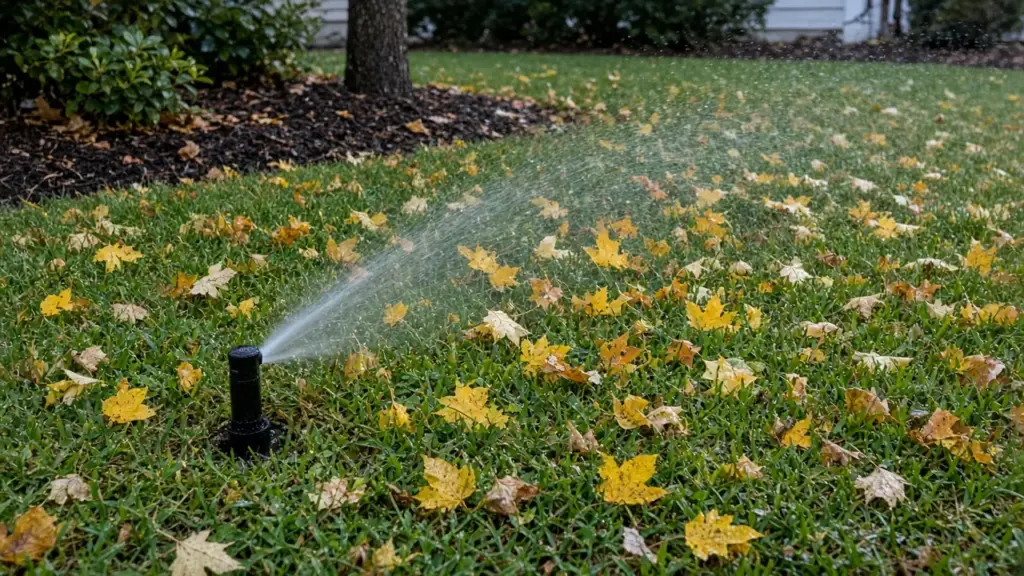
By the time September turns to October, a Dallas sprinkler system has been through months of heavy use. Heads have been mowed over, nozzles have clogged, and run times may have crept upward during heat waves. As temperatures drop, the lawn needs far less water, and the system needs attention before winter.
A fall tune-up resets the system for cooler weather, fixes damage from summer, and prepares for the first freeze. This guide walks through the steps.
Why Fall Matters in Dallas
Fall weather in North Texas brings shorter days, cooler nights, and often more rain. Warm-season grasses such as St. Augustine and Bermuda slow their growth and begin heading toward dormancy. A summer watering schedule in fall wastes water and can encourage fungal disease. Brown patch in St. Augustine is a common fall problem that thrives in cool, wet conditions.
Fall is also a good time to find problems. Mild weather makes it easier to dig and repair, and fixing issues now means the system is ready when spring arrives.
Step 1: Reduce Run Times
Start with the controller. As temperatures drop, lawns use less water. Many homeowners can reduce run times substantially from summer levels, and many lawns do well on one assigned day per week in fall rather than two.
Options include:
- Lowering the seasonal adjustment percentage
- Reducing each zone’s run time
- Removing one watering day from the program
Remember the Dallas rules still apply in fall: no more than two days per week on your assigned days, and no sprinkler watering between 10 a.m. and 6 p.m. See our guide to the twice-weekly watering schedule.
Step 2: Check the Clock and Programs
Confirm the controller’s day, date, and time. Daylight saving time ends in early November, and many controllers do not adjust automatically. Look through each program for leftover start times or old schedules.
Step 3: Walk Every Zone
Run each zone manually and walk it while it runs. Look for:
- Broken heads from mowers, vehicles, or foot traffic
- Heads that do not pop up fully or stick up after watering
- Clogged nozzles with weak or uneven spray
- Misaligned heads spraying sidewalks, driveways, or walls
- Sunken heads blocked by turf
- Geysers or bubbling that point to breaks
Flag problems as you go, then fix them. Our guide to fixing heads that spray the street, driveway, or house wall helps with alignment.
Step 4: Look for Summer Damage
Dallas summers can be hard on irrigation. Clay soil shrinks as it dries, and that movement can stress pipes and fittings. Look for soggy spots, unusually green patches, or areas where water pools after a zone runs. Our guide to soil cracks in summer explains how dry clay affects pipes.
Step 5: Test the Rain and Freeze Sensor
Dallas requires rain and freeze sensors on automatic irrigation systems. Fall is a good time to make sure yours works, before the first freeze. Test it according to the manufacturer’s instructions; many rain sensors can be tested by pressing the test button or wetting the sensor. Replace batteries on wireless sensors. See our guide to rain and freeze sensors.
Step 6: Clean Filters and Check Drip Zones
Drip zones often have filters that collect debris over summer. Clean the filter screen, flush the lines, and check emitters. Look for chewed or damaged tubing and emitters that have popped out.
Step 7: Check Valves and Valve Boxes
Open valve boxes and look for water, leaks, and damaged wiring. Clear dirt and debris. Make sure boxes are not buried or covered by turf so they are easy to find later.
Step 8: Look at the Backflow Preventer
Check the backflow preventer for leaks, damage, or missing parts. Note where the irrigation shutoff valve is and make sure it turns. In a hard freeze, backflow preventers are among the most vulnerable parts of the system. Our guide to protecting backflow preventers before a hard freeze explains how to prepare.
Step 9: Plan for Winter
Dallas winters are generally mild, but hard freezes do happen. Decide how you will protect the system:
- Know where the irrigation shutoff is
- Have insulating covers ready for the backflow preventer
- Make sure the freeze sensor works
- Consider turning off automatic watering during winter dormancy
Our guide to winterizing a sprinkler system in Dallas covers winter preparation in more detail.
Fall Is a Good Time for Upgrades
With cooler weather and a slower lawn, fall is a practical time to make improvements:
- Upgrading nozzles to more efficient models
- Adding drip to beds
- Replacing an old controller with a smart controller
- Fixing coverage problems found during summer
Overseeding and Irrigation
Some Dallas homeowners overseed dormant Bermuda with ryegrass for winter color. Overseeded lawns need regular watering while seed germinates, which may require changes to your schedule. Automatic sprinklers are still limited to your two assigned days, so plan around that limit. Hand watering with a hose is not restricted to specific days.
Leaves and Debris
Falling leaves can cover heads, clog nozzles, and block rain sensors. Keep heads clear, and check the rain sensor for leaves or debris that could keep it from working.
Keep Notes
As you finish the tune-up, write down what you fixed and what still needs attention. A simple list with zone numbers and problems helps you plan repairs and track recurring issues.
A Fall Checklist
- Reduce run times or watering days
- Check the controller clock and programs
- Walk every zone and fix broken or misaligned heads
- Look for leaks and summer damage
- Test the rain and freeze sensor
- Clean drip filters and check emitters
- Inspect valves and valve boxes
- Check the backflow preventer and shutoff
- Plan for freeze protection
Watch the Weather After the Tune-Up
Fall weather in Dallas can swing quickly, with warm spells, heavy rains, and early cold fronts. Keep an eye on the forecast and make small adjustments as needed. After a heavy rain, you may be able to skip watering for a week or more. During a warm, dry stretch in October, the lawn may briefly need both assigned days again. The goal is to match water to the lawn’s actual needs rather than relying on a fixed schedule.
Fall Fertilizing and Watering
Many Dallas lawn programs include a fall fertilizer application. Watering in fertilizer on your assigned day, rather than running extra cycles, keeps you within the schedule. Avoid heavy nitrogen late in the season on St. Augustine, as lush growth heading into cool, wet weather can make brown patch worse. If you are unsure, follow the product label and local extension guidance.
Frequently Asked Questions
When should I do a fall sprinkler tune-up in Dallas?
Many homeowners do it in September or October, as temperatures begin to drop and before the first freeze.
How much should I cut watering in fall?
It depends on the weather and your lawn, but many lawns need much less water than in summer. Many do well on one assigned day per week.
Do Dallas watering rules apply in fall?
Yes. The twice-weekly limit and the 10 a.m. to 6 p.m. sprinkler ban apply year-round.
Should I turn off my sprinklers in winter?
Many dormant lawns need little or no irrigation in winter. Watch the weather and water occasionally during extended dry periods.
Schedule a Fall Tune-Up
We inspect systems, repair heads and leaks, adjust controllers, and help prepare for winter. See our sprinkler repair service, or contact us to schedule.
Request Service or call 214-227-7444
We serve homes throughout Dallas and nearby North Texas communities.