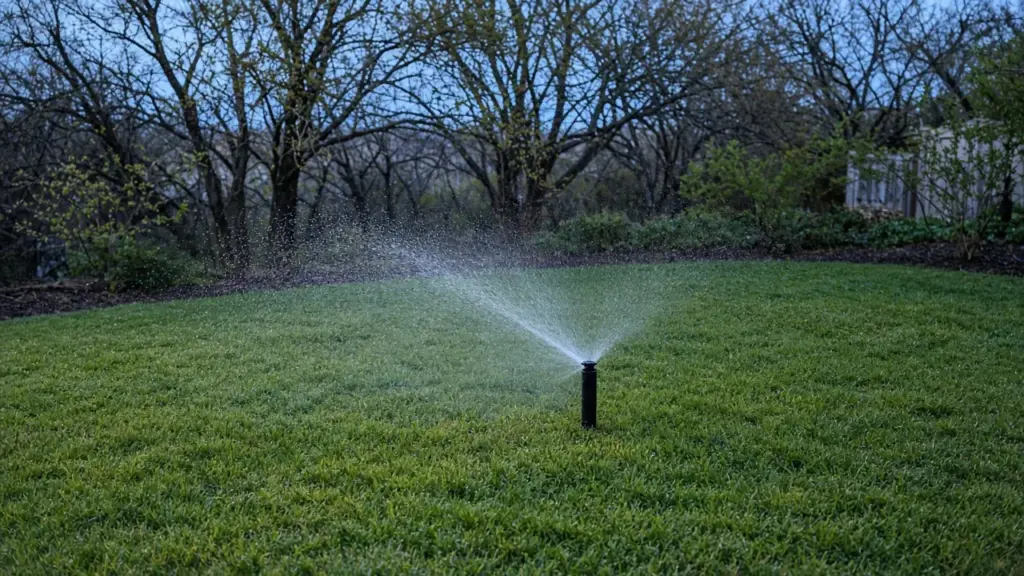
In Dallas, warm-season lawns start waking up in spring, and many homeowners turn their sprinkler systems back on after a winter of little or no use. A careful startup does more than restart the schedule. It catches freeze damage, broken heads, and leaks before they waste water, and it sets the controller for the season ahead.
This guide walks through a spring startup step by step.
When to Start Up
Wait until the risk of hard freezes has passed and your lawn begins to green up. Warm-season grasses such as Bermuda, St. Augustine, and zoysia need little water while dormant. Starting irrigation too early can waste water and encourage weeds. Watch the weather and the lawn rather than a fixed date.
Step 1: Inspect the Backflow Preventer
Before turning on the water, look over the backflow preventer:
- Check for cracks, splits, or bulges from winter freezes
- Make sure test cocks are closed
- Remove any insulated cover
If it looks damaged, do not pressurize it. Our guide to protecting backflow preventers before a hard freeze covers winter protection, and our freeze damage checklist explains what to look for.
Step 2: Restore Water Slowly
Open the irrigation supply valve slowly, a little at a time. Opening it quickly can send a pressure surge through the system that damages components. If your backflow preventer has ball valves, follow the manufacturer’s sequence for opening them.
Watch the backflow preventer for leaks as pressure builds.
Step 3: Check the Controller
- Confirm the controller has power
- Set the correct date and time
- Replace the backup battery if the controller uses one
- Review each program’s watering days, start times, and run times
Set watering days to your assigned Dallas days: Sundays and Thursdays for addresses ending in an even number, Wednesdays and Saturdays for odd. Make sure all cycles end before 10 a.m. Our guide to programming a controller for Dallas’s schedule explains programs and start times.
Step 4: Test the Rain and Freeze Sensor
Start a zone, then trigger the sensor by pressing its test button or wetting it. The zone should stop. Our guide to rain and freeze sensors explains testing.
Step 5: Run Each Zone and Walk It
Run each zone manually for a few minutes and walk it while it runs. Look for:
- Heads that do not pop up or stick up after the zone stops
- Broken heads or geysers
- Clogged nozzles with weak or uneven spray
- Misaligned heads spraying walls, sidewalks, or streets
- Sunken heads blocked by turf
- Wet spots where there is no head, which could mean a leak
- Weak pressure on the zone
Make a list of problems by zone.
Step 6: Check Valve Boxes
Open each valve box. Look for water in the box, cracked valves, and loose wire connections. Clear debris and make sure lids fit.
Step 7: Flush and Check Drip Zones
Open the flush caps at the ends of drip lines and run each drip zone until the water runs clear. Clean the filter. Look for broken emitters and split tubing. Our guide to drip emitters clogging covers cleaning.
Step 8: Make Repairs
Fix the problems on your list: replace broken heads and nozzles, raise sunken heads, adjust arcs, repair leaks, and replace faulty solenoids or diaphragms.
Step 9: Set Seasonal Run Times
Spring weather is milder than summer, so run times should be lower. If your controller has a seasonal adjust feature, set it below 100 percent and increase it as temperatures rise. Use cycle and soak for spray zones on clay.
Step 10: Watch the First Few Cycles
After the first scheduled watering, walk the yard. Look for runoff, puddles, and dry spots. Adjust run times and heads as needed.
Common Spring Problems in Dallas
- Freeze-cracked backflow preventers
- Heads broken by mowers or foot traffic over winter
- Heads buried under leaves, mulch, or new turf growth
- Controllers with dead batteries and lost time
- Drip lines damaged by winter garden cleanup
- Stuck valves after months without use
Should You Do It Yourself?
Many homeowners can handle a basic startup. Consider professional help if you find backflow damage, leaks you cannot locate, valves that will not open or close, or multiple broken components. A professional startup is also a good way to get an overall assessment of an older system.
Recording What You Find
Keep notes during startup: which heads were replaced, which zones had problems, what nozzle sizes you used, and any issues left for later. Those notes help you plan upgrades and make next year’s startup faster. If you have a system map, update it with any changes.
Spring Lawn Care and Irrigation
Spring is also when many homeowners fertilize, aerate, and treat weeds. Coordinate irrigation with these tasks. Core aeration helps water soak into clay, so it can make your irrigation more effective. Water in fertilizer according to the product directions, on your assigned days or by hand.
Our year-round maintenance calendar lays out tasks by season.
A Printable Startup Checklist
- Wait for the freeze risk to pass and the lawn to green up
- Inspect the backflow preventer and remove covers
- Close test cocks and open the supply slowly
- Set controller date and time; replace the battery
- Program assigned days, early start times, and spring run times
- Test the rain and freeze sensor
- Run and walk each spray and rotor zone
- Open valve boxes and check for water and damage
- Flush drip lines and clean filters
- Repair heads, nozzles, leaks, and valves
- Watch the first scheduled cycles and fine-tune
Tools to Have on Hand
A few basic tools make startup easier: a flat-head screwdriver for adjusting nozzles, a small trowel for clearing turf around heads, replacement nozzles in your common sizes, a head-adjustment tool if your rotors require one, and a notepad or phone for recording problems. A pair of gloves and a bucket for clearing valve boxes help too. Having these ready means you can fix small issues on the spot instead of making a second trip.
Lawn Signals to Watch After Startup
Over the first few weeks, watch for areas that green up slowly compared with the rest of the lawn. Slow areas often point to coverage gaps, compacted soil, or a head that is not reaching. Areas that stay unusually lush or soft may be getting too much water from overlapping heads or a small leak. Addressing these early in spring prevents bigger problems when summer heat arrives.
Frequently Asked Questions
When should I turn my sprinklers back on in Dallas?
After the risk of hard freezes has passed and your lawn begins to green up. Base it on weather and lawn condition rather than a fixed date.
Why should I open the water supply slowly?
A sudden surge of pressure can damage the backflow preventer, valves, and pipe.
What should I check during spring startup?
The backflow preventer, controller settings, rain and freeze sensor, each zone’s heads and coverage, valve boxes, and drip zones.
How long should zones run in spring?
Less than in summer. Use seasonal adjust and increase run times as temperatures rise.
Schedule a Spring Startup
We handle spring startups, catch freeze damage, and tune your system for the season. See our sprinkler repair service, or contact us to schedule.
Request Service or call 214-227-7444
We serve homes throughout Dallas and nearby North Texas communities.