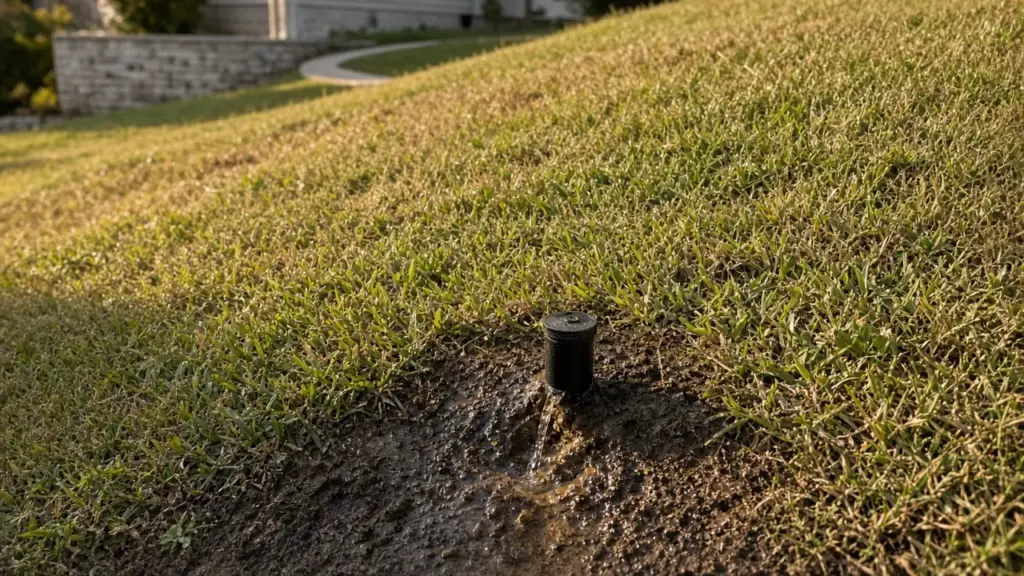
A zone finishes watering, the heads drop down, and water keeps trickling out of one head at the lowest point of the yard. Hours later, there is still a soggy spot or puddle around it. This is called low-head drainage, and it is common in Dallas yards with any slope.
Low-head drainage wastes water, creates soggy areas, and can wash away soil around the head. The usual fix is a check valve. This guide explains what causes low-head drainage and how check valves stop it.
What Causes Low-Head Drainage
When a zone shuts off, the valve closes, but the lateral pipe between the valve and the heads is still full of water. Gravity pulls that water downhill. If one head sits lower than the rest of the zone, the water in the pipe drains out through that head.
The amount of water depends on the length and size of the pipe and the elevation difference. On a long zone with a significant slope, it can be a lot of water every time the zone runs.
Signs of Low-Head Drainage
- Water trickles from one head after the zone shuts off
- A soggy or muddy spot around the lowest head
- Puddles on sidewalks or driveways below the head
- Soil or mulch washing away around the head
- Algae or moss near the head
- The zone takes a moment to pressurize at the start of each cycle as the pipe refills
Low-Head Drainage or a Leaking Valve?
Water seeping from the lowest head can also come from a valve that does not close completely. The difference:
- Low-head drainage stops once the pipe drains. The volume is limited to what was in the pipe.
- A leaking valve keeps feeding water continuously, so the low head seeps for many hours or until the next cycle.
If seepage continues long after the zone shuts off, check the valve. Our guide to a zone that will not turn off explains valve problems.
What a Check Valve Does
A check valve allows water to flow in one direction and blocks it when pressure drops. In a sprinkler head, a check valve holds water in the pipe once the zone shuts off. The spring or seal holds back the weight of water up to a certain elevation difference.
Many modern spray heads and rotors are available with built-in check valves, often labeled as models with a check valve or seal feature. There are also inline check valves that install below a head.
Options for Fixing Low-Head Drainage
Replace the Head With a Check Valve Model
The simplest fix is to replace the low head, and often other low heads on the zone, with models that include a built-in check valve. Many common spray head bodies and rotors are available in check valve versions.
Add a Check Valve Under the Head
Inline check valves install between the riser and the head. They can be useful when you want to keep the existing head.
Install Check Valves on Several Heads
On steep slopes, several heads may drain. Installing check valves on the lower heads spreads the job. Check valves are rated for a certain elevation difference; very steep slopes may require more than one.
Installing a Check Valve Head
- Turn off the controller.
- Dig around the existing head carefully.
- Unscrew the old head from the riser or fitting.
- Flush the line briefly by running the zone.
- Install the new head at the correct height, flush with grade.
- Install the correct nozzle and adjust arc and radius.
- Test the zone and watch the head after shutoff.
Keep the new head at the proper height. Our guide to raising sunken sprinkler heads in black clay covers setting height correctly.
Matching Nozzles
When replacing heads, match nozzles to the rest of the zone. Spray heads and rotors should not share a zone, and nozzle types should apply water at similar rates. Our guide to reading arc and radius markings helps identify existing nozzles.
Low-Head Drainage on Dallas Slopes
Many Dallas yards have gentle slopes toward the street, and neighborhoods such as Oak Cliff and Kessler Park have hillier terrain. Any slope can create low-head drainage. Clay soil makes the problem worse because it absorbs water slowly, so drainage puddles linger.
Why It Matters
- Water waste. The pipe drains every cycle.
- Soggy spots. Constant moisture can kill grass, invite fungus, and attract mosquitoes.
- Runoff. Water on sidewalks and streets can lead to a violation under Dallas’s water waste rules.
- Erosion. Soil around the head washes away, leaving the head exposed or tilted.
- Slower startup. Refilling a drained pipe each cycle can cause air and a brief sputtering at the start.
Checking Your Work
After installing check valves, run the zone and watch the low heads after shutoff. A small amount of water from the head itself as it retracts is normal. Persistent trickling means either the elevation difference exceeds the check valve’s rating, another head is draining, or the valve is leaking.
Soggy Spots From Other Causes
Not every soggy spot is low-head drainage. A cracked lateral line, a leaking fitting at the base of a head, or a broken pipe can also create wet areas. Our guide to a soggy spot that never dries helps sort out the causes.
Check Valves During Winterization
In areas where systems are drained for winter, check valves hold water in the pipe, which may need to be accounted for when draining. In Dallas, many systems are not fully drained, but if you do drain your system, know which heads have check valves.
Which Heads Need Check Valves
You do not always need check valves on every head. Start by finding the lowest heads on the zone, which are usually the ones that seep. Watch the zone after shutoff to see which heads drain. On a gentle slope, a check valve on the single lowest head may be enough. On longer or steeper zones, the next-lowest heads may start draining once the lowest is fixed, so check again after the first repair.
Budgeting the Repair
Check valve heads cost somewhat more than standard heads, but the difference is modest compared with the water lost each cycle and the damage soggy spots can cause. If you are already replacing heads during a retrofit or repair, choosing check valve models for low spots is an easy upgrade. Our sprinkler head repair guide covers other common head problems and replacements.
Rotors and Check Valves
Rotor zones often cover larger areas with longer pipe runs, which means more water can drain after shutoff. Many rotor models include a check valve option, and it is worth choosing that option for rotors at low points. As with spray heads, confirm that the elevation difference falls within the check valve’s rated capacity.
Frequently Asked Questions
What is low-head drainage?
Water draining out of the lowest sprinkler head on a zone after the zone shuts off, caused by gravity pulling water out of the pipe.
How do I stop water leaking from a sprinkler head after it shuts off?
Install a head with a built-in check valve, or add an inline check valve below the head. If seepage continues for hours, check the valve.
Do all sprinkler heads have check valves?
No. Many models are available with or without check valves.
Can a check valve fix a leaking zone valve?
No. A check valve stops drainage from the pipe but does not fix a valve that is not closing.
Get Help With Low-Head Drainage
We install check valve heads, fix leaking valves, and adjust coverage on sloped Dallas yards. See our sprinkler repair service, or contact us to schedule.
Request Service or call 214-227-7444
We serve homes throughout Dallas and nearby North Texas communities.