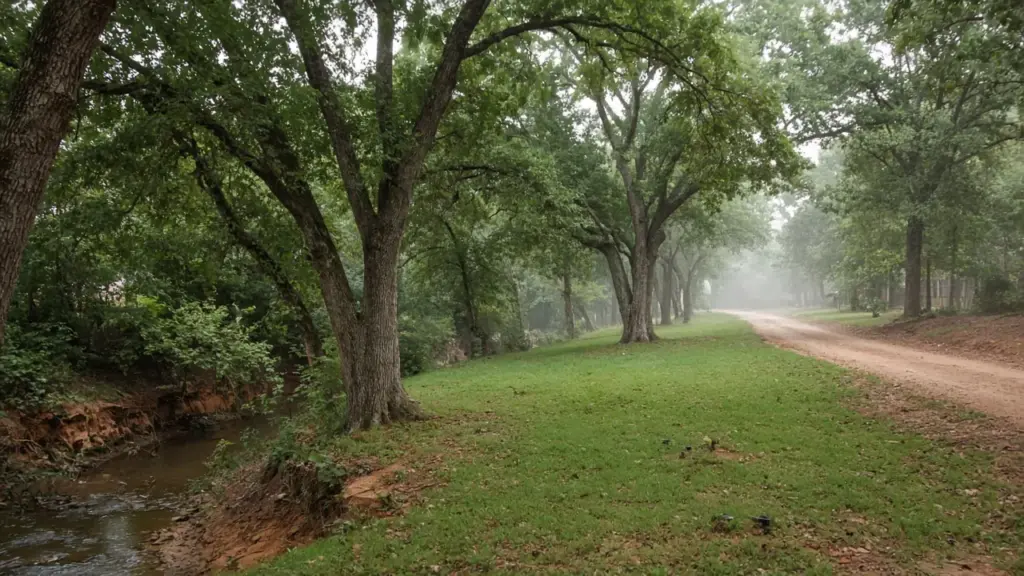
White Rock Lake is one of the defining features of East Dallas. The lake and its surrounding park are within the city of Dallas, and the neighborhoods around it, including areas such as Forest Hills, Casa Linda, and parts of Lakewood and Little Forest Hills, are known for established homes, mature trees, and varied terrain.
Those features create a specific set of irrigation challenges. This guide covers practical tips for sprinkler systems in the White Rock area.
Heavy Clay
Much of East Dallas sits on heavy clay soil that swells when wet and shrinks when dry. Clay absorbs water slowly, which means sprinklers can easily apply water faster than the soil can take it in. The result is runoff onto sidewalks and streets, puddles, and dry roots beneath a wet surface.
Tips for clay:
- Use cycle and soak. Split each zone’s run time into shorter cycles with breaks between them so water can soak in.
- Water deeply and infrequently. Deep watering encourages deeper roots.
- Consider rotary nozzles, which apply water more slowly than traditional spray nozzles.
- Aerate compacted areas to improve water absorption.
Our guides to deep and infrequent watering for clay soil and aerating clay lawns explain these techniques.
Rolling Terrain
Some streets near the lake have noticeable slopes, with yards that drop toward the street or toward creeks. Slopes shed water quickly, and clay makes it worse. The tops of slopes dry out while the bottoms stay soggy.
- Separate top and bottom of slopes into different zones when possible.
- Use more, shorter cycles on sloped zones.
- Install check valves on low heads to prevent drainage puddles. See our guide to check valves in sprinkler heads.
Our guide to yard grading and sprinkler runoff covers slope strategies.
Mature Trees
The White Rock area is known for its tree canopy. Large trees shade lawns, change water needs, and send roots into irrigation lines.
- Shaded areas need less water. Put them on separate zones or reduce run times.
- Roots can crack pipe and lift heads. Hand dig near trees and avoid cutting major roots.
- Trees need their own water. Drip rings or bubblers deliver deep water to tree root zones.
Our guide to root intrusion near sprinkler lines explains how to repair lines near trees.
Older Systems
Many homes in the area have irrigation systems that have been in the ground for years, with patched pipe, older heads, and aging controllers. Common issues include sunken heads, cracked fittings, corroded wiring, and valve boxes buried under turf. Retrofitting heads and updating the controller can extend a system’s life.
Dallas Watering Rules
Homes around White Rock Lake follow Dallas rules:
- Automatic sprinklers and hose-end sprinklers: no more than two assigned days per week.
- Even addresses: Sundays and Thursdays. Odd addresses: Wednesdays and Saturdays.
- No sprinkler watering between 10 a.m. and 6 p.m., year-round.
- Hand watering, soaker hoses, and drip: allowed any day.
- Foundation watering allowed any day and time with a hand-held hose, soaker hose, drip, or bucket.
- Rain and freeze sensors required on automatic systems.
Runoff and the Lake
Runoff from lawns carries fertilizer, pesticides, and soil into storm drains, which in this area can ultimately flow toward local creeks and the lake. Reducing runoff through cycle and soak, proper head adjustment, and careful fertilizer use helps protect water quality. Sweep fertilizer granules off pavement before watering.
Foundations
Clay soil near foundations shrinks and swells with moisture changes. Consistent moisture near the foundation, using drip or soaker hoses in foundation beds, can help. Avoid letting sprinkler water pool against the house.
Seasonal Tips
- Spring: inspect heads, test the rain sensor, and check for winter damage.
- Summer: watch for dry spots under trees and on slopes; use cycle and soak.
- Fall: reduce run times; fallen leaves can clog heads and cover rain sensors.
- Winter: reduce or pause watering; protect the backflow preventer before freezes.
Leaves and Debris
Heavy leaf fall from mature trees can cover heads, clog nozzles, block rain sensors, and fill valve boxes. Clearing leaves from heads and sensors in fall keeps the system working properly.
Mid-Century Homes and Later Additions
Many homes in neighborhoods near the lake date from the mid-twentieth century, and their sprinkler systems were often added or expanded later. That history can mean a system with zones added over several decades, mixed head types, and wiring spliced in multiple places. When troubleshooting, expect variety. A zone added years after the original system may have its own valve location, a different pipe type, or a separate wire run. Mapping the system before major repairs saves time.
Creek-Side and Low-Lying Lots
Some properties near the lake and its tributary creeks sit lower than surrounding streets or back up to drainage areas. These lots may stay wetter after rain and need less irrigation in low areas. Heavy rain can also wash soil and debris over heads and into valve boxes. After major storms, check low-lying zones for buried heads and flooded boxes. If an area stays soggy regardless of irrigation, it may be a drainage issue rather than a sprinkler problem.
Native and Adapted Plantings
Many homeowners in East Dallas have added beds with native and adapted plants, which suit clay and North Texas weather. Once established, these plantings often need far less water than turf. Converting spray zones in these beds to drip lets you water them deeply and infrequently, and drip is allowed on any day under Dallas rules.
Neighborhood Associations
Several neighborhoods near White Rock Lake have active neighborhood associations, and some have deed restrictions or guidelines related to front yards. Check any applicable guidelines before major landscape changes. Our Dallas neighborhood sprinkler repair guide compares irrigation conditions in other parts of the city.
Wildlife
Parkland near the lake supports wildlife that sometimes visits yards. Squirrels and other animals can chew drip tubing, and burrowing animals can disturb heads. Covering drip lines with mulch and checking tubing each season helps catch damage early.
A Quick Annual Check
Once a year, ideally in spring, run every zone and walk the yard. Flag broken or sunken heads, note dry spots under trees and on slopes, open valve boxes to check for water and corroded splices, and test the rain and freeze sensor. Fixing small problems each spring keeps an older system reliable through the summer.
Keep Notes by Zone
Write down each zone’s area, head type, and typical run time, and update the notes after repairs. In yards with varied shade, slope, and soil, zone notes make seasonal adjustments far easier.
Frequently Asked Questions
Is the White Rock Lake area in the city of Dallas?
Yes. White Rock Lake and the surrounding East Dallas neighborhoods are within the city of Dallas, so Dallas watering rules apply.
How do I water clay soil without runoff?
Use cycle and soak, water deeply and infrequently, and consider rotary nozzles with lower application rates.
Can tree roots damage my sprinkler system?
Yes. Roots can crack pipe and lift heads. Hand dig near trees and consider rerouting lines.
What watering days apply near White Rock Lake?
Even addresses water on Sundays and Thursdays; odd addresses on Wednesdays and Saturdays.
Get Help in East Dallas
We repair and adjust sprinkler systems around White Rock Lake and across Dallas. See our Dallas service area, or contact us to schedule.
Request Service or call 214-227-7444
We serve homes throughout Dallas and nearby North Texas communities.