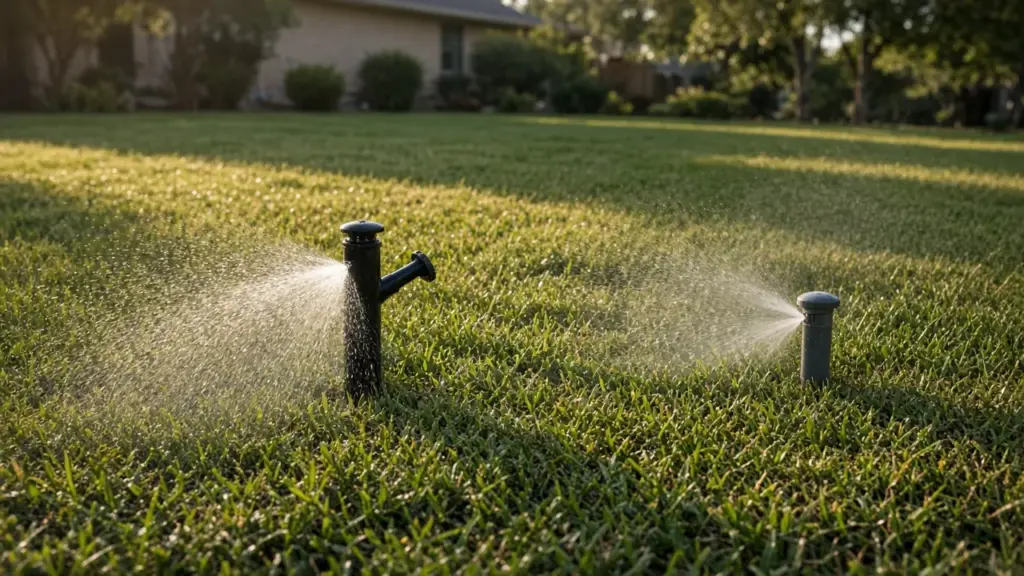
Walk through many older Dallas yards and you will find zones that mix head types: a couple of rotors in the middle of the lawn, spray heads along the edges, maybe a rotary nozzle where a broken head was replaced. Each of those heads applies water at a different rate. When they share a zone and run for the same time, the lawn ends up with soggy spots and dry spots side by side.
The concept that explains this, and the key to fixing it, is matched precipitation. This guide explains what it means and how to rebalance a mixed-head zone.
What Is Precipitation Rate?
Precipitation rate is how fast a sprinkler applies water to the ground, usually expressed in inches per hour. It depends on how much water the head puts out and how large an area it covers.
- Standard spray heads put out a fair amount of water over a small area, so they have a high precipitation rate.
- Rotors put out water over a much larger area, so their precipitation rate is lower.
- Rotary nozzles on spray bodies are designed for a low precipitation rate, often closer to rotors than to sprays.
What Does Matched Precipitation Mean?
Matched precipitation means every head on a zone applies water at about the same rate. When that is true, running the zone for a given time puts roughly the same depth of water everywhere.
Within a head type
For spray heads, matched precipitation rate nozzles scale flow with arc. A quarter-circle nozzle uses about a quarter of the water of a full-circle nozzle in the same series, because it covers a quarter of the area. The result is the same precipitation rate.
For rotors, matched precipitation comes from choosing nozzle sizes in proportion to arc. A half-circle rotor gets a nozzle with roughly half the flow of a full-circle rotor.
Across head types
Different head types cannot be matched to each other simply by choosing nozzles, because their rates are so different. That is why the basic rule is: do not mix sprays and rotors on the same zone.
What Happens When Heads Are Mixed
Imagine a zone where spray heads apply water several times faster than the rotors on the same zone. If you set run time for the rotors, the spray areas get soaked and may run off. If you set run time for the sprays, the rotor areas stay dry. There is no run time that works for both.
On Dallas clay, which absorbs slowly, the spray areas in a mixed zone often produce runoff and puddles, while rotor areas show brown patches.
Signs of a Mismatched Zone
- Soggy spots near some heads and dry spots near others on the same zone
- Runoff from some areas while others look thirsty
- A zone that never seems to have the right run time
- Heads of different types or brands on one zone
- Different nozzle series mixed together
How to Check Your Zones
- Run each zone and look at every head
- Note the type of each head: spray, rotor, or rotary nozzle
- Note nozzle markings where visible
- Look for arcs: quarter, half, and full circle heads should use appropriately sized nozzles
Our guide to reading nozzle arc and radius markings helps identify what you have.
How to Fix a Mixed Zone
Option 1: Convert the whole zone to one type
The most common fix. If a zone is mostly sprays, replace the rotors with sprays or rotary nozzles, depending on spacing. If a zone is mostly rotors in a large area, replace sprays with rotors where spacing allows, or with rotary nozzles if spacing is short.
Option 2: Convert sprays to rotary nozzles
Rotary nozzles have precipitation rates closer to rotors. Converting all sprays on a mixed zone to rotary nozzles can bring the zone much closer to balance, though you should check the manufacturer’s data.
Option 3: Split the zone
If the zone genuinely needs both types, for example rotors in a large open area and sprays in narrow beds, split it into two zones with separate valves.
Option 4: Match nozzles within each type
Even on a single-type zone, replace mismatched nozzles with a single series sized to each arc.
Why Rotary Nozzles Help in Dallas
On clay soil, lower precipitation rates reduce runoff. Converting a spray zone to rotary nozzles both matches precipitation and lowers the rate, which gives water time to soak in. Our guide to upgrading to high-efficiency nozzles explains how.
Head-to-Head Coverage Still Matters
Matched precipitation assumes proper spacing. Heads should throw water far enough to reach neighboring heads. Without head-to-head coverage, even matched heads leave dry areas.
Pressure Affects Precipitation
Pressure that is too high increases flow and misting; too low reduces throw. Both change the actual precipitation rate. Pressure-regulated bodies help keep rates consistent.
Testing Your Zone
A catch cup test shows how evenly water lands. Place containers across the zone, run it for a set time, and measure. Big differences mean the zone is not balanced. Repeat after changes to confirm improvement.
Scheduling Balanced Zones
Once zones are balanced, you can set run times based on each zone’s precipitation rate and your lawn’s needs. Use cycle and soak on spray zones to reduce runoff, and make sure watering finishes before 10 a.m. under Dallas rules. Our guide to programming a controller for Dallas’s schedule covers the details.
How Zones End Up Mixed
Mixed zones rarely start that way. They usually develop over time:
- A broken rotor gets replaced with whatever spray head is available
- A landscaper adds a spray head to cover a new corner
- A previous owner extends a zone into a new bed
- A nozzle breaks and gets replaced with a different series
Each change seems minor, but after several years, a zone can contain a mix of heads that no single run time can serve. Keeping a record of what each zone should contain helps prevent drift.
Beds and Lawns on the Same Zone
Another common mismatch is a zone that waters both lawn and beds. Turf and shrubs have different water needs, and spray heads in beds often hit foliage and walls. Moving beds to drip on a separate zone solves both problems. Our guide to converting spray zones in flower beds to drip explains how.
Keeping Zones Balanced Over Time
Once a zone is balanced, keep it that way. Record the head type and nozzle series for each zone, keep spares on hand, and replace like with like when something breaks.
Frequently Asked Questions
What is matched precipitation?
It means every head on a zone applies water at about the same rate, so the zone waters evenly.
Can I put sprays and rotors on the same zone?
It is best not to. They apply water at very different rates.
Do rotary nozzles match rotors?
Rotary nozzles have lower precipitation rates than standard sprays, often closer to rotors, but check manufacturer data before mixing.
How do I know if my zone is balanced?
A catch cup test shows whether water is applied evenly across the zone.
Get Help Balancing a Zone
We identify mismatched zones and rebalance them with the right heads and nozzles. See our sprinkler repair service, or contact us to schedule. For more on head problems, see our complete guide to sprinkler head repair.
Request Service or call 214-227-7444
We serve homes throughout Dallas and nearby North Texas communities.