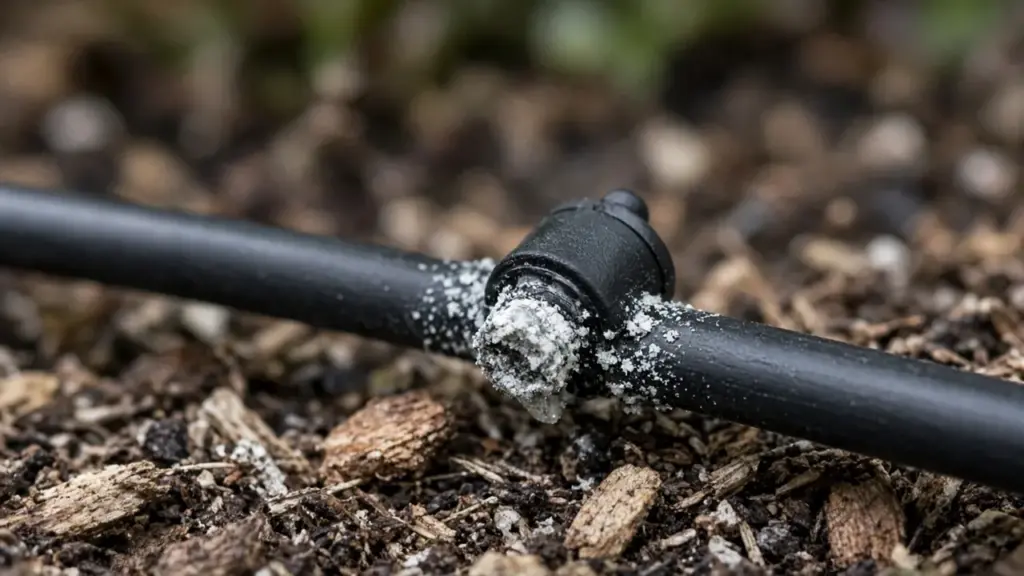
Drip irrigation is one of the most efficient ways to water beds, shrubs, and trees in Dallas. It puts water right at the roots, loses very little to wind and evaporation, and works well with the city’s twice-weekly schedule. But drip has one common weakness: emitters clog. A clogged emitter delivers little or no water, and the plant it serves slowly declines, often without anyone noticing until leaves yellow or a shrub dies back.
The good news is that most clogging has predictable causes, and most can be prevented. This guide covers why emitters clog, how to find the ones that have, and how to fix and prevent the problem.
How Drip Emitters Work
An emitter is a small device that releases water at a controlled rate, usually measured in gallons per hour. Water passes through a narrow path inside the emitter that reduces pressure and flow. Pressure-compensating emitters include a flexible diaphragm that keeps flow steady across a range of pressures.
That narrow path is what makes emitters efficient, and it is also what makes them vulnerable. Anything that narrows it further, whether a grain of sand, a flake of scale, or a bit of algae, cuts flow.
Our drip irrigation repair and design guide explains the full system, from the valve to the emitter.
Common Causes of Clogging
Missing or dirty filter
Every drip zone should have a filter near the valve. Without one, sediment from the water supply, fragments of pipe from past repairs, and debris from line breaks travel straight to the emitters. A filter that is never cleaned eventually restricts flow for the whole zone, and a torn screen lets debris pass.
Mineral scale
Water in many North Texas systems contains dissolved minerals. As water evaporates at the emitter outlet between cycles, minerals can leave a crust that narrows or seals the opening. Emitters in full sun and those that stay partly wet can scale faster.
Soil and mulch backsiphoning
When a drip zone shuts off, water drains from the lowest emitters. That draining can pull a small amount of soil or fine mulch back into higher emitters. Buried emitters and emitters pushed into the soil are especially prone to this. Some systems use an air relief valve at the high point to reduce the vacuum.
Debris after repairs
Cutting drip tubing or PVC during a repair can leave shavings in the line. If the line is not flushed before emitters are reinstalled, those shavings travel to the nearest emitters.
Algae and biofilm
Tubing exposed to sunlight, especially lighter-colored tubing, can grow algae inside. Biofilm can also build up where water sits between cycles.
Insects and roots
Small insects sometimes crawl into emitter outlets. Roots can grow toward and into emitters that stay wet, particularly buried inline tubing without root protection.
How to Find Clogged Emitters
- Run the zone manually. Use your controller’s manual run feature during allowed watering hours.
- Walk the bed. Look for emitters that are dry or barely dripping while others flow.
- Check plant health. A single yellowing or wilted plant among healthy neighbors often means its emitter is clogged.
- Look at the soil. A dry ring where there should be a damp spot points to a problem.
- Check the end of the line. Weak flow at the far end of a run can mean a clogged filter, a leak upstream, or too many emitters on one line.
How to Fix Clogged Emitters
Clean or replace the filter
Start here. Shut off the zone, open the filter housing, and rinse the screen or disc. If the screen is torn or the housing cracked, replace it.
Flush the lines
Open the end caps or flush valves at the ends of each drip line and run the zone until the water runs clear. This clears sediment that has settled in the tubing.
Clean individual emitters
Some emitters can be removed and rinsed, or their caps opened to clear debris. Mild vinegar soaks can loosen scale on removable emitters. Do not poke emitters with pins or wire, which can damage the internal path and change the flow rate.
Replace emitters that will not clear
Emitters are inexpensive. If one will not clear, replace it with the same flow rate so the zone stays balanced. Mixing flow rates on one line can overwater some plants and underwater others.
Repair leaks upstream
A leak upstream can starve emitters downstream. Our guide to converting spray zones to drip covers the parts that make up a proper drip zone, including the pressure regulator.
Prevention
- Install and maintain a filter. Clean it at least a few times a year and after any repair.
- Flush lines in spring during startup and after repairs.
- Keep emitters above the soil or use emitters designed for burial.
- Use a pressure regulator so emitters work within their rated range.
- Keep tubing covered with mulch to reduce algae and protect it from sun.
- Inspect regularly. A quick walk during a manual run each month in the growing season catches problems early.
Our year-round maintenance calendar includes drip checks alongside other seasonal tasks.
When to Replace Instead of Repair
If most emitters in a zone are clogging, the tubing is brittle or cracked, or the system was installed without a filter and regulator, a partial rebuild may make more sense than chasing individual emitters. A professional can evaluate whether the existing tubing is worth keeping and design the zone so each plant gets the water it needs.
Drip and the Dallas Watering Rules
Drip irrigation is generally treated more favorably than spray irrigation under many North Texas watering restrictions, but rules change and details matter. Check the current City of Dallas rules for drip and soaker hoses before assuming a drip zone can run on any day or at any time. Our Dallas watering schedule guide summarizes the current rules and links to the city’s official information.
Emitter Types and Clogging Resistance
Not all emitters clog equally.
- Pressure-compensating emitters keep flow even across a line but have a diaphragm that debris can affect.
- Turbulent-flow emitters use a longer, winding path that can resist clogging better than a simple orifice.
- Inline emitter tubing has emitters built into the tubing at set spacing. It is tidy and good for dense plantings, but individual emitters cannot be swapped, so a badly clogged section may need replacement.
- Adjustable emitters and micro-sprays are handy but generally clog more easily and are harder to keep balanced.
Choosing emitters suited to the plants and the water quality, with a good filter upstream, goes a long way.
Frequently Asked Questions
Why do my drip emitters keep clogging?
The most common causes are a missing or dirty filter, mineral scale, soil pulled back into emitters after shutoff, and debris left from repairs.
Can I clean a clogged drip emitter?
Some emitters can be removed and rinsed or soaked in mild vinegar to loosen scale. If one will not clear, replace it with the same flow rate.
How often should I clean my drip filter?
At least a few times a year, during spring startup, and after any repair on the zone.
Should drip emitters be buried?
Only emitters designed for burial should be buried. Standard emitters work best above the soil and under mulch.
How do I know if an emitter is clogged?
Run the zone and look for dry or barely dripping emitters, dry soil where there should be a wet spot, or a single stressed plant among healthy ones.
Get Help With Drip Irrigation
We repair and redesign drip zones, add filters and regulators, and troubleshoot weak flow. See our sprinkler repair service, or contact us to schedule.
Request Service or call 214-227-7444
We serve homes throughout Dallas and nearby North Texas communities.