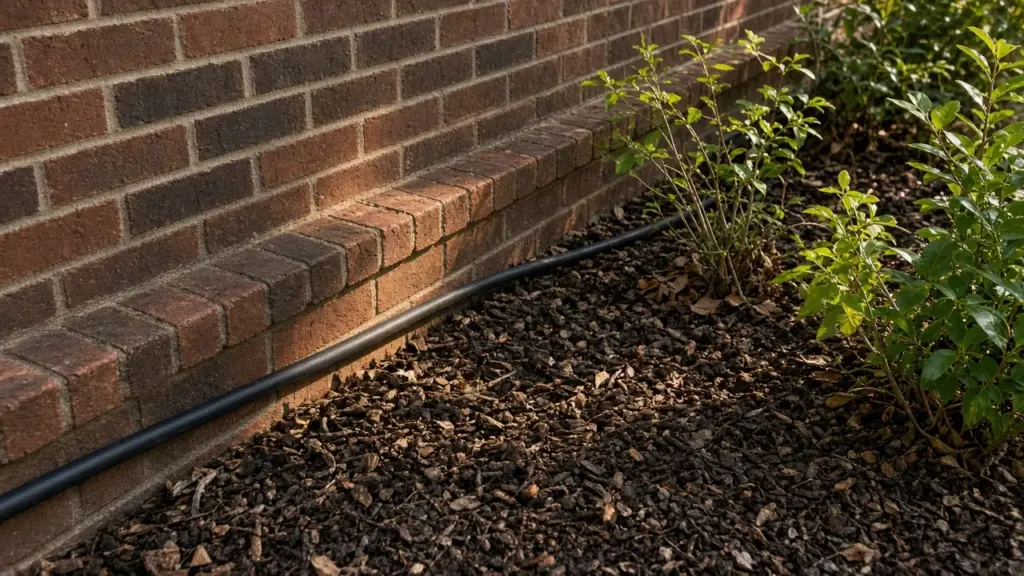
Dallas homeowners hear a lot about foundation watering. On expansive clay, soil around a slab foundation shrinks as it dries and swells as it gets wet. Keeping soil moisture more consistent around the foundation during dry periods is a common practice in North Texas. At the same time, the city limits lawn irrigation to protect water supplies. So what exactly is allowed?
This guide explains what the City of Dallas water conservation rules say about foundation watering, which methods qualify, and how to water efficiently. The city’s water conservation pages are the official source, and a foundation professional is the right person to advise on your specific foundation.
What the Rules Allow
Under the City of Dallas Water Conservation Ordinance, as updated in May 2026, property foundations may be watered on any day, at any time, using:
- A hand-held hose
- A soaker hose
- A drip irrigation device
- A hand-held bucket
These methods are not limited by the twice-weekly schedule or the 10 a.m. to 6 p.m. restriction that applies to automatic sprinkler systems and hose-end sprinklers.
Our guide to the Dallas twice-weekly watering schedule explains the broader rules, and our article on the year-round 10 a.m. to 6 p.m. ban covers the time-of-day rule.
What the Rules Do Not Allow
The foundation exception applies to the methods listed. It does not turn a spray zone into a foundation zone. Running lawn sprinklers or spray heads outside your assigned days, or during restricted hours, on the theory that they water the foundation, is not the same as using a soaker hose or drip line along the foundation.
Also keep in mind the general rules that apply to all watering: do not let water run off into streets, gutters, or alleys, and do not water during rain or freezing conditions.
Why Foundation Watering Comes Up in Dallas
Dallas sits on expansive clay soils that change volume with moisture. During long dry spells, soil can shrink and pull away from a foundation, and cracks can open in the ground. When heavy rain returns, the soil swells. Many homeowners and foundation professionals in North Texas recommend keeping soil moisture more even around the perimeter, especially during extended dry weather.
Our complete guide to Dallas clay soil explains shrink and swell.
Choosing a Method
Soaker hose
A soaker hose weeps water along its length. It is inexpensive and easy to lay along a foundation. Soaker hoses can be uneven over long runs and can degrade over time.
Drip line
Drip line, often inline emitter tubing, delivers water at a controlled rate along its length. A drip line connected to its own valve and zone can be automated, which makes consistent foundation watering easier. It needs a filter and pressure regulator.
Hand-held hose or bucket
Hand watering works for small areas or occasional use. It is time-consuming for a whole foundation.
Where to Place the Line
A foundation line is usually placed a short distance out from the foundation, not against it, and covered with mulch. The goal is to moisten the soil near the foundation evenly, not to pond water against the slab. Recommendations vary, so follow guidance from a foundation professional for your home.
How Much and How Often
There is no single answer. It depends on the weather, the soil, shade, landscaping, and the foundation. The general aim is to prevent extreme drying during long dry spells, not to keep the soil soggy. Too much water near a foundation can create problems too. Watch the soil: if a gap opens between soil and slab, or the soil cracks deeply, it is drying out. If the soil stays muddy, it is getting too much.
Automating Foundation Watering
A dedicated drip zone along the foundation, controlled by your irrigation controller, is a convenient way to water consistently. Because drip is allowed any day in Dallas, you can schedule a foundation drip zone separately from your lawn zones. Keep spray and rotor zones on your assigned days.
Our guide to converting spray zones to drip covers the components of a drip zone, including filters and pressure regulators.
Common Mistakes
- Soaking one side and ignoring others. Uneven moisture defeats the purpose.
- Pooling water against the slab. Keep the line a short distance away and avoid runoff.
- Relying on lawn sprinklers. Spray zones often wet walls and walkways but not the soil where it matters, and they are limited to assigned days.
- Forgetting shade differences. Shaded sides dry more slowly than sunny sides.
- Letting a leak run. A leaking sprinkler line near the foundation adds uncontrolled water.
Sprinkler Leaks Near Foundations
A sprinkler leak near the foundation is worth fixing quickly. Signs include a soggy area near the house, water seeping near a head or valve box, or a zone with weak pressure. Our guide to signs of a hidden sprinkler leak in clay soil can help.
Beds Along the Foundation
Many foundation beds are watered by spray heads that hit brick and windows. Converting those beds to drip keeps water off walls, delivers it to plants, and can double as foundation watering. Keep mulch pulled back from siding and weep holes.
Seasonal Considerations
Foundation watering matters most during extended hot, dry periods, often in mid to late summer. In cooler, wetter months, less or no supplemental water may be needed. Adjust your foundation drip zone seasonally just as you would your lawn zones. During freezes, turn off foundation drip along with the rest of the system.
Working With Professionals
If you notice signs of foundation movement, such as new cracks in walls or doors that stick, talk to a qualified foundation professional. They can evaluate the foundation and recommend a watering approach. An irrigation professional can then set up a drip system to deliver that plan consistently.
A Sample Foundation Drip Setup
A typical foundation drip zone for a Dallas home might include:
- A dedicated valve on the irrigation manifold
- A filter and pressure regulator right after the valve
- Solid supply tubing to the start of each run
- Inline emitter tubing running around the perimeter, a short distance out from the slab, under mulch
- Flush caps at the ends of each run for cleaning
With the zone on its own program, you can run it on days and at times that make sense for the weather, separate from your lawn’s assigned days.
Frequently Asked Questions
Can I water my foundation any day in Dallas?
Yes. The City of Dallas allows foundations to be watered any day, at any time, using a hand-held hose, soaker hose, drip irrigation device, or hand-held bucket.
Can I use my sprinklers to water my foundation outside my watering days?
No. The foundation exception covers the listed methods, not spray or rotor sprinkler zones.
Is drip better than a soaker hose for foundations?
Drip line tends to be more even and easier to automate, while soaker hoses are simpler and less expensive. Both are allowed.
How much should I water my foundation?
It depends on conditions. The goal is to avoid extreme drying, not to keep soil soggy. Consult a foundation professional for your home.
Get Help With Foundation Watering
We install foundation drip zones, convert beds to drip, and repair leaks near foundations. See our sprinkler repair service, or contact us to schedule.
Request Service or call 214-227-7444
We serve homes throughout Dallas and nearby North Texas communities.