Every automatic sprinkler system connected to a public water supply in Texas must have a backflow prevention device. That device keeps irrigation water, which may contain fertilizer, soil, and bacteria, from being pulled back into the drinking water. Because the device protects public health, some assemblies need periodic testing to confirm they still work.
Many homeowners never think about backflow testing until a notice arrives from the water utility or a repair technician mentions it. This guide explains what a test involves, who is qualified to perform it, when it is typically required, and how to prepare. Always confirm current requirements with your water utility, since local rules determine when tests are due.
What a Backflow Test Checks
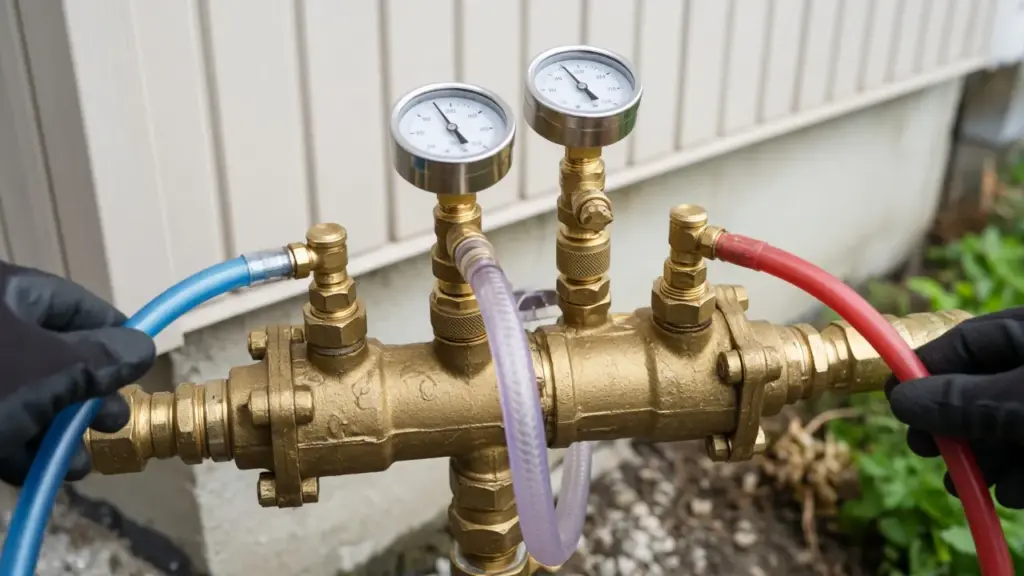
A backflow assembly contains check valves, and some types also contain a relief valve or an air inlet. Over time, debris, mineral buildup, worn rubber, and freeze damage can keep these parts from sealing. A test uses a calibrated gauge connected to the test cocks on the assembly to confirm each part holds pressure and opens or closes when it should.
The test does not require digging and usually takes a short time once the tester has access to the assembly. The water to the irrigation system is shut off briefly during the test.
Our overview of what a backflow preventer does explains the parts inside the assembly.
Who Can Test a Backflow Assembly
In Texas, backflow prevention assembly testing is performed by a licensed Backflow Prevention Assembly Tester, a license issued by the Texas Commission on Environmental Quality (TCEQ). Testers use gauges that must be kept calibrated.
A few points to keep in mind:
- An irrigator license and a tester license are different. Some irrigation professionals hold both, but not all do.
- Utilities may keep a list of registered testers. Some water utilities require testers to register with them before submitting reports.
- Test reports go on specific forms. Results are usually recorded on a form the utility accepts, and the tester or homeowner submits it.
If you are unsure whether someone is qualified, ask to see their tester license and confirm it with the state or your utility.
When Testing Is Typically Required
Testing requirements depend on the type of assembly and local rules. Common triggers include:
- At installation. New assemblies are commonly tested when installed to confirm they work before the system goes into service.
- After repair or replacement. When an assembly is repaired, rebuilt, or replaced, a test confirms it works.
- Periodically. Some utilities require periodic testing of certain assemblies, and some send reminder notices when a test is due.
- When the utility asks. A utility can request a test as part of its cross-connection control program.
Dallas homeowners should check with Dallas Water Utilities for current requirements. Our backflow prevention and irrigation code guide covers the broader code picture.
Which Devices Are Testable
Not all backflow devices have test cocks.
- Pressure vacuum breakers (PVBs) have test cocks and are testable.
- Double check assemblies have test cocks and are testable.
- Reduced pressure zone assemblies (RPZs) have test cocks and a relief valve, and are testable.
- Atmospheric vacuum breakers usually do not have test cocks.
If your system has an assembly with test cocks, it is designed to be tested.
What Happens If a Test Fails
A failed test means one or more parts are not sealing or opening correctly. Common causes include debris lodged in a check valve, worn rubber parts, a damaged relief valve, or freeze damage. Often the assembly can be repaired with a rebuild kit or replacement internal parts. If the body is cracked, the assembly may need replacement. After repair or replacement, a retest confirms the assembly passes.
How to Prepare for a Test
- Make the assembly accessible. Clear plants, mulch, or covers so the tester can reach the test cocks.
- Know where your shutoff is. The tester may need to shut off the water to the irrigation system.
- Plan for a short interruption. The system will be off during the test.
- Keep your paperwork. Keep a copy of the test report for your records.
Common Questions About Cost and Frequency
Testing costs vary by provider and by whether repairs are needed. We do not publish a standard price because every assembly and access situation is different. Frequency depends on local rules and the assembly type, so check with your utility.
Why Testing Protects You Too
A working backflow assembly protects your household water as well as your neighbors’. If pressure drops on the main, for example during a water main break or firefighting, a failed assembly could let irrigation water flow backward into the pipes that serve your kitchen. Testing confirms the device will do its job when it matters.
Keeping Records
Keep a simple file with the assembly type, size, serial number if visible, installation date, and past test reports. When a notice arrives or a repair is needed, this information speeds things up. Some homeowners snap a photo of the assembly and its label for reference.
Freeze Damage and Testing
Dallas freezes are usually short, but they are hard on backflow assemblies because the devices sit above ground, full of water. A crack in the body or a damaged internal part may not be obvious until the system is turned back on in spring. If your assembly leaks, sprays from the relief valve, or loses pressure after a freeze, have it inspected. Once repaired or replaced, a test confirms it works properly.
Preventing freeze damage is simpler than repairing it. Our guide to protecting backflow preventers before a hard freeze explains covers, enclosures, and draining, and our winterizing guide covers the rest of the system.
Signs Your Assembly Needs Attention Before a Test
You do not have to wait for a notice to spot trouble. Call for an inspection if you notice:
- Water dripping or spraying from the assembly when the system runs
- Constant discharge from the relief valve on an RPZ
- Water spitting from the air inlet on a pressure vacuum breaker
- Visible cracks, bulges, or corrosion on the body or bonnet
- A sudden drop in pressure across all zones
Addressing these issues early can prevent a failed test and a longer repair. A qualified technician can tell you whether the fix is a simple part replacement or a full assembly. For broader context on how backflow devices fit into the system, see our Dallas sprinkler maintenance calendar.
Frequently Asked Questions
Who can test my backflow preventer in Texas?
A licensed Backflow Prevention Assembly Tester, a license issued by TCEQ. Your water utility may also require testers to register with it.
How often does a backflow preventer need to be tested?
It depends on the assembly type and local rules. Common triggers are installation, repair or replacement, periodic requirements, and utility requests.
Does a backflow test require digging?
No. The tester connects a gauge to test cocks on the assembly, which is usually above ground.
What happens if my backflow preventer fails the test?
It usually needs repair with replacement parts or, if the body is damaged, replacement, followed by a retest.
Can I test it myself?
Testing for compliance must be performed by a licensed tester with a calibrated gauge.
Schedule a Backflow Check
We can inspect your backflow assembly, repair leaks and freeze damage, and help you understand what your utility requires. Learn about our sprinkler repair service, or contact us to schedule.
Request Service or call 214-227-7444
We serve homes throughout Dallas and nearby North Texas communities.