Homeowners often think about watering and mowing as separate chores. In reality, they are closely connected. How high you cut the grass affects how deep roots grow, how much the soil is shaded, how quickly the lawn loses moisture, and how well it handles Dallas summer heat. Mowing at the right height can make your irrigation go further.
This guide explains the relationship between mowing height and watering needs, with tips for common Dallas grasses.
How Mowing Height Affects Water Use
Roots Mirror Shoots
In general, grass that is allowed to grow taller develops deeper roots, while grass mowed very short tends to have shallower roots. Deeper roots can reach water stored lower in the soil, helping the lawn go longer between waterings. Shallow roots depend on frequent watering and dry out quickly in heat.
Shade on the Soil
Taller grass shades the soil surface, keeping it cooler and reducing evaporation. Shaded soil also discourages some weed seeds from germinating. Scalped lawns expose soil to direct sun, which dries it faster.
Leaf Area and Stress
Grass blades produce the energy the plant needs to grow roots. Cutting too much at once removes leaf area and stresses the plant, which can slow root growth and make the lawn more vulnerable to heat and drought.
Recommended Heights for Dallas Grasses
Recommended heights vary by grass type and variety. General guidance from turf experts includes:
- St. Augustine: typically mowed relatively tall compared with other warm-season grasses. Many recommendations fall in the range of a few inches. Mowing too low weakens St. Augustine and can invite problems.
- Bermuda: tolerates and often prefers lower mowing heights. Common Bermuda is typically mowed lower than St. Augustine, and hybrid Bermudas can be mowed lower still.
- Zoysia: varieties differ; many are mowed at moderate heights.
Check recommendations for your specific grass variety from a local extension service or turf supplier. Our guides to St. Augustine watering, Bermuda grass watering, and Zoysia irrigation tips cover each grass.
The One-Third Rule
A widely used guideline is to remove no more than about one-third of the grass blade at a time. Cutting more than that stresses the grass. If the lawn has grown tall, lower it gradually over several mowings.
Raise the Height in Summer
Many turf experts recommend mowing at the higher end of the range for your grass during summer heat and drought. The extra height helps shade soil and support deeper roots when water is limited to twice-weekly sprinkler watering. In Dallas, where automatic sprinklers are restricted to two assigned days per week and prohibited between 10 a.m. and 6 p.m. year-round, a lawn that holds moisture longer between watering days is a real advantage.
Shade Lawns
Grass growing in shade often benefits from a higher mowing height, which gives it more leaf area to capture limited light. Shaded lawns also use less water than sunny ones. Our guide to shade lawns and irrigation adjustments explains how to adjust watering in shaded areas.
Mowing and Sprinkler Heads
Mowing height affects sprinkler heads too:
- Heads set too high get clipped by mowers.
- Taller grass can block spray from heads set too low.
- Pop-up height should clear the grass so spray is not blocked.
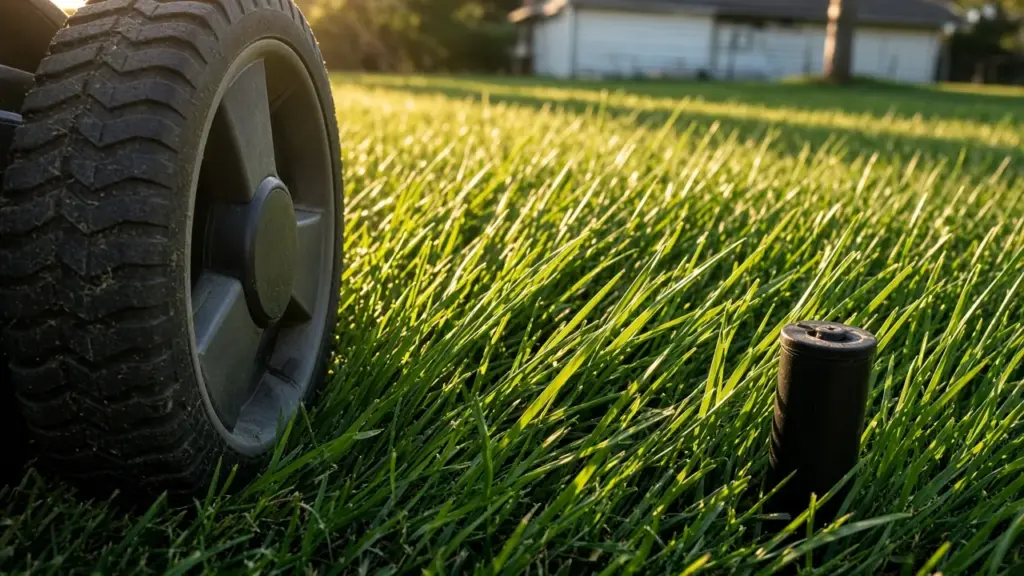
If you raise your mowing height, check whether heads still clear the grass when they pop up. Taller pop-up bodies may be needed in St. Augustine lawns mowed high. Our guide to raising sunken sprinkler heads in black clay covers head height.
Sharp Blades Matter
Dull mower blades tear grass rather than cutting cleanly, leaving ragged tips that lose more moisture and can turn brown. Sharpen blades regularly during the growing season.
Mowing Wet Grass
Mowing when grass and soil are wet can clump clippings, leave ruts in clay soil, and spread disease. Schedule mowing when the lawn has dried, not right after a watering cycle.
Grass Clippings and Moisture
Leaving clippings on the lawn, often called grasscycling, returns nutrients and organic matter to the soil. Short clippings break down quickly and do not typically cause thatch problems on their own. Over time, the added organic matter can help soil hold moisture.
Scalping
Scalping, cutting grass extremely short, is sometimes done on Bermuda lawns in early spring to remove dormant growth. Scalping at other times or on St. Augustine can seriously stress the lawn. After any scalping, the lawn needs time and appropriate water to recover.
Signs Your Mowing Height Is Increasing Water Needs
- Lawn browns quickly between watering days
- Soil surface dries out rapidly
- Shallow roots that pull up easily
- Weeds taking over thin areas
If you see these signs, consider raising the mowing height and adjusting irrigation for deep, infrequent watering. Our guide to deep and infrequent watering for clay soil explains the approach.
Mowing Services and Irrigation
If a lawn service mows your yard, discuss mowing height, especially in summer. Ask the crew to watch for sprinkler heads and to report any damage.
Putting It Together
- Mow at the recommended height for your grass, at the higher end in summer.
- Follow the one-third rule.
- Keep blades sharp.
- Leave clippings.
- Mow when grass is dry.
- Check that sprinkler heads clear the grass.
- Water deeply on your assigned days.
Mowing Frequency Through the Season
How often you mow matters as much as how high. In late spring and early summer, when warm-season grasses grow fastest, weekly mowing or more may be needed to follow the one-third rule. In midsummer heat, growth often slows, particularly on lawns with limited water. In fall, growth slows further as temperatures drop, and mowing can become less frequent. Adjusting frequency to growth, rather than mowing on a fixed calendar, keeps the lawn at a steady height and avoids removing too much at once.
Heat and Mowing Time of Day
Mowing in the heat of a Dallas summer afternoon stresses both the lawn and the person pushing the mower. Grass cut during peak heat loses moisture from fresh cuts when it is already under stress. Many homeowners mow in the early evening or morning after dew dries. Avoid mowing immediately after a watering cycle, when soil is soft and grass is wet.
Thatch and Water Movement
Thatch is a layer of living and dead stems and roots between the grass blades and the soil. A thin layer is normal. A thick layer can repel water, causing sprinkler water to run off rather than soak into the soil. St. Augustine and Bermuda can both build thatch, especially with heavy fertilizing and frequent watering. If water seems to bead up and run off even on flat ground, check thatch depth by cutting a small wedge from the lawn. Dethatching or core aeration may help when thatch is excessive. Our guide to Dallas lawn irrigation by grass type covers other grass-specific considerations.
Frequently Asked Questions
Does mowing height affect how much water my lawn needs?
Yes. Taller grass generally develops deeper roots and shades the soil, reducing evaporation and helping the lawn go longer between waterings.
Should I mow higher in summer?
Many turf experts recommend mowing at the higher end of the range for your grass during summer heat.
What is the one-third rule?
Remove no more than about one-third of the grass blade in a single mowing.
Can mowing damage sprinkler heads?
Yes, if heads sit above grade. Set heads flush with the soil so mowers pass over them.
Get Help With Heads and Coverage
We adjust head heights, replace mower-damaged heads, and fix coverage problems. See our sprinkler repair service, or contact us to schedule.
Request Service or call 214-227-7444
We serve homes throughout Dallas and nearby North Texas communities.