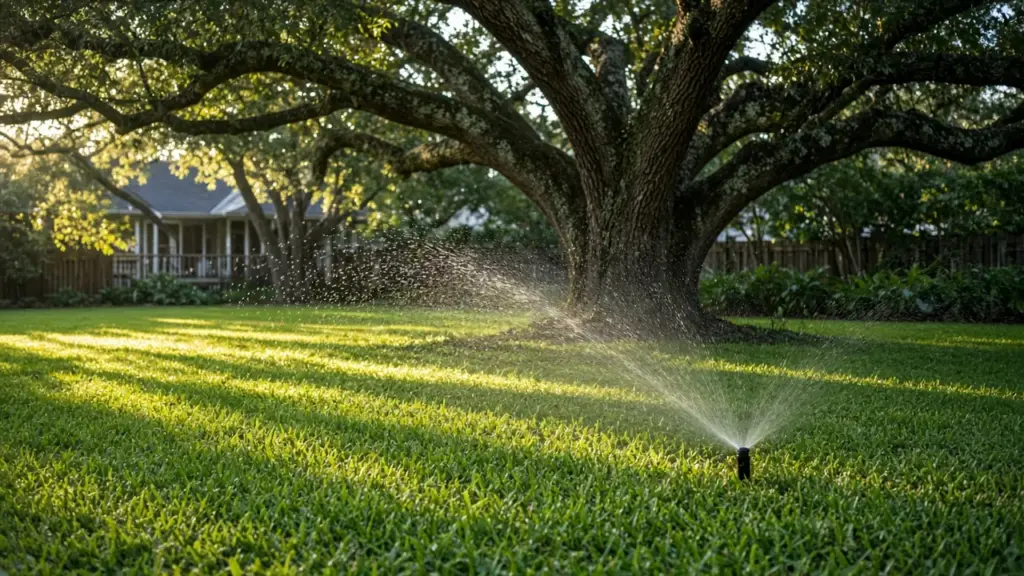
Mature trees are one of the best things about established Dallas neighborhoods. They also create shade, and shaded lawns behave very differently from sunny ones. Shade reduces evaporation and the grass’s water use, so shaded turf needs less water. Yet many irrigation systems water shaded and sunny areas on the same zone for the same time. The result is often thin, soggy, disease-prone turf in the shade and dry turf in the sun.
This guide explains how shade affects watering, how to adjust your system, and when a different approach makes more sense.
Why Shade Changes Water Needs
- Less evaporation: shaded soil stays moist longer
- Lower grass water use: grass in shade grows more slowly and uses less water
- Cooler temperatures: reduce stress and water demand
- Tree root competition: roots take water from the soil, sometimes offsetting some of the savings
Because of these factors, shaded areas usually need shorter run times than sunny areas.
Signs Your Shade Is Overwatered
- Soft, spongy turf
- Moss or algae on the soil surface
- Mushrooms
- Thin grass with fungal spots
- Soil that stays wet between watering days
Signs Your Shade Is Underwatered
Less common, but possible under trees with heavy root competition:
- Thin, wilting grass under the canopy
- Dry, hard soil despite shade
Check before assuming either.
Step 1: Map Your Shade
Walk your yard at different times of day and note which areas get full sun, partial shade, and full shade. Shade patterns change with the seasons and as trees grow. An area that got afternoon sun five years ago may be in shade now.
Step 2: Zone by Exposure
The best fix is to put sunny and shaded areas on separate zones. Then each zone can run for the right amount of time. If your system has a zone that crosses both, splitting it may involve adding a valve and some pipe.
Step 3: Adjust Nozzles
If splitting zones is not practical, adjust nozzles in shaded areas to deliver less water. Options include lower-flow nozzles or reducing the radius where appropriate. Be careful not to create dry spots. Mixing nozzle types on one zone can cause imbalance, so choose nozzles in the same series with lower flow.
Our guide to reading nozzle arc and radius markings helps you choose.
Step 4: Set Run Times
Shaded zones often need substantially less water than sunny zones. Start with shorter run times and watch the turf. If the soil stays wet, reduce further. Smart controllers with a sun exposure setting per zone can help calculate run times.
Step 5: Water in the Morning
Dallas prohibits sprinkler watering between 10 a.m. and 6 p.m. year-round. For shaded areas, early morning watering is especially important. Evening watering leaves turf wet overnight, and shaded turf dries slowly, increasing disease risk.
Grass Choice Matters
Some grasses tolerate shade better than others.
- St. Augustine: among the more shade-tolerant warm-season grasses, though it still needs some sun
- Zoysia: some varieties tolerate partial shade
- Bermuda: needs full sun and thins in shade
If Bermuda is struggling under trees, watering more will not help. Consider a more shade-tolerant grass, groundcover, or beds. Our guides to St. Augustine watering and zoysia irrigation cover those grasses.
When to Stop Fighting for Grass
In deep shade, no turf grass thrives. Rather than overwatering thin grass, consider:
- Shade-tolerant groundcovers
- Mulched beds with shade plants on drip
- Hardscape or seating areas
Converting shade areas away from turf can reduce water use and maintenance.
Trees and Shade Lawns
Tree roots compete with grass for water and nutrients. Under dense canopies, grass may struggle even with correct watering. Trees benefit from deep watering during drought, which lawn zones do not provide. Drip rings under the canopy can help trees without overwatering grass.
Disease and Shade
Warm-season grasses in shade are more prone to fungal problems, particularly in spring and fall when temperatures are mild and moisture is high. Avoid overwatering during these seasons. Brown patch in St. Augustine is a common example. Reducing irrigation and improving air flow by pruning trees can help.
Seasonal Changes
Deciduous trees drop leaves in winter, so shade is lighter in winter and heavier in summer. Evergreen trees shade year-round. Adjust shaded zones seasonally, and remember that warm-season grass is dormant in winter regardless.
A Real-World Example
Consider a back yard where one zone waters a sunny open area near the fence and a shaded area under a large tree near the house. The zone runs long enough to keep the sunny area green, so the shaded area stays wet, the grass thins, and moss appears. Splitting the zone, adding a valve for the shaded area, and giving it about half the run time solves both problems: the sunny area stays green, and the shaded area dries between cycles.
Pruning to Let in Light
Sometimes the best help for a shade lawn is more light. Selective pruning by a qualified arborist can raise the canopy and thin branches, letting more sun reach the turf and improving air flow. That can make the grass healthier and change its water needs, so adjust run times afterward.
Checking Soil Moisture Before You Adjust
Before cutting run times, check the soil. Push a long screwdriver into the soil in a shaded area the day before a watering day. If it slides in easily several inches deep, the soil still has plenty of moisture. If it stops short in hard, dry soil, the area may actually need more water, often because of tree roots. Compare with a sunny area. This simple test keeps you from guessing and helps set run times for each zone.
Leaf Litter and Heads in Shade
Shaded areas under trees collect leaves, twigs, and seed pods that can block heads and clog nozzles. In fall especially, clear debris from heads so they pop up and spray properly. A head buried under leaves may leave a dry patch that tempts you to add run time to the whole zone. Our complete guide to sprinkler head repair covers clogged nozzles and heads that stick, and our grass-type irrigation guide compares how common Dallas grasses handle shade.
Mowing Shade Lawns
Mowing a little higher in shade can help turf capture more light and hold up better. Avoid heavy traffic on shaded turf, which recovers slowly.
Fertilizing Shade Lawns
Shaded turf grows more slowly and generally needs less fertilizer than turf in full sun. Heavy fertilization in shade can push weak growth that is more prone to disease, especially when combined with extra water. Follow local guidance and adjust for the reduced light.
Frequently Asked Questions
Do shaded lawns need less water?
Yes. Shade reduces evaporation and grass water use, so shaded turf usually needs less water than turf in full sun.
Should shaded and sunny areas be on separate zones?
Ideally yes, so each can be watered appropriately.
Why is my grass thin under trees?
Too little light, root competition, or overwatering can all cause thin turf in shade.
What is the best grass for shade in Dallas?
St. Augustine and some zoysia varieties tolerate partial shade better than Bermuda. Deep shade may call for groundcover or beds.
Get Help With Shade Lawns
We rezone and adjust sprinkler systems so shaded and sunny areas get the right water. See our sprinkler repair service, or contact us to schedule.
Request Service or call 214-227-7444
We serve homes throughout Dallas and nearby North Texas communities.