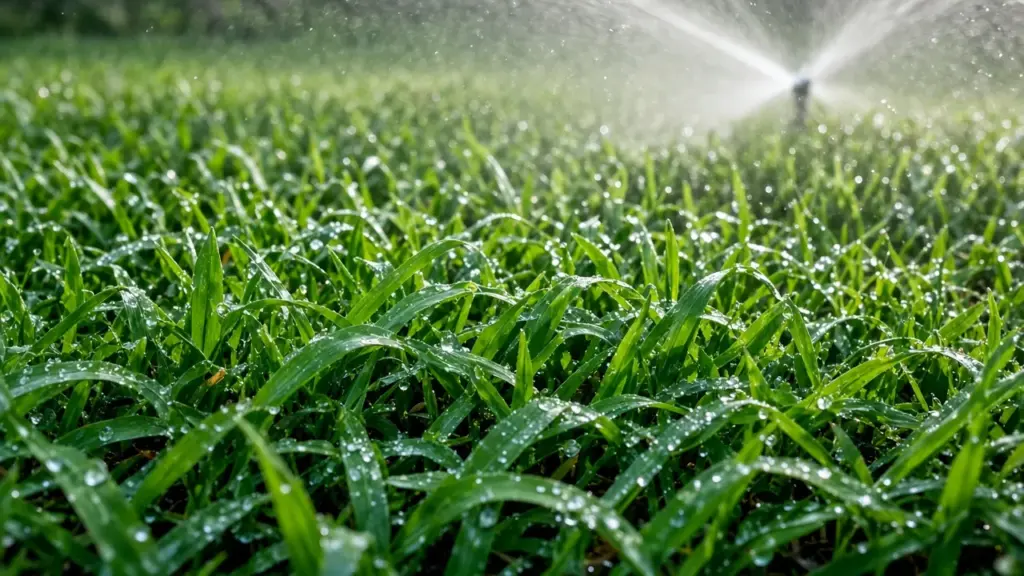
St. Augustine is the most familiar lawn grass in many Dallas neighborhoods. Its wide, dark green blades fill in shaded front yards where Bermuda struggles, and a healthy St. Augustine lawn looks thick and lush. It is also sensitive to how it is watered. Too little and it shows stress quickly in summer heat. Too much, especially in shade, and it invites fungal disease.
This guide explains how St. Augustine uses water, how to set up irrigation for sun and shade, and how to avoid the most common watering mistakes in Dallas lawns. It builds on our pillar guide to irrigating Dallas lawns by grass type.
How St. Augustine Grows
St. Augustine is a warm-season grass that spreads by above-ground runners called stolons. It grows actively from spring through fall and slows down in winter. Compared with Bermuda, it:
- Tolerates more shade
- Has coarser, wider blades
- Is often mowed at a taller height
- Tends to show drought stress faster in full sun
Signs St. Augustine Needs Water
- Blades folding lengthwise or curling
- A dull, blue-gray tint instead of bright green
- Footprints that remain visible after walking across the lawn
- Soil that is dry several inches down the day after watering
Signs St. Augustine Is Getting Too Much
- Soft, spongy turf
- Circular or irregular brown patches, especially in cooler, humid weather
- Mushrooms or algae
- Shallow roots and thinning in shade
Sun vs. Shade: The Most Important Difference
St. Augustine in full sun and St. Augustine under trees have very different water needs. Shaded turf loses less water to evaporation and grows more slowly, so it needs less irrigation. The problem is that many Dallas systems water sun and shade on the same zone. When owners increase run times to keep the sunny areas green, the shaded areas get far too much water.
Fixes
- Split sun and shade zones where possible, so each gets its own run time.
- Change nozzles in shaded areas to apply less water, if splitting is not practical.
- Adjust arcs so shade heads do not overlap heavily with sun heads.
Our valve repair guide explains how zones are split.
Watering Schedule for St. Augustine
Dallas allows automatic irrigation up to twice a week on your assigned days, with no sprinkler watering between 10 a.m. and 6 p.m. year-round. St. Augustine does well with that schedule when watering is deep and efficient.
Water early in the morning
Morning watering lets blades dry during the day. Evening watering leaves the turf wet overnight, which favors brown patch and other fungal problems. If you must water in the evening, start soon after 6 p.m.
Water deeply
Aim to wet the root zone rather than the surface. Deep watering encourages deeper roots that handle heat better.
Use cycle and soak
On Dallas clay, split each zone into two or three shorter cycles with rest periods between them. That reduces runoff and helps water reach the roots. Our controller programming guide explains how.
Adjust for the season
St. Augustine needs the most water in the heat of summer and much less in spring and fall. Use seasonal adjust to scale run times instead of reprogramming.
Irrigation Equipment for St. Augustine
Pop-up height
Because St. Augustine is mowed relatively tall, taller pop-up heads help clear the grass blades. Heads that sit too low spray into the turf and leave dry rings.
Head type
Rotors and rotary nozzles apply water slowly, which suits clay. Fixed sprays work in small areas but can cause runoff. Keep one type per zone. Our comparison of spray heads, rotors, and rotary nozzles explains the trade-offs.
Coverage
St. Augustine thins quickly in dry arcs between heads. If brown areas show up in the same spots every summer, check head spacing, nozzle size, and pressure before adding water.
Checking Your Work
After changing zones or run times, give the lawn a couple of weeks and then check. Push a screwdriver into the soil in sun and shade areas the day after watering; it should slide in several inches in both. Look at the color and texture of the turf, and walk the zones while they run to confirm every head pops up and covers its area. Small adjustments based on what you see work better than large changes all at once.
Brown Patch and Watering
Brown patch is a fungal disease that commonly affects St. Augustine in Dallas, especially during cooler, humid weather in spring and fall. Irrigation habits that keep leaves wet for long periods make it worse. To reduce the risk:
- Water in the morning, not the evening.
- Reduce watering in shade and in cooler months.
- Avoid overwatering and fix leaks that keep soil saturated.
If disease persists, consult a lawn care professional for diagnosis and treatment.
Summer Heat and St. Augustine
In Dallas summers, St. Augustine in full sun can struggle even with good irrigation. Help it by:
- Making sure heads pop up fully and cover evenly
- Raising the mowing height
- Using cycle and soak to get water into the soil
- Watering both assigned days during heat waves, early in the morning
- Checking for chinch bugs if sunny areas brown despite adequate watering
Mowing, Fertilizing, and Water
Irrigation works together with the rest of your lawn care.
- Mowing height: St. Augustine is usually kept taller than Bermuda. Taller blades shade the soil, reduce water loss, and support deeper roots. Scalping it short makes it more sensitive to heat and drought.
- Sharp blades: clean cuts lose less moisture than torn blade tips.
- Fertilizer timing: heavy fertilizing in hot weather pushes growth that the lawn then struggles to support with water. Follow a lawn care professional’s guidance for timing and rates.
- Thatch: a thick thatch layer can keep water from reaching the soil. If water beads up or runs off quickly, thatch or compacted soil may be the issue.
Common Irrigation Mistakes With St. Augustine
- Watering every allowed day for short periods instead of deeply
- Evening cycles that leave the lawn wet all night
- One run time for sun and shade on the same zone
- Heads buried below the turf so water never clears the blades
- Adding run time to fix a coverage problem, which floods other areas
- Leaving summer run times in place through fall
Correcting even two or three of these often makes a visible difference within a few weeks during the growing season.
Frequently Asked Questions
How often should I water St. Augustine in Dallas?
Up to twice a week on your assigned days, deeply, and early in the morning. Adjust run times for the season and for sun versus shade.
Why is my St. Augustine dying in the shade?
Shaded St. Augustine often gets too much water when it shares a zone with sunny turf. Reduce watering in shade and water in the morning.
Is evening watering bad for St. Augustine?
Evening watering leaves blades wet overnight, which can encourage fungal disease. Morning is better.
Why do I have brown spots in the same place every summer?
That usually points to coverage problems such as low heads, wide spacing, or mismatched nozzles.
Do I need taller sprinkler heads for St. Augustine?
Taller pop-ups help clear the taller mowing height typical of St. Augustine.
Get Your St. Augustine Irrigation Tuned
We can split sun and shade zones, raise low heads, and program your controller for healthy St. Augustine. Learn about our sprinkler repair service, or contact us to schedule.
Request Service or call 214-227-7444
We serve homes throughout Dallas and nearby North Texas communities.