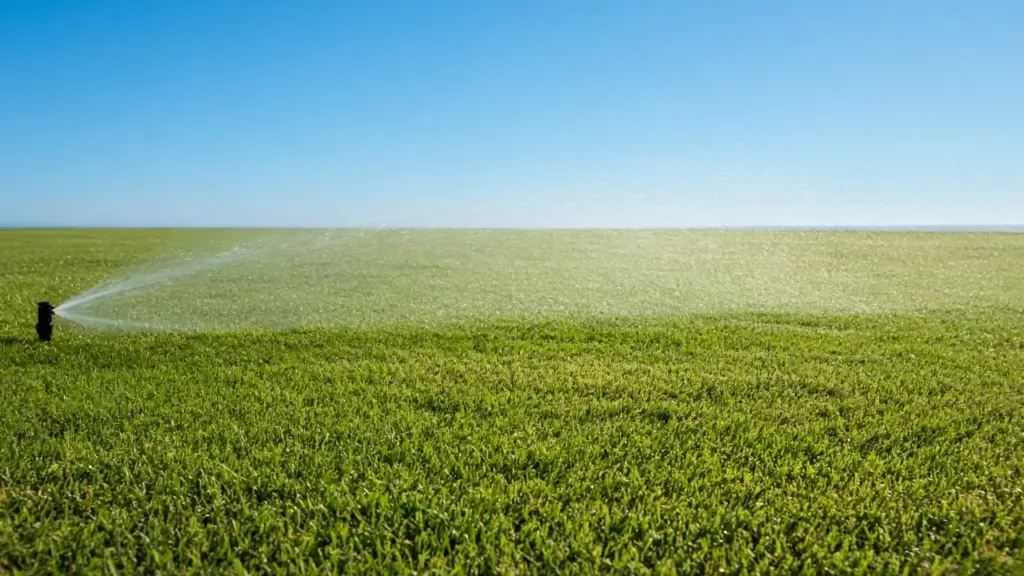
Bermuda grass is one of the most common lawn grasses in Dallas and across North Texas. It loves full sun, tolerates heat, recovers quickly from wear, and can survive drought by going dormant. Those strengths make it a good fit for the region, but Bermuda still needs the right watering approach to stay green and dense through a DFW summer.
This guide explains how Bermuda grows, how much water it tends to need, and how to water it well within Dallas’s twice-weekly schedule and year-round daytime restriction.
How Bermuda Grass Grows
Bermuda is a warm-season grass. It grows actively when temperatures are warm and slows or goes dormant when temperatures drop in fall and winter. It spreads by both above-ground runners and underground stems, which is why it fills in bare spots quickly.
Bermuda roots can grow deep when soil conditions and watering habits allow it. Deep roots are the key to drought tolerance. Frequent shallow watering keeps roots near the surface and makes the lawn more sensitive to heat.
Bermuda needs full sun. In shade, it thins out regardless of watering. Our guide to irrigating Dallas lawns by grass type compares Bermuda with other common grasses.
How Much Water Bermuda Needs
Water needs vary with temperature, sun, wind, soil, and how the lawn is maintained. As a general guide, many established warm-season lawns in North Texas summer do well with roughly an inch of water per week from rain and irrigation combined, and less in spring and fall. Bermuda can often get by on less than St. Augustine.
Rather than chasing a fixed number, watch the lawn. Signs Bermuda needs water include:
- A dull, bluish-gray color
- Footprints that stay visible after you walk across it
- Leaf blades folding or curling
If you see these signs on your non-watering days during a heat wave, check coverage before adding run time. Dry spots are often a sprinkler problem, not a schedule problem.
Water Deeply, Not Often
Dallas limits automatic irrigation to two assigned days per week. For Bermuda, that fits well with deep, infrequent watering. The goal is to wet the soil several inches deep on each watering day so roots follow the water down.
On clay soil, deep watering requires cycle and soak. Clay absorbs water slowly, so a single long cycle runs off. Split each zone’s run time into two or three shorter cycles with a soak period in between. Our guide to programming a controller for the Dallas schedule shows how.
Timing Within Dallas Rules
Sprinkler watering is not allowed between 10 a.m. and 6 p.m. year-round in Dallas. Early morning is usually the best window: winds are calmer, evaporation is lower, and grass dries as the day warms. Our article on the year-round watering ban explains the rule and how to adjust.
Check Your Coverage
Bermuda shows coverage problems quickly because it needs full sun and even water. A brown arc between heads, a dry strip along a sidewalk, or a crescent near a tilted head all point to coverage issues.
Walk each zone while it runs:
- Make sure every head pops up fully and sprays cleanly
- Check that spray reaches the next head
- Look for tilted, sunken, or blocked heads
- Watch for misting from high pressure
Our sprinkler head repair guide covers common fixes.
Bermuda Dormancy
Bermuda goes dormant in cold weather and turns tan. It can also go semi-dormant during extreme summer drought if it does not get enough water. Dormancy is a survival mechanism, not death, and Bermuda typically greens up when conditions improve.
In winter, dormant Bermuda needs very little irrigation. Reduce run times sharply or turn the system off during cool, wet periods, while keeping an eye on extended dry spells.
Signs of Overwatering Bermuda
Too much water causes problems too:
- Soggy soil and puddles
- Weed growth, especially sedges and other moisture-loving weeds
- Shallow roots
- Fungal issues
If the lawn stays wet, reduce run times and check for leaks.
Mowing and Watering Work Together
Bermuda is typically mowed shorter than St. Augustine. Mowing at a consistent height and not removing too much at once helps the lawn handle heat. Dull mower blades shred grass, which increases water loss. Keep blades sharp.
Fertilizer and Water
Fertilizer pushes growth, and growing grass needs more water. Heavy fertilization during a hot, dry stretch can stress the lawn. Follow local guidance for timing and amounts, and water in fertilizer as directed.
Month-by-Month Adjustments
- Spring: as Bermuda greens up, start with modest run times and increase as temperatures rise.
- Summer: peak water need. Water deeply on your assigned days with cycle and soak.
- Fall: reduce run times as temperatures cool.
- Winter: dormant; minimal irrigation.
Use your controller’s seasonal adjust feature to make these changes quickly.
Bermuda in Parkways and Slopes
Parkway strips between the sidewalk and street, and sloped front yards, are especially tough spots for Bermuda. Heat radiates from concrete, water runs off slopes, and narrow strips are hard to cover without overspray. Use nozzles designed for narrow strips, cycle and soak on slopes, and check these areas first during heat waves.
A Simple Catch-Cup Test
Want to know how much water your zones actually apply? Place several straight-sided containers, such as tuna cans or purpose-made catch cups, across a zone. Run the zone for a set time, then measure the water in each container.
- If the depths are similar, coverage is even.
- If some containers have much less, you have a coverage gap near those spots.
- Divide the average depth by the run time to estimate how much water the zone applies per minute.
With that number, you can set run times to deliver the water your Bermuda needs instead of guessing. Repeat the test after any head or nozzle changes. Spray zones and rotor zones apply water at very different rates, so test each zone separately.
Common Mistakes With Bermuda
- Watering a little every allowed day. Short cycles encourage shallow roots.
- Ignoring runoff. Water running into the street is water the lawn never gets.
- Fixing dry spots with longer run times. If one area is dry and the rest is fine, adjust or repair heads instead of overwatering the whole zone.
- Keeping summer run times into fall. Cooler weather means less water need.
- Planting Bermuda in shade. It will thin no matter how much you water. Consider a shade-tolerant grass or beds instead. Our St. Augustine watering guide covers a grass that handles partial shade better.
Frequently Asked Questions
How often should I water Bermuda grass in Dallas?
Up to twice a week on your assigned days, deeply, using cycle and soak on clay soil. Adjust based on weather and the lawn’s appearance.
How much water does Bermuda grass need?
It varies. Many established warm-season lawns need around an inch per week in summer from rain and irrigation combined, and less in cooler months.
Why is my Bermuda turning brown in summer?
Common causes are coverage gaps, run times that are too short, shallow roots from frequent light watering, or heat-induced dormancy.
Should I water dormant Bermuda in winter?
Very little. Reduce or pause irrigation, but water during extended dry spells.
Get Help With Your Bermuda Lawn
We tune sprinkler systems for even coverage and efficient schedules. See our sprinkler repair service, or contact us to schedule.
Request Service or call 214-227-7444
We serve homes throughout Dallas and nearby North Texas communities.