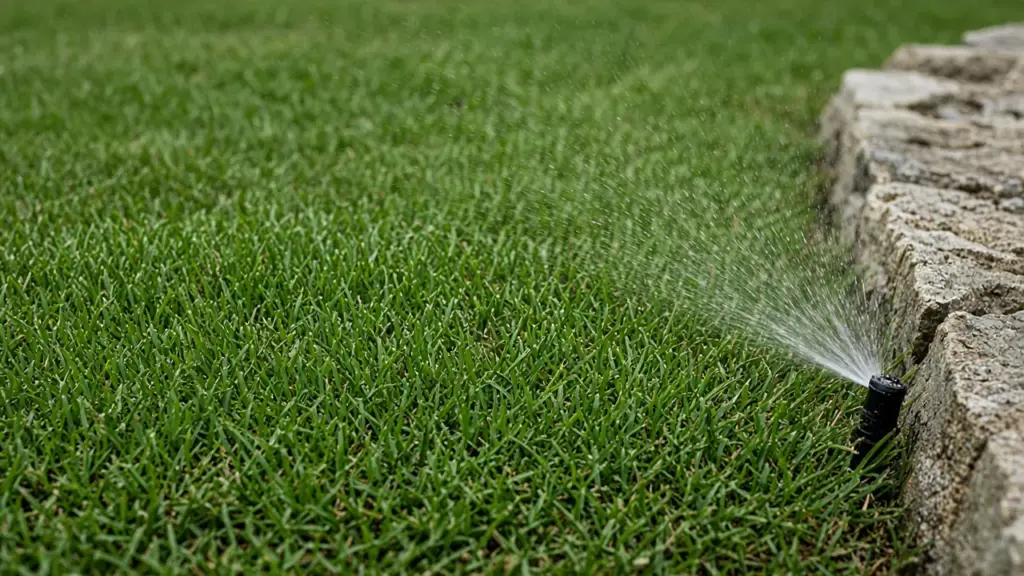
Zoysia grass has become a popular choice for Dallas lawns. It forms a dense, carpet-like turf, tolerates more shade than Bermuda, handles moderate foot traffic, and stays attractive with reasonable care. Like any warm-season grass, zoysia needs the right watering approach to stay healthy through North Texas summers.
This guide covers how zoysia grows, how to water it within Dallas rules, and how to spot problems early.
How Zoysia Grows
Zoysia is a warm-season grass that grows actively in warm weather and goes dormant in cold weather, turning tan in winter. It spreads by runners above and below ground, but more slowly than Bermuda. That slow growth makes it dense once established but slow to recover from damage.
Zoysia varieties differ in blade width, shade tolerance, and water needs. Fine-bladed and wide-bladed types can behave differently, so knowing which variety you have helps.
Our guide to irrigating Dallas lawns by grass type compares zoysia with Bermuda and St. Augustine.
How Much Water Zoysia Needs
Zoysia’s water needs depend on variety, sun, soil, and temperature. Many zoysia lawns do well with deep, infrequent watering, with needs peaking in mid-summer. Some varieties tolerate drought reasonably well by slowing growth and going semi-dormant, then recovering when water returns.
Rather than following a fixed amount, watch for signs of thirst:
- Leaf blades rolling or folding
- A dull, grayish color
- Footprints that remain visible
If only some areas show these signs, check sprinkler coverage before increasing run times.
Deep, Infrequent Watering
Dallas limits automatic irrigation to two assigned days per week. That schedule suits zoysia well when watering is deep enough to encourage roots to grow down. Frequent shallow watering leads to shallow roots and more thatch.
On clay soil, use cycle and soak: split each zone’s run time into two or three shorter cycles with soak time in between. Our guide to programming a controller for Dallas’s schedule shows how.
Timing
Sprinkler watering is prohibited between 10 a.m. and 6 p.m. year-round in Dallas. Early morning watering, finishing before 10 a.m., is usually best. It reduces evaporation and lets grass dry during the day, which lowers disease risk. Evening watering is allowed but keeps grass wet overnight.
Sun vs. Shade
Zoysia tolerates partial shade better than Bermuda, but shaded zoysia needs less water than zoysia in full sun. If one zone covers both, the shaded area may stay too wet while the sunny area dries out. Adjust nozzles or split zones where possible.
Thatch and Water
Zoysia can build up thatch, a layer of dead stems and roots between the soil and the green blades. Heavy thatch can repel water, so irrigation runs off instead of soaking in. It can also harbor disease. Avoiding overwatering and overfertilizing helps limit thatch. If thatch becomes thick, dethatching or core aeration may help.
Coverage Matters
Because zoysia recovers slowly, dry spots from poor coverage can linger. Walk each zone while it runs:
- Make sure heads pop up above the dense turf
- Check that spray reaches the next head
- Look for tilted, sunken, or blocked heads
Dense zoysia can block short pop-up heads. Taller pop-up bodies may help. Our guide to raising sunken sprinkler heads covers height adjustments.
Signs of Overwatering
- Soft, spongy turf
- Mushrooms and fungal disease
- Increased thatch
- Weeds that thrive in wet soil
Zoysia can be susceptible to certain fungal diseases, particularly in cool, wet periods. Avoid watering more than needed in spring and fall.
Seasonal Adjustments
- Spring: start modestly as zoysia greens up; avoid heavy watering in cool, wet weather
- Summer: peak water need; water deeply on assigned days
- Fall: reduce run times as temperatures drop
- Winter: dormant; minimal irrigation, with occasional watering during extended dry periods
Use your controller’s seasonal adjust feature for quick changes.
Mowing and Watering
Mowing at the right height for your variety helps zoysia hold moisture and shade its roots. Sharp blades reduce stress. Avoid removing too much at once.
Zoysia and Trees
Zoysia’s shade tolerance makes it a common choice under trees, but tree roots compete for water. Areas near trees may dry out faster than open areas even though they get less sun. Check these areas and consider drip rings for the trees. Our guide to watering trees with drip rings and bubblers explains how.
Establishing New Zoysia
New zoysia sod or plugs need more frequent watering until roots establish, then a gradual shift to deep, infrequent watering. Check current Dallas rules regarding watering new landscapes, which may include specific provisions. Our St. Augustine watering guide covers similar establishment principles for another common grass.
A Catch-Cup Check
To learn how much water each zone applies, set several straight-sided containers across the zone, run it for a set time, and measure. Even depths mean even coverage. Big differences point to head or nozzle problems. Dividing the average depth by the run time gives an application rate you can use to set run times for zoysia’s needs.
Common Mistakes With Zoysia
- Watering too often. Encourages shallow roots, thatch, and disease.
- Overfertilizing. Pushes excess growth and thatch.
- Ignoring blocked heads. Dense turf can smother short pop-ups.
- Treating shade and sun the same. Leads to soggy shade and dry sun.
- Expecting quick recovery. Zoysia fills in slowly, so prevent damage rather than counting on regrowth.
Zoysia on Slopes and Parkways
Zoysia is often planted on sloped front yards and in parkway strips because of its dense growth. These areas bring their own watering challenges. On slopes, water runs downhill before it soaks in, so the top of the slope dries out while the bottom stays wet. Cycle and soak scheduling, lower application rate nozzles, and check valves in heads at the bottom of the slope all help.
Parkway strips between sidewalk and street heat up from surrounding concrete and are hard to cover without overspray. Use nozzles designed for narrow areas, keep spray off the pavement, and check these strips first during heat waves. Because zoysia recovers slowly, preventing stress in these tough spots is easier than repairing it later.
Working Zoysia Into Your Maintenance Routine
A few habits keep zoysia healthy with less water:
- Walk each zone during a manual run once a month in the growing season
- Trim turf around heads so it does not block spray
- Adjust seasonal percentages at the start of each season
- Clean or replace clogged nozzles promptly
- Schedule core aeration if water is not soaking in
These small steps make the most of every watering day.
Frequently Asked Questions
How often should I water zoysia in Dallas?
Up to twice a week on your assigned days, deeply, using cycle and soak on clay. Adjust for weather and the lawn’s appearance.
Does zoysia need less water than St. Augustine?
It varies by variety and conditions. Many zoysia lawns handle dry spells reasonably well with deep, infrequent watering.
Why is my zoysia lawn spongy?
Often excess thatch, sometimes from overwatering and overfertilizing.
Can zoysia grow in shade?
It tolerates partial shade better than Bermuda, but shaded areas need less water than sunny areas.
Get Help With Your Zoysia Lawn
We tune sprinkler systems for even coverage and efficient schedules. See our sprinkler repair service, or contact us to schedule.
Request Service or call 214-227-7444
We serve homes throughout Dallas and nearby North Texas communities.