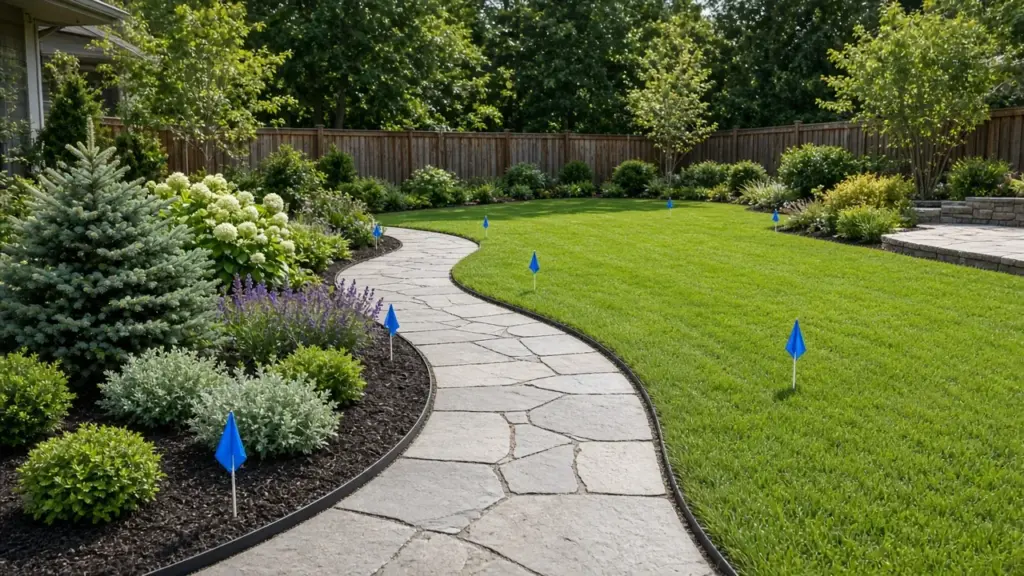
A landscape redesign can transform a yard: new beds, a smaller lawn, a patio or walkway, native plants, trees. But the sprinkler system underneath was designed for the old landscape. Heads that once watered turf now spray into beds. Zones that covered a lawn now water a patio. Pipe may have been cut or crushed during construction.
Updating irrigation is a key part of any redesign. This guide explains how to plan it, what changes are common, and how to protect your system during the work.
Plan Irrigation Before Construction
The best time to think about irrigation is before the first shovel hits the ground. When irrigation is planned alongside the landscape design:
- Pipe can be routed before hardscape goes in
- Sleeves can be placed under new walkways and patios for future pipe and wire
- Zones can be organized around new plant groupings
- Heads can be placed to avoid overspray
If the redesign is already done, the system can still be updated, but some changes may require more digging.
Common Changes After a Redesign
Converting lawn areas to beds
When turf becomes beds, spray heads in those areas usually need to be converted to drip or capped. Beds need less water, delivered to plant roots rather than sprayed across foliage.
Shrinking the lawn
A smaller lawn may need fewer heads. Remaining heads may need different nozzles or new positions to maintain head-to-head coverage.
Adding patios, walkways, and pools
Hardscape often goes right over existing pipe and heads. Heads under a new patio need to be removed and capped, and pipe may need to be rerouted.
Adding trees
New trees need their own watering plan, often bubblers or drip rings. Our guide to watering trees with drip rings and bubblers explains the options.
Switching to native or adapted plants
Native and adapted plants often need less water once established. Grouping them on their own drip zone lets you water them appropriately.
Rezoning
Zones should group areas with similar water needs:
- Sunny lawn
- Shady lawn
- Beds with regular water needs
- Beds with low water needs
- Trees
After a redesign, zones often mix these. Rezoning may involve adding valves, splitting zones, and converting some zones to drip. Our guide to converting spray zones to drip covers bed conversions.
Protecting the System During Construction
- Mark heads, valves, and pipe routes before work starts
- Protect the backflow preventer from equipment
- Keep heavy equipment off lawn areas with pipe
- Turn off affected zones during construction
- Inspect after construction by running each zone
Construction crews can crush pipe, cut wire, and bury heads and valve boxes. A walk-through after the work catches damage before it causes problems. Our guide to finding buried valve boxes helps if boxes end up buried.
Sleeves Under Hardscape
A sleeve is a larger pipe placed under a walkway, driveway, or patio before it is poured. Irrigation pipe and wire can later pass through the sleeve without breaking concrete. If you are adding hardscape, ask about sleeves.
Controller Updates
A redesign is a good time to review the controller. New zones may require a controller with more stations. A smart controller that adjusts for weather can help manage a mix of lawn, beds, and trees. Our guide to controller repair and upgrades covers options.
Coverage and Efficiency
New heads and nozzles should provide head-to-head coverage on remaining lawn areas. Matched precipitation nozzles keep application rates even. On Dallas clay, rotary nozzles apply water slowly, which reduces runoff.
Our article on retrofitting an old system with modern heads explains head upgrades.
Licensing and Permits
In Texas, installing or significantly modifying an irrigation system is regulated, and much of that work must be performed by or under the supervision of a licensed irrigator. Local permits may apply to some work. Ask your contractor how they handle licensing and permits.
Setting New Schedules
After changes, set new run times for each zone based on its plants, exposure, and head type. New plants need more frequent watering during establishment, then less. Dallas limits automatic irrigation to two assigned days per week and prohibits sprinkler watering between 10 a.m. and 6 p.m. year-round. Check current rules for new landscape establishment, which may have specific provisions.
Establishment Watering
New plants and sod need extra attention for the first weeks and months. Roots have not yet grown into the surrounding soil, so the root ball can dry out even when the soil around it is moist. Watch new plantings closely, especially in summer. Hand watering can supplement irrigation during establishment. Once plants are established, reduce frequency and water more deeply.
Budgeting Irrigation Into the Project
Irrigation updates are sometimes treated as an afterthought, which leads to surprises at the end of a project. Including irrigation in the landscape plan from the start lets you budget for rezoning, drip conversions, sleeves, and controller upgrades alongside plants and hardscape. We do not publish flat prices because every yard is different, but a clear scope up front avoids surprises.
A Final Walk-Through
When the landscape and irrigation work are both complete, walk each zone during a manual run. Confirm every head sprays where it should, drip zones deliver water to each plant, valves are accessible and labeled, and the controller is set with the new schedule. Update your system map to reflect the new layout.
Common Redesign Scenarios
Front lawn to native bed. A homeowner replaces part of a sunny front lawn with native perennials and grasses. The spray heads in that area are capped or converted to drip, and the new bed gets its own drip zone with a lower watering frequency once plants establish. The remaining lawn keeps its spray or rotary heads, adjusted to stop at the bed edge.
Back yard patio addition. A new patio covers part of an old lawn zone. Heads under the patio are removed and the lateral capped, a sleeve is placed under the patio for future needs, and the remaining heads are repositioned for full coverage around the new edges.
Pool installation. Excavation for a pool often cuts through several zones and possibly the mainline. After construction, damaged lines are repaired, heads near the pool are set to keep water off the decking, and planting beds around the pool get drip.
Adding a vegetable garden. Raised beds or in-ground vegetable plots benefit from drip on their own zone so they can be watered more often than ornamental beds.
In each case, the goal is the same: match the irrigation to the new layout so every area gets the water it needs and no more.
Keeping Records
Update your system map and controller zone labels after the redesign. Note which zones were changed, capped, added, or converted to drip. Future repairs, seasonal adjustments, and any later landscape work go faster when the layout is documented.
Frequently Asked Questions
Do I need to change my sprinkler system after landscaping?
Usually yes. New beds, hardscape, and lawn changes leave old heads watering the wrong places.
Should new beds use drip or spray?
Drip is usually better for beds, delivering water to roots and avoiding overspray.
What are irrigation sleeves?
Larger pipes placed under hardscape before it is built so irrigation pipe and wire can pass through later.
Can construction damage my sprinkler system?
Yes. Equipment can crush pipe, cut wire, and bury heads and valves. Mark and protect the system, then inspect after construction.
Plan Your Irrigation Update
We update sprinkler systems after landscape redesigns, from rezoning and drip conversions to controller upgrades. Learn about our services, or contact us to schedule.
Request Service or call 214-227-7444
We serve homes throughout Dallas and nearby North Texas communities.