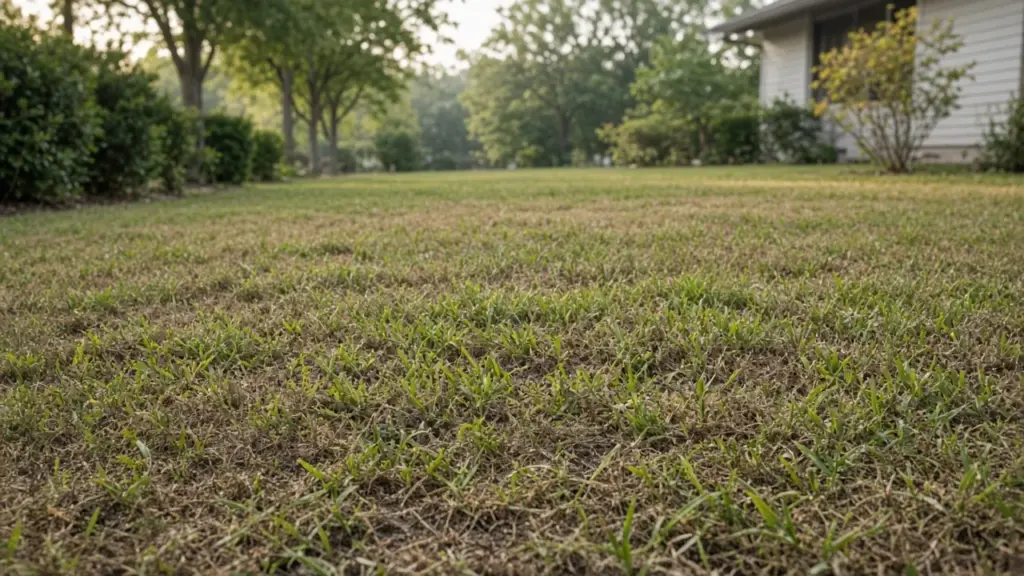
North Texas summers regularly bring long stretches of heat with little rain. Even with a working sprinkler system and a twice-weekly schedule, lawns can turn brown and crispy by late summer, particularly in areas with poor coverage, shallow soil, or heavy sun. When rain finally returns or temperatures ease, homeowners wonder whether their lawn can come back.
The good news is that warm-season grasses common in Dallas are often more resilient than they look. This guide explains how to assess drought damage, help the lawn recover, and prepare the irrigation system for the next dry spell.
Dormant or Dead?
Many warm-season grasses respond to drought by going dormant. The blades turn brown, but the crowns, stolons, and roots may still be alive, waiting for water. Dead grass, on the other hand, will not recover.
How to check:
- Tug test: gently pull on a handful of brown grass. Dormant grass stays anchored; dead grass pulls out easily with little root attached.
- Look at the crown: the base of the plant where blades emerge. A living crown often has some green or white tissue.
- Check stolons: on St. Augustine and Bermuda, runners above the soil surface should be firm and show some green inside when scratched. Dry, brittle, hollow runners are likely dead.
- Watch after watering: dormant grass typically shows new green growth within a couple of weeks of consistent water in warm weather.
How Different Grasses Handle Drought
- Bermuda is known for its drought tolerance and ability to go dormant and recover.
- Zoysia can also go dormant in drought and recover, though recovery may be slower.
- St. Augustine is less tolerant of prolonged drought and more likely to suffer lasting damage, particularly in full sun.
Our guide to Dallas lawn irrigation by grass type compares these grasses.
Rewatering a Drought-Stressed Lawn
Follow the Rules
Dallas limits automatic sprinklers and hose-end sprinklers to two assigned days per week and prohibits sprinkler watering between 10 a.m. and 6 p.m. year-round. Even during recovery, those limits apply. Hand watering with a hose is allowed on any day, which can help stressed areas.
Water Deeply
Dry clay can become hard and even repel water at first. Use cycle and soak to help water penetrate: several short cycles with soak periods in between. Our guide to deep and infrequent watering for clay soil explains the approach.
Be Patient
Recovery takes time. Look for new green shoots emerging from the crown and stolons over the following weeks. Avoid the temptation to overwater, which can encourage disease once temperatures cool.
Check the Irrigation System
Drought often reveals irrigation problems. Brown areas that follow a pattern, such as between heads or at the edges of zones, point to coverage issues. Walk each zone and look for:
- Clogged or broken heads
- Heads blocked by grass or sunk below grade
- Poor spacing leaving gaps
- Heads spraying pavement instead of lawn
- Low pressure
Our guide to head-to-head spacing explains the coverage rule many yards break. Fixing these issues does more for recovery than extra watering.
Rule Out Other Causes
Not every brown patch is drought. Chinch bugs attack stressed St. Augustine in hot, dry weather, and their damage looks similar to drought. If a patch does not recover with water while surrounding grass greens up, check for insects. Our guide to chinch bugs vs. dry spots explains the difference.
Fertilizing After Drought
Wait until the grass is actively growing again before fertilizing. Fertilizing dormant or stressed grass can do more harm than good. When growth resumes, a moderate application according to the product label can support recovery. Avoid heavy nitrogen late in the season on St. Augustine.
Mowing During Recovery
Raise the mowing height and mow only when the grass is growing. Taller grass shades the soil and supports deeper roots. Keep blades sharp. Our guide to mowing height and watering needs explains the connection.
Filling Dead Areas
If some areas are truly dead:
- St. Augustine does not spread from seed in typical residential practice; replace dead areas with sod or plugs.
- Bermuda can recover by spreading from surrounding healthy grass, and seed is available for common Bermuda.
- Zoysia spreads slowly; sod or plugs speed recovery.
New sod needs frequent watering to establish. Dallas offers a variance for newly installed landscapes; see our guide to watering new sod under Dallas rules.
Timing Replanting
Warm-season grasses establish best during warm weather when they are actively growing. Replanting in early fall gives some time to establish before dormancy, but spring and early summer often provide the longest growing window.
Preparing for the Next Drought
- Fix coverage problems so every part of the lawn gets water.
- Encourage deep roots with deep, infrequent watering.
- Raise mowing height in summer.
- Aerate compacted areas.
- Consider replacing struggling turf in hard-to-water areas with beds on drip.
- Keep the controller schedule tuned to the season.
Water-Wise Choices
Some areas are simply hard to keep green in drought: narrow strips next to hot pavement, steep slopes, and deep shade. Converting those areas to native and adapted plants on drip irrigation can reduce water needs and stress.
Soil Cracks and Pipes After Drought
Long droughts dry Dallas clay deeply, opening wide cracks across lawns. That shrinkage can stress sprinkler pipes and fittings, and the problems often show up when the soil swells again after rain returns. After a drought ends, watch for new soggy spots, geysers, and weak zones, which may indicate cracked pipe. Early detection limits water waste and soil damage.
Trees Need Attention Too
Drought stresses trees as well as lawns, and tree damage can take much longer to show. Large trees rely on deep soil moisture that lawn irrigation rarely reaches. During and after drought, slow, deep watering across a tree’s root zone with drip rings, soaker hoses, or hand watering helps. Dallas allows drip, soaker hoses, and hand watering on any day. Protecting trees during drought is often more important than keeping every blade of grass green, since trees take decades to replace.
Watch the Weather Pattern
Recovery depends on weather. If rain returns with cooler temperatures in fall, grass may green up quickly but have limited time to grow before dormancy. If drought breaks in early summer, the lawn has a full season to recover. Adjust your expectations and watering to the season. In fall, avoid overwatering a recovering lawn, since cool, wet conditions can encourage brown patch in St. Augustine.
Keep a Record
Note which areas browned first and which recovered last. Those areas usually have coverage problems, poor soil, or extra heat exposure. They are the first places to improve before the next dry summer.
Frequently Asked Questions
Will my brown lawn come back after drought?
Many warm-season grasses go dormant in drought and recover with water. Check whether the crowns and stolons are still alive.
How do I tell if grass is dormant or dead?
Tug on it. Dormant grass stays anchored; dead grass pulls out easily. Look for green tissue at the crown or in the stolons.
Can I water extra days to help my lawn recover?
Automatic sprinklers are limited to two assigned days. Hand watering is allowed any day.
Should I fertilize a drought-stressed lawn?
Wait until the grass is actively growing again before fertilizing.
Get Help Restoring Coverage
We fix the coverage problems drought reveals and tune controllers for deep watering. See our sprinkler repair service, or contact us to schedule.
Request Service or call 214-227-7444
We serve homes throughout Dallas and nearby North Texas communities.