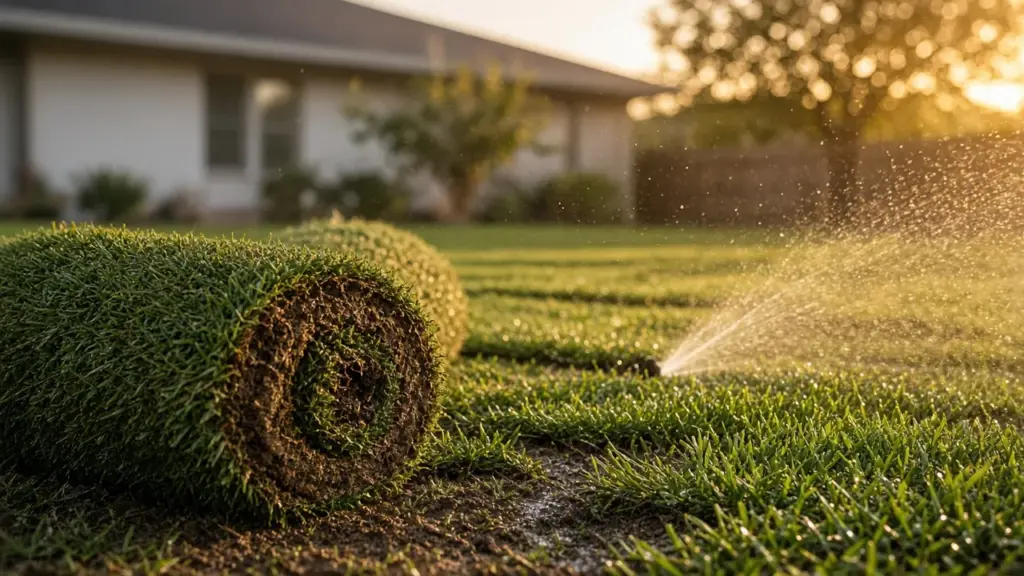
New sod needs water often in its first weeks, far more often than an established lawn. That creates an obvious question for Dallas homeowners: how do you keep new grass alive when automatic sprinklers are limited to two days per week?
The answer is that Dallas offers a variance for newly installed landscapes. This guide explains how the variance works, what rules still apply, and how to water new sod so it roots into Dallas clay. Rules and procedures can change, so confirm current details with Dallas Water Utilities before you install.
The Standard Rules
Under the Dallas Water Conservation Ordinance:
- Automatic irrigation systems and hose-end sprinklers are limited to no more than two assigned days per week.
- Even addresses water on Sundays and Thursdays; odd addresses on Wednesdays and Saturdays.
- No watering with sprinklers between 10 a.m. and 6 p.m. on any day, year-round, following the May 13, 2026 update to the ordinance.
- Hand watering, soaker hoses, and drip irrigation are allowed on any day.
- Automatic systems must have working rain and freeze sensors.
Our guides to even and odd address watering days and the twice-weekly watering schedule cover the basics.
The Newly Installed Landscape Variance
Dallas Water Utilities offers variances for newly installed landscapes. According to the city’s Save Dallas Water program, homeowners installing lawns and landscapes may apply for a variance allowing additional watering days for a limited period after installation, currently up to five weeks. Cool-season grasses are not included.
Key points:
- Apply for the variance. Without an approved variance, watering new plantings outside assigned days can be subject to citation.
- Be ready to show proof of purchase for sod, seed, or soil amendments.
- Post the permit at the property if a variance is granted, where city staff can see it.
- The time-of-day restriction still applies. Sprinkler watering between 10 a.m. and 6 p.m. remains prohibited.
Applications are available through the Save Dallas Water website, and the city’s conservation office can answer questions.
A Few Shrubs or a Tree?
If you are only planting a few new shrubs or a tree, you may not need a variance. Hand watering, soaker hoses, and drip irrigation are allowed on any day. Our guide to watering trees with drip rings and bubblers explains how to water new trees deeply.
How New Sod Roots
Sod arrives with a thin layer of soil and short roots. Its first job is to send roots into the soil beneath. Until it does, the sod depends on moisture in that thin layer, which dries quickly in Dallas heat.
A typical progression:
- First days: keep the sod and the soil just beneath consistently moist.
- As roots begin to knit: start reducing frequency and increasing depth.
- After roots establish: transition to a normal deep, infrequent schedule.
You can check rooting by gently lifting a corner of a sod piece. Resistance means roots are growing into the soil.
Preparing Soil Before Sod
Good soil preparation makes watering easier. Loosening compacted soil and removing debris before laying sod helps roots penetrate Dallas clay. Wet the soil before laying sod so the pieces do not sit on dry, hard ground. Our guide to deep and infrequent watering for clay soil explains how clay handles water.
Setting Up the Sprinkler System for New Sod
Before the sod goes down, check the irrigation system:
- Run each zone and confirm coverage reaches every part of the new sod.
- Fix broken, clogged, or misaligned heads.
- Adjust heads to the new grade; installation often changes soil levels.
- Make sure the rain and freeze sensor works.
With a variance, set a temporary program for the new sod zones. Keep all cycles outside 10 a.m. to 6 p.m. Several short cycles in the early morning and evening can keep sod moist while reducing runoff on clay.
Watering Tips for New Sod
- Water thoroughly after installation. The soil under the sod should be moist.
- Keep edges and seams moist. Edges dry out first.
- Watch sunny and sloped areas, which dry faster.
- Avoid puddling. Too much water can suffocate roots and invite disease.
- Stay off new sod as much as possible while it roots.
Transitioning to the Normal Schedule
As the variance period ends, transition gradually to your assigned days. Increase run times per cycle while reducing frequency, using cycle and soak to prevent runoff. By the end of the transition, the lawn should be on your normal twice-weekly schedule, or less in cooler months.
Timing Your Installation
Warm-season grasses such as St. Augustine, Bermuda, and Zoysia establish best during warm weather when they are actively growing. Mid-summer installations need the most water and attention; spring and early fall installations often establish with less stress. Cool-season grasses are not covered by the newly installed landscape variance.
Grass Types
Different grasses have different needs:
- St. Augustine tolerates some shade and is common in Dallas yards.
- Bermuda needs full sun and handles heat well.
- Zoysia tolerates some shade and forms a dense turf.
Our guide to Dallas lawn irrigation by grass type compares them.
Avoiding Common Mistakes
- Watering during prohibited hours. The daytime ban applies even with a variance.
- Skipping the variance. Watering extra days without one can lead to citations.
- Overwatering. Soggy sod can develop fungal problems and shallow roots.
- Ignoring coverage gaps. New sod in a dry spot will fail even with frequent watering.
Hand Watering to Supplement
Even with a variance, some spots need extra help. Edges along sidewalks and driveways, slopes, and areas near heat-reflecting walls dry out fastest. Hand watering those spots with a hose is allowed on any day, so you can target dry areas without running a whole zone. A gentle spray nozzle avoids washing soil from under sod edges.
Mowing New Sod
Wait until the sod has rooted before the first mowing, and ease off watering for a day or two beforehand so the soil is firm enough to walk on. Mow with a sharp blade at the recommended height for your grass, removing no more than about a third of the blade at a time. Mowing too early on soft soil can leave ruts and lift sod pieces.
Checking the Sprinkler System After Installation
Sod installation can shift or bury heads and change the grade around them. After the sod is down, run each zone and check that every head pops up above the new turf and sprays correctly. Heads that now sit too low will block coverage exactly where new grass needs it. Raise or adjust them promptly.
Frequently Asked Questions
Can I water new sod every day in Dallas?
You may apply for a newly installed landscape variance, which can allow additional watering days for a limited period. The 10 a.m. to 6 p.m. sprinkler ban still applies.
How long does the new landscape variance last?
The city currently describes it as up to five weeks following installation. Confirm current details with Dallas Water Utilities.
Do I need a variance for a few new shrubs?
Usually not. Hand watering, soaker hoses, and drip irrigation are allowed on any day.
Are cool-season grasses covered by the variance?
No. The newly installed landscape variance does not include cool-season grasses.
Get Your System Ready for New Sod
We check coverage, adjust heads to new grades, and set up controllers for establishment and transition. See our sprinkler repair service, or contact us to schedule.
Request Service or call 214-227-7444
We serve homes throughout Dallas and nearby North Texas communities.