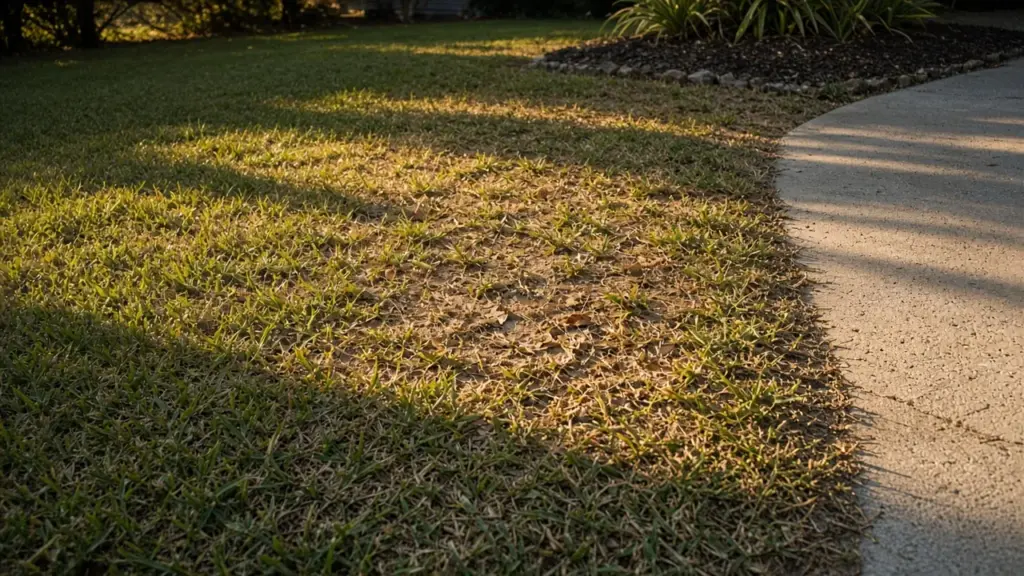
Every summer, Dallas homeowners notice yellowing, browning patches in their lawns and wonder what went wrong. Two of the most common culprits look surprisingly similar: chinch bugs and irrigation dry spots. Both show up in hot weather, both often start in sunny areas, and both can spread if ignored.
Telling them apart matters. Watering more will not stop chinch bugs, and insecticide will not fix a clogged nozzle. This guide explains how to distinguish the two and what to do about each.
What Chinch Bugs Are
Southern chinch bugs are small insects that feed on grass, particularly St. Augustine. Adults are tiny, roughly the size of a grain of rice or smaller, with black bodies and white wings folded across their backs. Young nymphs are even smaller and reddish or orange with a light band.
Chinch bugs suck sap from grass blades and inject substances that disrupt the plant’s water movement. Damaged grass yellows, then browns and dies. They thrive in hot, dry conditions and are often worst in sunny areas, along driveways, sidewalks, and other heat-absorbing surfaces.
St. Augustine is the grass most commonly affected in Dallas. Our guide to St. Augustine watering and irrigation needs covers that grass in more detail.
What Irrigation Dry Spots Are
Dry spots occur when part of the lawn does not get enough water. Common causes include:
- Clogged or damaged nozzles
- Heads that do not pop up fully or are blocked by turf
- Misaligned heads spraying pavement instead of lawn
- Low pressure on a zone
- Poor head spacing that leaves gaps in coverage
- Soil that sheds water, such as compacted clay or slopes
Dry spots also appear in hot, sunny areas and near pavement, which is exactly why they are confused with chinch bug damage.
Key Differences
Pattern
- Dry spots often follow the geometry of the sprinkler system: arcs, gaps between heads, the edges of a zone, or the area a broken head used to cover.
- Chinch bug damage usually appears as irregular patches that expand outward, often in full sun. The edges of the patch, where healthy grass meets dying grass, are where bugs are most active.
Response to Water
- Dry spots usually improve within days of fixing coverage or hand watering.
- Chinch bug damage does not recover with extra water. The grass keeps declining even when the soil is moist.
Soil Moisture
Push a screwdriver or soil probe into the affected area and into healthy lawn nearby. If the damaged area is much harder and drier, a water problem is likely. If the soil is equally moist, look for insects.
How to Check for Chinch Bugs
Get down close to the grass at the edge of a damaged patch, where yellowing grass meets green grass. Part the blades and look at the base of the grass near the soil. Chinch bugs move quickly and may scatter.
Another common method is the float test:
- Remove both ends of a metal can.
- Push one end a couple of inches into the soil at the edge of a damaged area.
- Fill the can with water and keep it filled for several minutes.
- Watch for small insects floating to the surface.
Check several spots, since chinch bugs cluster.
How to Check for Dry Spots
Run the zone that covers the area and watch:
- Are all heads popping up and spraying?
- Is spray reaching the damaged area?
- Is any head clogged, tilted, or blocked?
- Is pressure noticeably weak?
Catch cup tests, where you place cups across the area and measure how much water each collects, show whether coverage is uneven. Our guide to how much water a Dallas lawn actually needs explains the method.
It Can Be Both
Chinch bugs favor stressed, dry grass, so dry spots and chinch bugs can occur together. A drought-stressed patch is a welcoming place for an infestation. Fixing coverage alone may not stop established bugs, and treating bugs alone may not fix a coverage gap. Check for both.
Treating Chinch Bugs
If you confirm chinch bugs, treatment options include insecticides labeled for chinch bugs on your grass type. Always follow the product label. Some homeowners prefer to hire a lawn care professional. Treat promptly, as damage can spread quickly in hot weather.
Healthy lawn practices also help:
- Water deeply and infrequently rather than lightly and often
- Avoid excessive nitrogen fertilizer, which can favor chinch bugs
- Manage thatch buildup
- Mow at the recommended height for your grass
Fixing Dry Spots
Most dry spots come from fixable irrigation issues:
- Clean or replace clogged nozzles
- Raise sunken heads
- Adjust arcs and radius so water reaches the lawn
- Replace broken heads
- Add heads to fill gaps
- Check zone pressure
Our guides to matched precipitation and heads that spray the street or driveway help with coverage fixes.
Hand Watering Stressed Areas
While you diagnose or wait for repairs, hand watering stressed spots can help. Dallas limits automatic sprinklers and hose-end sprinklers to two assigned days per week, but hand watering with a hose is permitted on any day. Avoid watering between 10 a.m. and 6 p.m. with sprinklers, which is prohibited year-round.
Other Causes of Summer Patches
Chinch bugs and dry spots are not the only possibilities. Other causes of patches in Dallas lawns include:
- Brown patch, a fungal disease more common in fall and spring in cool, wet weather. See our guide to brown patch and overwatering.
- Grub damage, where grass pulls up easily because roots have been eaten
- Take-all root rot in St. Augustine
- Dog urine spots
- Shade stress
- Fertilizer or chemical burn
If the cause is unclear, a local extension office or lawn care professional can help identify it.
Prevention Through Good Irrigation
A well-maintained sprinkler system reduces both problems. Even coverage prevents stressed dry spots, and deep, infrequent watering produces stronger grass that resists insects better. A seasonal check of heads and nozzles catches coverage issues before they turn into dead patches.
When to Call for Help
If you have checked for insects, found none, and still see a patch that will not recover, the problem is likely irrigation or soil. If repairs are beyond a simple nozzle cleaning, such as a broken lateral line, a valve problem, or poor head spacing, an irrigation technician can find and fix the cause.
Keeping a Summer Log
A simple log makes diagnosis easier. When you notice a patch, photograph it, note the date, and mark which zone covers it. Check the patch again after the next watering day and after any repair. Patches that shrink after a nozzle fix point to irrigation. Patches that expand despite good coverage point to insects or disease. Over a few weeks, the photos tell a clear story.
Frequently Asked Questions
How can I tell chinch bug damage from dry spots?
Dry spots usually follow sprinkler coverage patterns and improve with water. Chinch bug damage forms expanding patches that do not recover with watering.
What grass do chinch bugs attack in Dallas?
St. Augustine is the grass most commonly affected.
How do I check for chinch bugs?
Look closely at the base of grass at the edge of damaged areas, or use a float test with a bottomless can filled with water.
Will watering more stop chinch bugs?
No. Proper watering helps keep grass healthy, but established chinch bugs usually require treatment.
Get Help With Dry Spots
We find and fix the coverage problems that cause dry patches. See our sprinkler repair service, or contact us to schedule.
Request Service or call 214-227-7444
We serve homes throughout Dallas and nearby North Texas communities.