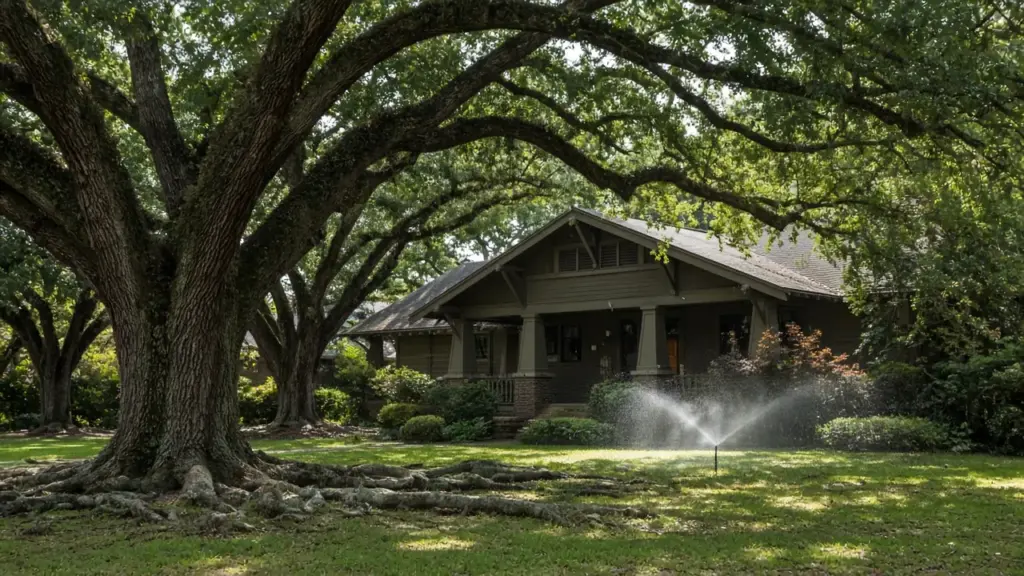
Lakewood, in East Dallas near White Rock Lake, is known for its tree-lined streets and homes that date back many decades. Those same features shape how sprinkler systems behave. Irrigation in many Lakewood yards was added long after the houses were built, sometimes more than once, and it has to work around large trees, established beds, and heavy clay soil.
This guide covers the irrigation issues that come up often in neighborhoods like Lakewood and how to approach repairs so they last. It builds on our guide to sprinkler repair across Dallas neighborhoods.
Systems Added After the Fact
Automatic irrigation was not standard when many older East Dallas homes were built. Systems were installed later, often by different contractors over the years. As a result, Lakewood-area systems commonly have:
- Mixed parts from different eras. Older heads next to newer ones, sometimes different brands and types on the same zone.
- Undocumented zones. Nobody knows exactly which valve serves which area, or where every valve box is.
- Expansions tied into existing lines. New beds or yard areas added by tapping into whatever pipe was nearby, which can overload a zone.
- Controllers replaced without full reprogramming. A new controller wired up to old zones with guesswork run times.
The first step in many repairs is simply mapping the system. Our valve repair guide explains how zones and valves are traced.
Mature Trees and Your Irrigation
Big shade trees are a defining feature of the neighborhood. They affect irrigation in several ways.
Shade changes water needs
A system designed when trees were smaller may now be overwatering shaded turf while sunny areas struggle. Shaded St. Augustine needs noticeably less water, and too much water in shade can encourage fungal disease. Our guide to irrigating by grass type covers St. Augustine in shade.
Roots meet pipes
Roots grow toward moisture and can wrap, lift, or crack irrigation lines. Roots are often involved when a lateral line near a large tree leaks repeatedly.
Debris clogs heads
Leaves, seed pods, and small twigs fall into spray heads and valve boxes. Heads stuck in the down position or with clogged nozzles are common in the fall.
Trees need their own water
Mature trees benefit from deep, slow watering under the outer canopy during long dry spells. Lawn sprinklers often wet only the surface. Drip rings or soaker hoses deliver water deeper. Our drip irrigation guide explains tree watering.
Clay Soil and Older Lines
Lakewood sits on the heavy clay common across Dallas. Years of swelling and shrinking can sink heads, tilt them, and stress rigid fittings. Older systems often used rigid risers rather than flexible swing pipe, which makes them more likely to crack as the soil moves. Our Dallas clay soil guide explains why.
Common Repairs in Lakewood-Area Yards
Buried and sunken heads
Decades of lawn growth and top-dressing gradually bury heads. Many older yards have heads that sit well below the turf, spraying into the grass. Raising them on swing pipe restores coverage.
Leaks near trees and driveways
Root pressure and vehicle loads crack older pipe, especially near driveways and along parkways.
Overloaded zones
Zones that were expanded to cover new areas often have too many heads for the available flow. Heads at the end of the line barely pop up. Splitting the zone solves it.
Mixed head types
Sprays and rotors on the same zone water unevenly. Standardizing each zone improves coverage. Our comparison of spray heads, rotors, and rotary nozzles explains the options.
Beds that have outgrown their heads
Established foundation plantings and borders often block spray heads. Converting beds to drip is a common upgrade.
Narrow Parkways and Sidewalk Strips
Many older Dallas streets have parkway strips between the sidewalk and the curb. They are narrow, heavily used, and difficult to water without soaking concrete. Strip nozzles or low-angle nozzles help, and in some cases drip-style solutions or a change in plantings works better.
Working Around Established Landscapes
Repairs in older, established yards require care:
- Protect roots. Dig carefully near trees and avoid cutting large roots.
- Respect beds. Mature plantings may sit on top of old lines.
- Keep hardscape intact. Rerouting around walks and patios is often better than breaking them.
- Document as you go. Every repair is a chance to map zones and valves.
Watering Rules Still Apply
Every Dallas neighborhood follows the same city rules: automatic irrigation up to twice a week on assigned days, no sprinkler watering between 10 a.m. and 6 p.m. at any time of year, and a required rain and freeze sensor. Hand watering, soaker hoses, and drip are allowed any day, which is useful for trees and beds.
A Good Plan for Older Systems
Rather than fixing one problem at a time, many Lakewood-area homeowners benefit from a system review:
- Map every zone and valve.
- Test pressure and look for hidden leaks.
- Raise buried heads and add swing pipe.
- Standardize head types by zone.
- Split overloaded zones.
- Convert beds to drip.
- Reprogram the controller with separate sun and shade run times.
Seasonal Notes for Tree-Heavy Yards
Yards with heavy canopy follow a slightly different rhythm through the year.
- Spring: new leaves change shade patterns quickly. Walk each zone after the trees leaf out and reduce run times on zones that are now mostly shaded. Clear winter debris from heads and valve boxes before startup.
- Summer: sunny openings between trees dry out fastest. Check that heads in those areas pop up fully and are not blocked by low branches or shrubs. Water trees deeply with drip or soaker hoses during long dry spells.
- Fall: leaf drop clogs spray heads and buries valve box lids. Clear heads after heavy leaf fall and lower seasonal adjust as temperatures cool.
- Winter: with leaves down, it is a good time to see pipe routes, find buried valve boxes, and plan zone changes before the growing season. Protect the backflow preventer before hard freezes.
Why a Map Pays Off
In older neighborhoods, the single most valuable document for your irrigation system is a simple zone map: a sketch of the yard showing each valve box, which zone it controls, and roughly where heads are. Once it exists, every repair starts faster, and anyone working on the yard, from fence installers to landscapers, can avoid cutting lines.
Frequently Asked Questions
Why do so many older yards have buried sprinkler heads?
Lawns grow and are top-dressed over the years, and clay soil moves heads downward. Raising heads on swing pipe fixes it.
Can tree roots break sprinkler pipes?
Yes. Roots grow toward moisture and can wrap, lift, or crack lines, especially near large trees.
How can I water my big trees without overwatering the lawn?
Use drip rings, soaker hoses, or hand watering under the outer canopy. These methods are allowed any day in Dallas.
Nobody knows where my valves are. Is that a problem?
It makes repairs slower. Mapping the system once saves time and money on every future visit.
Is it better to replace an old system or repair it?
Many older systems can be retrofitted while keeping sound pipe and wiring. An inspection shows what is worth keeping.
Get Sprinkler Repair in Lakewood and East Dallas
Our team repairs and updates older systems in established Dallas neighborhoods. See our Dallas service area page, or contact us to schedule a visit.
Request Service or call 214-227-7444
We serve homes throughout Dallas and nearby North Texas communities.