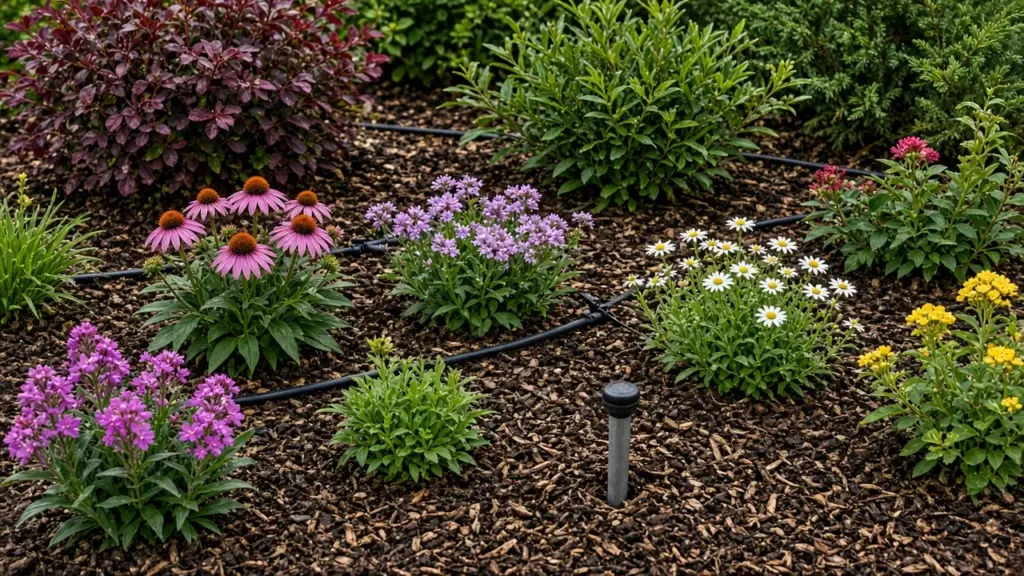
If you have spray heads in your flower beds, you have probably seen the problems. Shrubs grow in front of the heads and block the spray. Water lands on leaves, mulch, brick, and windows instead of the soil. The sidewalk gets wet, and some plants get soaked while others stay dry. In Dallas, where clay soil absorbs water slowly and outdoor watering is limited, those spray zones are one of the easiest places to save water and improve plant health.
Converting bed zones to drip irrigation is one of the most common irrigation upgrades we make. This guide explains why drip works better in beds, how a conversion is done, what parts are involved, and how to program the new zone.
Why Spray Heads Struggle in Beds
Spray heads were designed to throw water over open turf. In beds they run into several problems:
- Blocked patterns. As shrubs and perennials grow, they intercept the spray, leaving dry areas behind them.
- Wet foliage. Constant wetting of leaves can encourage some plant diseases.
- Overspray. Water hits walls, windows, fences, and walkways.
- Runoff. Sprays apply water quickly, and clay beds shed the excess.
- Mulch displacement. Strong spray can move mulch and expose soil.
Why Drip Works Better
Drip irrigation applies water slowly at or near the soil surface, right where roots are. That means:
- Less evaporation and overspray
- Better absorption in clay
- Dry foliage
- Water delivered to each plant rather than broadcast over the whole bed
Dallas rules also allow drip irrigation, soaker hoses, and hand watering outside the twice-weekly sprinkler schedule, which gives you more flexibility for beds. Our Dallas watering schedule guide explains the rules, and our drip irrigation guide covers drip systems in depth.
Before You Convert: Check the Zone
A conversion works best when the bed zone waters only beds. If the zone also waters turf, converting it to drip will leave the turf dry. Run the zone and note every head it operates. If lawn and beds share a zone, the options are:
- Split the zone with a new valve so beds and lawn run separately.
- Convert only a separate bed zone and leave mixed zones for a later redesign.
Our valve repair guide explains how zones are added or split.
Parts of a Drip Conversion
Filter
Drip emitters have small openings that clog easily. A filter at the start of the drip zone catches grit and clay particles.
Pressure regulator
Most drip components are designed for lower pressure than typical household supply. A regulator protects tubing and fittings and keeps emitter flow consistent.
Conversion point
The drip zone can start at the existing valve or at one of the existing spray heads. Conversion kits replace a spray head with a fitting that includes a filter and regulator, feeding drip tubing from that point. Remaining spray heads on the zone are capped.
Tubing and emitters
Two common approaches:
- Inline drip tubing with emitters built in at regular spacing, laid in rows or loops through the bed. It works well for dense plantings and groundcovers.
- Point-source emitters on solid tubing, placed at each plant. They work well for spaced shrubs and plants with different water needs.
Flush caps
Each line ends with a flush cap or end fitting that can be opened to flush debris out of the system.
How a Conversion Is Done
- Map the zone and confirm it waters only beds.
- Choose the conversion point, either at the valve or at an existing head.
- Cap unused spray heads at the lateral fittings or remove them and cap the risers.
- Install the filter and pressure regulator.
- Lay tubing through the bed, positioned to wet the root zones of plants.
- Add emitters where needed for point-source designs.
- Secure tubing with stakes and cover it with mulch.
- Flush the lines before closing the ends.
- Run and inspect the zone to confirm every plant is getting water.
Programming the New Drip Zone
This step is often missed. Drip applies water far more slowly than sprays, so the old spray run time will underwater the bed. Drip zones typically need much longer run times. The right time depends on emitter flow, spacing, soil, and plants.
- Put the drip zone on its own program if possible.
- Start with a moderate run time, then check the soil several inches down a few hours after watering.
- Adjust until moisture reaches the root zone without leaving the surface soggy.
Our controller programming guide explains how to set up separate programs.
Common Conversion Mistakes
- Skipping the filter. Emitters clog quickly without one.
- Skipping the pressure regulator. Fittings can blow apart.
- Leaving spray heads active on the same zone as drip.
- Using spray run times. Drip needs longer.
- Placing tubing against the trunk or stem of shrubs instead of across the root zone.
- Leaving tubing exposed to sun and foot traffic.
Beds Along Foundations
Many Dallas beds sit right next to the foundation. Drip lines in these beds can also help keep soil moisture more consistent around the slab during dry weather, which many homeowners do because of expansive clay. The city allows foundations to be watered any day with drip or soaker hoses. Our Dallas clay soil guide explains why.
Maintaining a Converted Bed
- Clean the filter several times a year.
- Flush lines at spring startup.
- Check for damage after planting or digging in the bed.
- Adjust or add emitters as plants grow.
- Keep mulch over the tubing.
Is a Conversion Right for Every Bed?
Most beds benefit from drip, but a few situations call for other solutions. Very large, dense groundcover areas may do well with low-flow rotary nozzles. Annual beds that are replanted often may need flexible layouts that are easy to move. A technician can recommend the best approach for each area.
Plant Groupings Make Drip Work Better
A single drip zone has one run time, so it works best when the plants on it have similar needs. When planning a conversion, look at what is in the bed:
- Established shrubs usually need deep, less frequent watering.
- Seasonal color and annuals have shallow roots and dry out faster.
- Native and adapted perennials often need little supplemental water once established.
- Newly planted material needs more frequent water until roots grow out.
If a bed mixes very different plants, add more emitters to thirstier plants and fewer to drought-tolerant ones, or split the bed into two drip zones. That flexibility is one of drip’s biggest advantages over spray heads, which water everything in their pattern the same.
Frequently Asked Questions
Can I convert just one bed to drip?
Yes, as long as that bed has its own zone or you split it from turf areas on the same zone.
Do I need a new valve for drip?
Not always. Many conversions use the existing valve and wiring, adding a filter and pressure regulator.
Why are my plants still dry after the conversion?
The run time may still be set for sprays. Drip needs much longer run times. Also check for clogged emitters or tubing damage.
Is drip allowed on non-watering days in Dallas?
Dallas allows drip irrigation, soaker hoses, and hand watering outside the twice-weekly sprinkler schedule. Check current city guidance.
Will drip tubing show in my beds?
Covered with mulch, drip tubing is usually hidden.
Get Your Beds Converted to Drip
We can convert spray bed zones to drip, split mixed zones, and program the new zone correctly. Learn about our sprinkler repair service, or contact us to schedule.
Request Service or call 214-227-7444
We serve homes throughout Dallas and nearby North Texas communities.