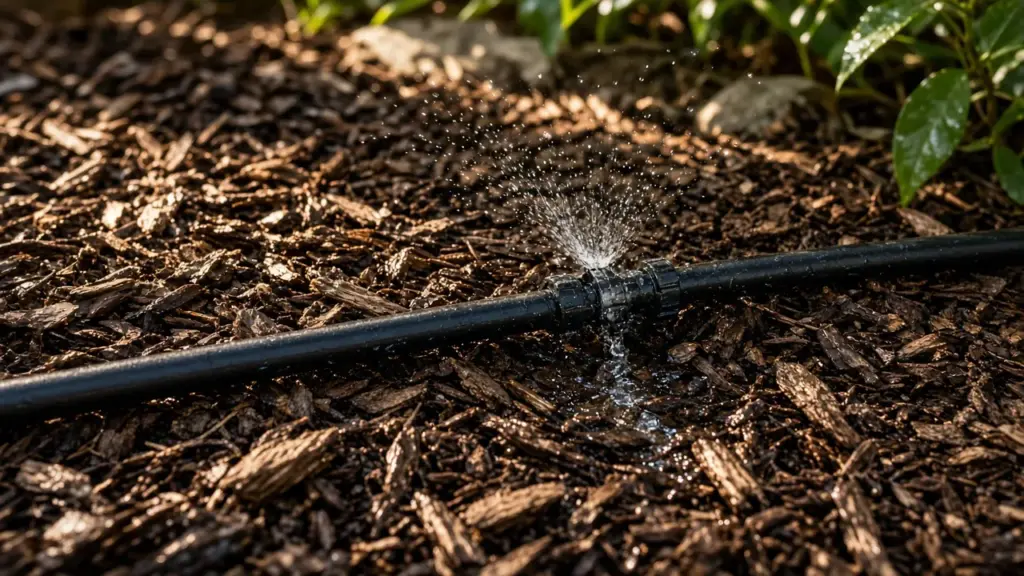
Drip irrigation is efficient when it works as designed, delivering slow, steady water to each plant. When drip lines leak, though, that efficiency disappears. A popped fitting or a cut line can pour water into one spot while plants at the end of the line go dry. Because drip tubing usually hides under mulch, leaks can go unnoticed for weeks.
This guide explains how to find drip line leaks and how to fix the most common ones.
Signs of a Drip Leak
- Puddles or soggy spots in a bed
- Water bubbling up through mulch
- Plants at the end of a line wilting or drying out
- Eroded mulch around a single spot
- A drip zone using more water than usual, if you have a flow sensor or meter
- A geyser from a blown-off emitter or fitting
Common Causes
- Fittings popped apart from pressure, often because a pressure regulator failed or was never installed
- Tubing cut by shovels, edgers, or aerators
- Chewing by rodents, squirrels, or dogs
- Emitters popped out of tubing
- Punctures from stakes, sharp rocks, or tools
- Sun damage to exposed tubing
- Freeze damage to above-ground components
Our article on mulch, drip line, and rodent damage covers animal damage in more detail.
How to Find Drip Leaks
- Run the zone. Drip leaks are only visible when the zone is running.
- Walk the bed slowly, looking and listening for spraying, bubbling, or gurgling.
- Pull back mulch along the tubing route where you see wet spots.
- Check each emitter. A missing emitter leaves a hole that sprays or gushes.
- Check fittings where tubing connects: tees, elbows, couplings, and end caps.
- Check the start of the zone: the valve, filter, and pressure regulator.
- Check the end of the line: if the end cap is off, water runs freely.
If a zone seems to be losing water but you cannot see where, run the zone longer and look for the wettest area after an hour or so.
Fixing Common Drip Leaks
Popped Fittings
Push the tubing firmly back onto the fitting. Many drip fittings are barbed or compression style. If the fitting keeps popping off, check the pressure regulator. Drip components are designed for low pressure, and excess pressure is a leading cause of blown fittings. Our guide to drip filters and pressure regulators explains why.
Cut or Punctured Tubing
Cut out the damaged section and install a coupling, pushing each end fully onto the fitting. For small punctures, some homeowners use a goof plug in a clean hole, but a coupling is more reliable for cuts.
Missing Emitters
Replace the emitter, or if it is no longer needed, plug the hole with a goof plug, a small plug designed for drip tubing.
Damaged Distribution Tubing
Quarter-inch distribution tubing running from the main line to individual plants can pull out of its barb. Reinsert it, or replace the barb and tubing if damaged.
Leaking End Caps
End caps can loosen or crack. Tighten or replace them. Flush-style end caps should be closed after flushing.
Filter and Regulator Leaks
Filter housings can crack, especially after freezing, and O-rings can wear. Replace the housing or O-ring. A failed pressure regulator may need replacement.
Preventing Drip Leaks
- Install and maintain a pressure regulator so fittings do not blow off
- Cover tubing with mulch to protect it from sun
- Stake tubing so it stays in place
- Mark drip lines before digging or aerating
- Protect tubing from pets and rodents where damage is common
- Winterize above-ground components before freezes
Drip Line Maintenance Routine
- Clean the filter a few times a year
- Flush lines by opening end caps and running water briefly
- Walk each drip zone while it runs, checking emitters and fittings
- Look for dry plants that may indicate a clog or break upstream
Our guide to drip emitters clogging covers clogs, which can look like leaks because plants go dry.
Leaks vs. Clogs
A plant that is drying out may be downstream of a leak, or its emitter may be clogged. Check the emitter first: if it is not dripping but others nearby are, it may be clogged. If several plants at the end of a line are dry, look for a leak or break upstream.
Tools and Parts to Keep on Hand
- Couplings and tees in your tubing size
- Goof plugs
- Replacement emitters
- Quarter-inch barbs and tubing
- A hole punch for drip tubing
- Stakes
- Spare end caps
Why Fix Leaks Promptly
Drip zones often run longer than spray zones. A leak during a long run time can waste a lot of water, and plants downstream suffer. In Dallas, drip irrigation is allowed on any day, so drip zones may run more often, making leaks more costly.
Leaks in Foundation Beds
Drip lines in beds along the house deserve extra attention. A leak next to the foundation can saturate soil in one spot while the rest of the bed stays drier, creating the kind of uneven moisture that matters in Dallas clay. It can also soak siding or seep toward the slab. When you check drip zones, walk foundation beds carefully and look for wet spots against the house. Our guide to drip irrigation for foundation beds covers layouts that keep water where it should be.
Leaks After Planting
New plants often mean new holes dug in beds, and new holes often mean cut drip lines. Before planting, locate the tubing by running the zone or pulling back mulch, and mark it. Dig by hand near the lines. After planting, run the zone and check the area around each new plant. Add an emitter for the new plant at the same time, since it will need its own water source.
Leaks in Tree Rings
Drip rings around trees are often installed in lawns, where they are exposed to mowers, edgers, and aerators. Check tree rings each spring for cuts and popped fittings. Our guide to watering trees with drip rings and bubblers explains ring setups and placement.
When to Replace Rather Than Repair
Old drip tubing becomes brittle over years of sun and heat, especially if it has been exposed. If repairs keep failing because the tubing cracks when you work on it, or if the line has many patches, replacing that run with new tubing is often faster and more reliable. Our drip irrigation repair guide covers larger repairs and upgrades.
Checking Water Use
If you have a water meter you can read easily, note how fast it moves while a drip zone runs when everything is working. Later, a noticeably faster reading on the same zone is a strong hint that a fitting has popped or a line has been cut somewhere in the bed.
Frequently Asked Questions
How do I find a leak in my drip irrigation?
Run the zone, walk the bed, look and listen for bubbling or spraying, and check fittings, emitters, and end caps.
Why do my drip fittings keep popping off?
Excess pressure is a common cause. Check that a pressure regulator is installed and working.
How do I fix a cut drip line?
Cut out the damaged section and install a coupling.
What is a goof plug?
A small plug used to seal holes in drip tubing where emitters are removed.
Get Help With Drip Leaks
We find and repair drip leaks and install filters and pressure regulators. See our sprinkler repair service, or contact us to schedule.
Request Service or call 214-227-7444
We serve homes throughout Dallas and nearby North Texas communities.