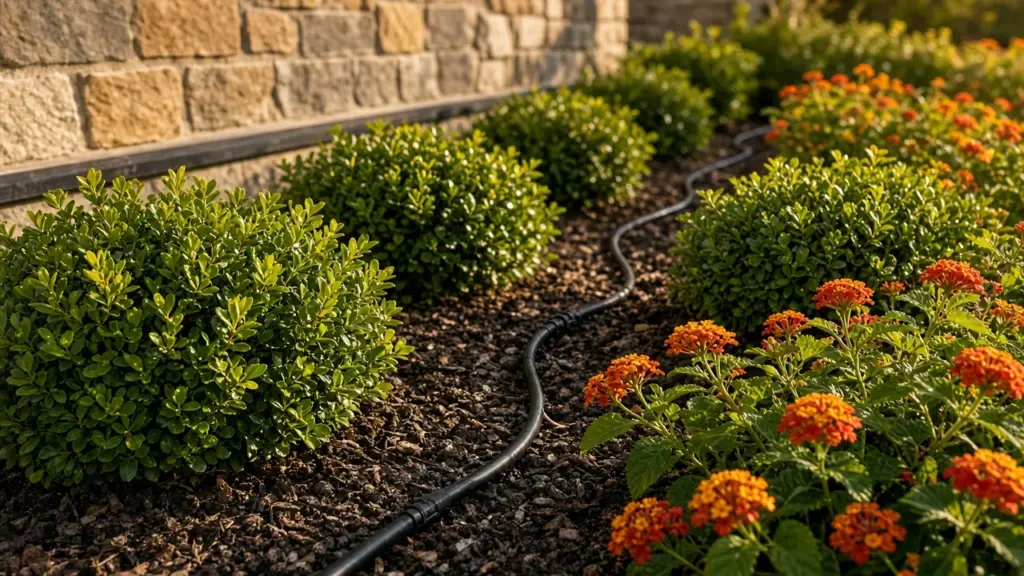
The beds that wrap around a Dallas home do double duty. They hold shrubs, perennials, and groundcovers that frame the house, and they sit on top of the clay soil that supports the foundation. Watering them well means keeping plants healthy without flooding the slab or letting soil dry out and pull away from it.
Drip irrigation is well suited to this job. It applies water slowly, directly to the root zone, with little runoff or overspray. This guide explains how to plan and maintain drip in foundation beds.
Why Drip Suits Foundation Beds
Traditional spray heads in foundation beds often cause problems:
- Overspray wets walls, windows, and siding, leaving stains and encouraging mildew.
- Runoff carries mulch and soil onto walkways and patios.
- Uneven watering as shrubs grow and block spray patterns.
- Wasted water from evaporation and wind drift.
Drip avoids these issues. Water goes into the soil at the base of plants, with little evaporation. Our guide to converting spray zones in flower beds to drip explains the conversion process.
Dallas Rules for Drip and Foundations
Dallas limits automatic sprinklers to two days per week on assigned days and bans sprinkler watering between 10 a.m. and 6 p.m. year-round. Drip irrigation is treated differently: drip and soaker hoses may be used on any day. Dallas also allows foundation watering on any day and at any time using a hand-held hose, soaker hose, drip irrigation, or bucket.
That flexibility is useful in summer, when clay near the foundation can dry and shrink. See our guide to foundation watering rules for the details.
Planning the Layout
A foundation bed drip zone usually includes:
- A drip zone valve controlled by the irrigation controller
- A filter to keep debris out of emitters
- A pressure regulator to reduce pressure to the level drip requires
- Supply tubing running along the bed
- Emitters or inline drip tubing delivering water to plants
Our guide to drip filters and pressure regulators explains why those components matter.
Inline Drip Tubing vs. Point-Source Emitters
- Inline drip tubing has emitters built in at regular intervals. It is laid in rows or loops through the bed and works well for dense plantings and groundcovers.
- Point-source emitters are inserted into solid tubing at each plant. They suit beds with widely spaced shrubs.
Many foundation beds use a combination.
Placement Near the Foundation
Place drip lines within the bed, generally a short distance from the foundation rather than directly against it. The goal is consistent moisture in the bed soil without saturating the soil right at the slab. Keep water from pooling against the house, and make sure the bed grade slopes away from the foundation.
If your aim includes foundation watering, a dedicated drip line or soaker hose placed along the foundation perimeter provides even moisture. Our guide to foundation watering with drip lines covers perimeter setups.
Emitter Placement for Shrubs
For shrubs, place emitters near the root zone rather than at the trunk. As shrubs grow, roots spread, and you may need to add emitters farther out. Larger shrubs typically need more than one emitter.
Scheduling Drip Zones
Drip applies water much more slowly than spray heads, so run times are longer. Instead of minutes, a drip zone might run for considerably longer depending on emitter flow and plant needs.
Some tips:
- Put drip on its own zone and program, separate from lawn zones.
- Water deeply and less often rather than a little every day.
- Check soil moisture a few inches down after watering to confirm water is reaching roots.
- Reduce run times in cooler months.
Mulch and Drip
Cover drip tubing with mulch to protect it from sunlight, reduce evaporation, and keep beds neat. A layer of mulch also helps moderate soil temperature. Keep mulch pulled back slightly from the foundation and siding. Our article on mulch, drip line, and rodent damage covers protecting tubing.
Maintenance
Drip systems need periodic attention:
- Clean the filter a few times a year.
- Flush lines by opening end caps and letting water run briefly.
- Check emitters for clogs. Our guide to drip emitters clogging explains causes and fixes.
- Look for damage from digging, rodents, and foot traffic.
- Adjust as plants grow.
Common Problems in Foundation Beds
- Wet spots against the house from a leaking fitting or misplaced emitter
- Dry plants from clogged emitters or insufficient run time
- Popped-off emitters creating geysers
- Tubing exposed after mulch washes away
- Damage from landscape work
Beds With Mixed Plants
Foundation beds often combine plants with different water needs. Grouping plants with similar needs makes drip easier to manage. When that is not possible, adjust emitter flow or number to give thirsty plants more water.
Converting an Existing Spray Zone
If your foundation beds are watered by spray heads now, a conversion kit can adapt an existing head riser into a drip supply point. For larger beds, a dedicated drip zone is often the better long-term solution. Conversions should include a filter and pressure regulator.
When Beds Border the Lawn
Where foundation beds meet the lawn, keep lawn spray heads adjusted so they do not overspray into the beds, and keep drip tubing inside the bed edge so mowers and edgers do not cut it. A bed edging material can help keep mulch and tubing in place.
Checking Moisture Through the Seasons
Dallas soil near the foundation behaves differently in summer and winter. In summer heat, clay can dry quickly, particularly on south- and west-facing sides of the house that receive more sun. Those beds may need longer drip run times than beds on the north side. In winter, many plants need little water, and drip can be reduced or paused except during dry spells. Checking soil moisture by hand a few inches down is the best guide.
Testing a New Drip Zone
After installing or repairing a drip zone, run it and walk the bed. Look for emitters that are not dripping, fittings that spray or bubble, and wet spots that appear far from any plant. Open the end caps to flush debris from new tubing before closing them for good. Then let the zone run a full cycle and check soil moisture near a few plants the next day. The soil should be moist several inches down in the root zone, but not muddy against the foundation.
Keeping Records of the Layout
Drip lines disappear under mulch quickly. Sketch the layout, including where supply tubing runs, where end caps are, and where the filter and regulator sit. Keep the sketch with your controller notes. It will save time when planting, digging, or repairing the bed later, and it helps avoid cutting lines by accident.
Frequently Asked Questions
Can I use drip irrigation any day in Dallas?
Yes. Drip irrigation and soaker hoses may be used on any day. Foundation watering is allowed any day and time with a hand-held hose, soaker hose, drip irrigation, or bucket.
How close to the foundation should drip lines be?
Place drip lines within the bed, generally a short distance from the foundation, and keep water from pooling against the house.
How long should a drip zone run?
Longer than spray zones, depending on emitter flow and plant needs. Check soil moisture after watering to confirm depth.
Do I need a filter on drip irrigation?
Yes. A filter keeps debris out of emitters, and a pressure regulator protects drip components.
Get Help With Drip in Foundation Beds
We install, repair, and convert foundation bed zones to drip. See our sprinkler repair service, or contact us to schedule.
Request Service or call 214-227-7444
We serve homes throughout Dallas and nearby North Texas communities.