Drip irrigation works best when it is out of sight. Tubing tucked under a few inches of mulch stays cooler, lasts longer, loses less water to evaporation, and keeps beds looking neat. But hidden tubing is also easy to forget, and in many Dallas yards it becomes a target. Rodents chew it, dogs dig it up, rakes snag it, and too much or too little mulch causes its own problems.
This guide explains how mulch and drip line work together, what causes chewed and damaged tubing, how to find damage, and how to repair and prevent it.
Why Drip Line Belongs Under Mulch
Mulch does several jobs for a drip system:
- Protects tubing from sun. Ultraviolet light breaks down plastic over time, and exposed tubing gets very hot in a Dallas summer.
- Reduces evaporation. Water released at the soil surface stays in the soil longer under mulch.
- Hides the system. Beds look finished, and tubing is less likely to be tripped over.
- Moderates soil temperature. Roots and emitters both benefit.
A layer of a few inches of shredded hardwood or similar mulch over tubing is common. Keep mulch pulled back from plant stems and tree trunks.
Our drip irrigation repair and design guide covers the full system.
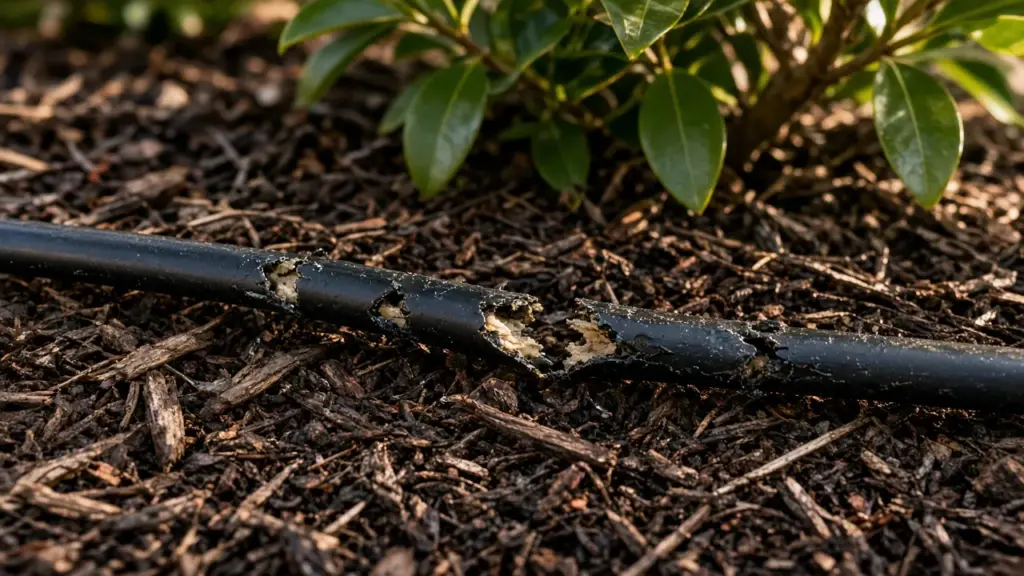
Common Causes of Drip Line Damage
Rodents
Rats, mice, squirrels, and other animals sometimes chew drip tubing, especially during hot, dry periods when water is scarce. A small bite can create a leak that sprays or bubbles every time the zone runs. Damage often clusters in areas near fences, woodpiles, dense groundcover, or sheds, where animals feel sheltered.
Pets
Dogs dig in cool, moist mulch, and a curious dog can pull up tubing and chew on it. Damage tends to appear in favorite resting spots and along fence lines.
Garden tools
Rakes, hoes, shovels, and edgers snag and cut tubing, especially when tubing sits right at the surface. Spring cleanup and planting season are the most common times for tool damage.
Planting and landscaping
Adding plants to an existing bed often means digging right through a drip line. Landscape crews may not know it is there.
Sun and heat
Where mulch has thinned or washed away, exposed tubing becomes brittle over the years and can crack.
Signs of Damage
- Geysers or bubbling in the bed when the drip zone runs
- Wet spots that are much larger than an emitter’s normal wetted area
- Dry plants downstream of a leak, because pressure drops past the break
- Lower pressure at the end of the line
- Visible tubing pulled up through the mulch
- Higher water use than expected for the zone
How to Find the Damage
- Run the drip zone manually during allowed hours. Drip is allowed any day in Dallas.
- Walk the bed slowly and listen. Leaks often hiss or gurgle.
- Look for disturbed mulch or wet areas.
- Pull back mulch gently along the tubing route where you suspect damage.
- Check the ends of the line. Weak flow at flush caps suggests a significant leak upstream.
Our guide to drip emitters clogging helps separate leaks from clogs, which cause the opposite symptom.
How to Repair Chewed Tubing
Most chewed tubing can be repaired with simple fittings.
- Turn off the zone.
- Cut out the damaged section with clean, square cuts.
- Insert a coupling that matches the tubing size and type. Barbed or compression couplings are common.
- Replace a longer section if damage is extensive, using new tubing and two couplings.
- Flush the line by opening the end cap and running the zone briefly to clear debris.
- Replace emitters that were damaged.
- Re-cover with mulch.
Match the tubing size carefully. Drip tubing comes in several diameters, and couplings must fit snugly.
Preventing Rodent Damage
There is no perfect solution, but these steps reduce damage:
- Keep tubing fully covered so it is less noticeable.
- Reduce shelter. Clear debris piles and trim dense groundcover near beds.
- Provide alternative water sources where appropriate, such as a birdbath, which some homeowners find reduces chewing during drought.
- Fix leaks quickly. A leaking fitting can attract animals looking for water.
- Use protective sleeves in problem areas; some homeowners run tubing through rigid sleeves where chewing keeps recurring.
- Consult a pest professional if rodent activity is significant.
Preventing Pet Damage
- Give dogs a designated dig or rest area away from drip beds
- Use rigid edging or decorative stone along favorite digging spots
- Secure tubing with stakes so it does not pull up easily
- Consider routing tubing deeper under mulch in pet areas, using emitters designed for burial
Preventing Tool and Landscaping Damage
- Mark tubing routes on a simple bed map
- Tell landscapers where drip lines run
- Stake tubing so it stays put
- Use hand tools gently in drip beds
Managing Mulch Depth
Mulch that is too thin exposes tubing. Mulch that is piled too deep can keep soil overly wet and may bury emitters too deeply. Refresh mulch periodically to maintain a consistent layer, and pull it back from plant crowns and trunks.
When to Rebuild
If a drip bed has been repaired many times, tubing is brittle, or the layout no longer fits the plants, rebuilding the zone may be easier than patching. A rebuild is a chance to add a proper filter and regulator, use tubing suited to the plantings, and route lines away from problem areas. Our guide to drip filters and pressure regulators explains the head-of-zone components.
Seasonal Checks
A quick check during spring startup catches winter damage from animals looking for shelter and from cleanup work. Another check in midsummer catches chewing during dry spells, when animals seek water. Our year-round maintenance calendar includes drip checks.
Tree Rings and Foundation Lines
Drip rings around trees and drip lines along foundations are also vulnerable. Damage to a tree ring can go unnoticed for a long time. Our guide to watering trees with drip rings and bubblers covers those systems.
Choosing Mulch for Drip Beds
Not all mulch behaves the same over drip tubing. Shredded hardwood knits together and stays in place on slopes, which keeps tubing covered. Large bark nuggets can float and wash away in heavy rain, exposing tubing. Fine mulches break down faster and need refreshing more often. Rock mulch looks tidy but heats up in summer and makes it harder to reach tubing for repairs. Whatever you choose, plan to top it up periodically so the tubing stays covered through the hottest months.
Frequently Asked Questions
Why do rodents chew drip tubing?
Often in search of water, especially during hot, dry weather. Sheltered areas near fences, woodpiles, and dense groundcover see more damage.
How do I fix a chewed drip line?
Cut out the damaged section and join the ends with a coupling that matches the tubing size, then flush the line and re-cover with mulch.
Should drip line be buried under mulch?
Yes. A few inches of mulch protects tubing from sun and heat and reduces evaporation.
How do I find a leak in a drip line under mulch?
Run the zone, walk the bed listening for hissing, look for wet or disturbed mulch, and check flow at the end of the line.
Get Drip Repair Help
We find and repair damaged drip lines and rebuild zones that have been patched too many times. See our sprinkler repair service, or contact us to schedule.
Request Service or call 214-227-7444
We serve homes throughout Dallas and nearby North Texas communities.