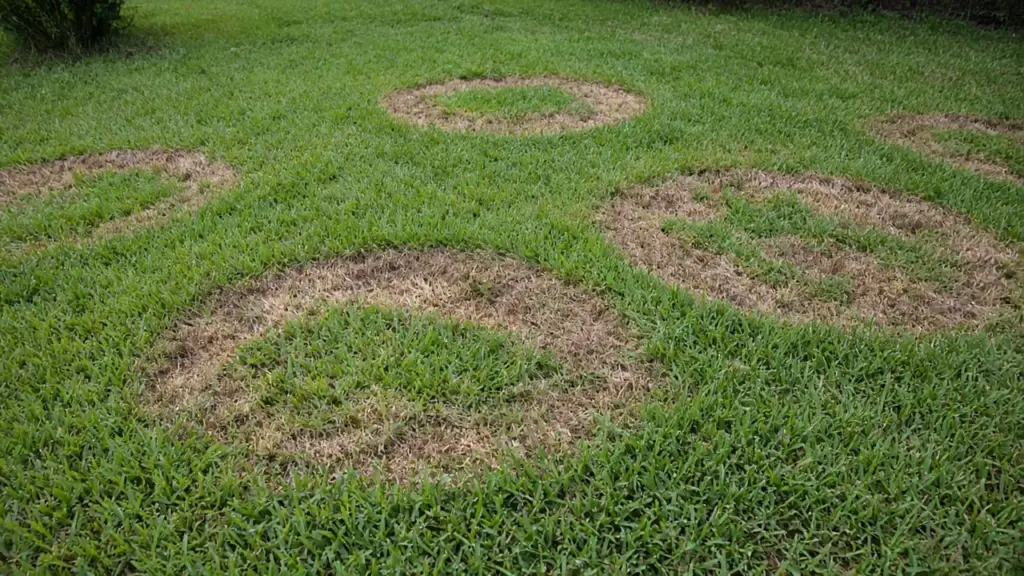
St. Augustine is one of the most popular lawn grasses in Dallas, prized for its thick, lush look and its tolerance of partial shade. It also has a well-known weakness: a fungal disease commonly called brown patch, sometimes referred to as large patch in warm-season grasses. Brown patch tends to appear in spring and fall, when temperatures are mild and moisture is high. Irrigation habits play a big role in whether it gets a foothold.
This guide explains how brown patch develops, how watering contributes, and what irrigation changes help. For diagnosis and treatment, local extension resources and lawn care professionals are the best sources; our focus here is the sprinkler side of the problem.
What Brown Patch Looks Like
- Circular or irregular patches of yellow, tan, or brown turf, often several feet across
- A darker or orange-tinged border at the edge of active patches
- Leaf blades that pull easily from the runner at the base, often with rotted-looking tissue where they attach
- Patches that expand during cool, moist weather and slow down when it turns hot and dry
Brown patch in St. Augustine usually damages leaves and leaf sheaths rather than killing the runners outright, so turf can often recover when conditions improve.
When It Appears in Dallas
Brown patch is most common during the mild seasons, particularly fall and spring, when nights are cool and the grass stays wet for long periods. Periods of rain, heavy dew, and overcast skies favor the fungus. This is also when many sprinkler systems are still running on summer schedules, adding water the lawn does not need.
How Irrigation Contributes
Too much water in mild weather
In fall and spring, St. Augustine uses much less water than in midsummer. A system that still runs summer run times keeps the soil and leaf blades wet far longer than necessary.
Watering at the wrong time of day
Leaves that stay wet for many hours give fungi a chance to infect. Evening watering can leave turf wet all night. Early morning watering, finishing before 10 a.m. as Dallas rules require, lets the grass dry during the day. Our guide to the year-round watering restriction explains the time-of-day rule.
Poor drainage and low spots
Areas where water collects stay wet longest and often show brown patch first. Our guide to standing water after watering helps sort out irrigation and drainage causes.
Uneven coverage
Overlapping heads and mismatched nozzles can put far more water in one area than another. Those soggy areas are more vulnerable.
Leaks and weeping valves
A slow leak or a valve that does not shut off completely can keep one area constantly moist.
Irrigation Changes That Help
Reduce run times as temperatures drop
Use your controller’s seasonal adjust feature to scale back watering in fall and keep it modest in spring. Often a significant reduction from summer levels is appropriate. Watch the lawn and soil rather than relying on the calendar.
Water in the early morning
Set start times so all watering finishes before 10 a.m. Avoid evening cycles in the mild seasons.
Skip watering after rain
A working rain sensor pauses the system after significant rain. Dallas requires rain and freeze sensors on automatic systems. Our guide to rain and freeze sensors explains testing.
Fix coverage and leaks
Walk each zone and correct overlapping or misaligned heads. Repair leaks and weeping valves promptly.
Separate shade and sun
Shaded St. Augustine dries slowly and needs less water. If shade and sun share a zone, the shaded part may stay wet too long. Our guide to shade lawns and irrigation adjustments explains how to adjust.
Other Cultural Factors
Irrigation is only part of the picture. Heavy nitrogen fertilization in fall, thick thatch, poor air circulation, and compacted soil can all make brown patch more likely. Mowing with sharp blades at the proper height for St. Augustine also helps. Our St. Augustine watering guide covers the grass’s general needs.
What to Do if You Already Have It
- Reduce irrigation and water only in the early morning
- Avoid spreading clippings from infected areas to healthy turf
- Hold off on nitrogen fertilizer during active outbreaks
- Consult local extension guidance or a lawn care professional about treatment options
Many lawns recover as the weather changes. Correcting irrigation habits helps prevent repeat outbreaks.
A Seasonal Watering Pattern for St. Augustine
- Spring: start modestly as the lawn greens up; increase gradually
- Summer: peak water need; water deeply on assigned days
- Early fall: begin reducing as nights cool
- Late fall: keep watering minimal, especially in cool, damp weather
- Winter: dormant or semi-dormant; very little irrigation
Checking Soil Moisture
Before a watering day in fall, push a long screwdriver into the soil. If it slides in easily several inches, the soil still holds plenty of moisture, and you can likely skip or shorten that watering. This simple check prevents a lot of unnecessary water during the seasons when brown patch is most active.
Why Fall Is the Danger Zone
Many Dallas homeowners set their controllers once in early summer and forget them. By October, nights are cooler, days are shorter, dew lasts longer, and the lawn’s water use has dropped, yet the system may still be running summer run times. That combination of extra water and long leaf wetness is exactly what brown patch favors. A simple reminder to lower seasonal adjust when the first cool nights arrive is one of the most effective habits a St. Augustine owner can build.
Spot Problems Early
Walk the lawn every week or two in fall and spring. Look for yellowing circles, especially in shaded areas, low spots, and zones that stay wet. Catching an outbreak early lets you cut back water before patches spread. Note where patches appear year after year; those areas often have a coverage, drainage, or shade issue worth fixing permanently.
Mowing and Clippings
Mow with sharp blades and avoid mowing wet grass when patches are active, since equipment can spread the fungus. Bagging clippings from affected areas during outbreaks can help limit spread.
Thatch and Air Flow
Thick thatch holds moisture near the leaf sheaths where brown patch attacks. Dense shrubs and low tree branches reduce air flow and slow drying. Managing thatch through proper mowing and fertilization, and pruning to open up stagnant corners of the yard, helps the lawn dry faster after watering, dew, or rain. Pair those steps with a leaner fall watering schedule for the best results.
Frequently Asked Questions
Does overwatering cause brown patch?
Brown patch is a fungal disease, but excess moisture, especially in mild weather, creates conditions that favor it.
When is brown patch most common in Dallas?
Typically in fall and spring, when temperatures are mild and turf stays wet.
Should I water in the evening?
Morning watering is better. It lets grass dry during the day, which reduces disease risk.
Will my St. Augustine recover from brown patch?
Often yes, as conditions change, especially if irrigation and other cultural practices are adjusted.
Get Help Adjusting Your Schedule
We tune sprinkler schedules and fix coverage problems that keep lawns too wet. See our sprinkler repair service, or contact us to schedule. Our grass type irrigation guide compares common Dallas grasses.
Request Service or call 214-227-7444
We serve homes throughout Dallas and nearby North Texas communities.