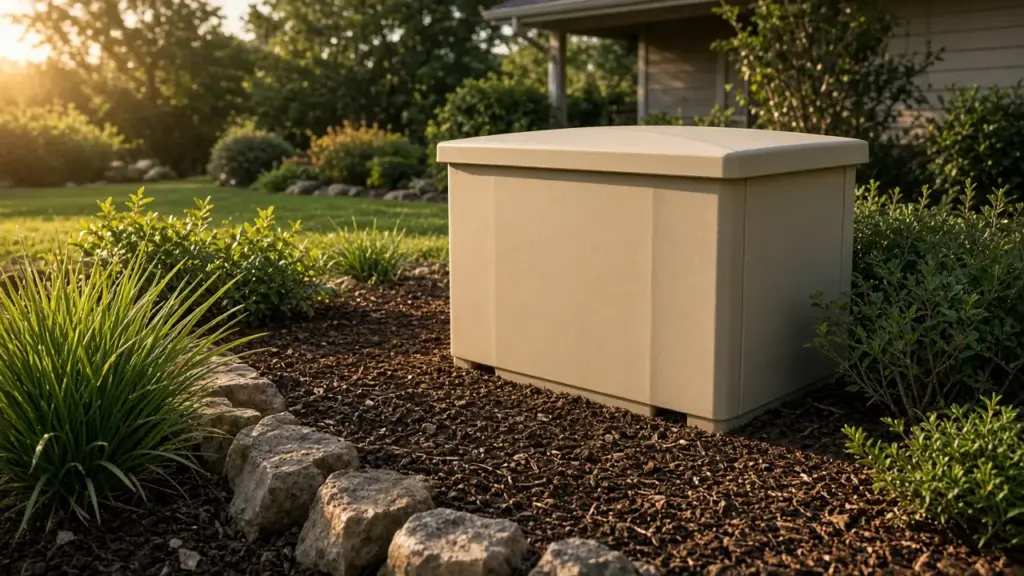
The backflow preventer is one of the most important parts of a sprinkler system and one of the most exposed. It sits above ground, usually near the house, where it faces freezing temperatures in winter, mower and trimmer strikes year-round, and, in some neighborhoods, theft of its brass components. A cover or enclosure can address some or all of those risks.
This guide compares common types of backflow covers and enclosures and explains what to look for when choosing one.
Why Protection Matters
- Freezing: water trapped inside a backflow preventer can expand and crack the device. Our guide to why pipes burst in Dallas even though freezes are short explains why above-ground components are vulnerable.
- Physical damage: mowers, trimmers, and foot traffic can crack test cocks and bend pipe.
- Theft: brass backflow preventers are sometimes stolen for scrap metal value.
- Sun exposure: some plastic components degrade in sunlight over time.
Type 1: Insulated Bags and Covers
Insulated bags are soft covers that slip over the backflow preventer and close with a drawstring, zipper, or hook-and-loop fastener.
Pros:
- Inexpensive and easy to install
- Easy to remove for testing or inspection
- Good for seasonal freeze protection
Cons:
- Little protection from physical damage or theft
- Can absorb water if not designed to repel it
- May degrade in sunlight if left on year-round
- Must fit the device properly to be effective
Type 2: Rigid Insulated Enclosures
Rigid enclosures are boxes, often made of fiberglass or plastic with insulation, that cover the device and sit on a pad or the ground. Some have hinged or removable lids and locking options.
Pros:
- Year-round protection from freezing, damage, and sun
- Can be locked to deter theft
- Neater appearance
Cons:
- Higher cost
- Must be sized correctly for the device
- May need a base or pad
- Must allow access for testing and repair
Type 3: Security Cages
Metal cages bolted to a concrete pad or anchored in the ground surround the device.
Pros:
- Strong deterrent to theft
- Protection from mowers and physical damage
Cons:
- No freeze protection on their own, though an insulated cover can be used inside
- Can look industrial
- Need proper anchoring
Type 4: Improvised Wraps
In a pinch, towels, blankets, or foam insulation covered with a plastic bag can provide temporary freeze protection. Keep improvised wraps dry, since wet insulation loses effectiveness. Our guide to insulating exposed irrigation components covers materials and technique.
Sizing and Fit
Measure the device, including shutoff valves and exposed pipe, before choosing a cover or enclosure. Too small, and it will not fit or will leave pipe exposed. Too large, and a soft cover may leave air gaps that reduce insulation. Rigid enclosures should leave clearance around the device for testing.
Access for Testing
Backflow preventers may require periodic testing by a certified tester, and they need access for repairs. Any enclosure should open easily and give room to reach test cocks and shutoff valves. Our guide to backflow testing explains testing requirements.
Relief Ports and Drainage
Some devices, such as reduced pressure zone assemblies (RPZs), have relief valves that can discharge water. Enclosures for these devices must allow discharge to drain freely. Pressure vacuum breakers have air inlets that should not be sealed. Follow the device and enclosure manufacturers’ guidance. Our guide to PVB vs. RPZ vs. double check assemblies explains the device types.
Covers Are Not a Substitute for Shutting Off
Insulation slows heat loss but does not add heat. In a long, hard freeze, an insulated device full of pressurized water can still freeze. Before hard freezes:
- Turn off the controller
- Close the irrigation shutoff
- Drain the device according to the manufacturer’s guidance
- Cover or enclose it
Our guide to protecting backflow preventers before a hard freeze walks through the steps.
Theft Prevention
If backflow theft is a concern in your area, consider:
- A locking rigid enclosure or security cage anchored to a pad
- Painting brass components to reduce scrap appeal
- Keeping the device visible from the house or street
Placement and Landscaping
Shrubs can screen a backflow preventer from view, but leave enough room for access and airflow. Do not plant so close that roots or branches interfere with the device or testing.
Maintenance
- Check covers and enclosures for damage each fall
- Remove debris, insects, and nests
- Make sure lids and locks work
- Replace degraded insulation
Choosing Based on Your Situation
The right choice depends on what you are protecting against:
- Mainly occasional freezes: an insulated bag, used along with shutting off and draining, is usually enough for many Dallas homes.
- Freezes plus mower damage: a rigid enclosure protects the device year-round.
- Theft risk: a locking enclosure or anchored cage is the priority, with an insulated cover inside for winter.
- Exposed, windy location: a rigid insulated enclosure offers better freeze protection than a soft bag.
Many homeowners combine options, such as a cage for security with an insulated bag added before freezes.
Installing a Rigid Enclosure
Rigid enclosures typically sit on a concrete pad or a prepared base of gravel. The pad should be level and slightly larger than the enclosure footprint. Anchoring the enclosure to the pad prevents it from being lifted or blown over. Leave space at the base for pipe to pass through, and seal gaps around pipe with insulation to reduce cold air entry, without blocking any required drainage. If the device is an RPZ, the enclosure design must allow relief discharge to drain away.
When the Device Itself Needs Attention
A cover or enclosure is only as good as the device underneath. If the backflow preventer leaks, spits water from the top, or shows cracks, repair or replace it before adding a new cover. Our guide to a backflow preventer leaking from the top covers common leaks.
Keep Winter Supplies Ready
Insulated bags can sell out quickly before a forecast freeze. Buy one in the fall that fits your device, and store it with foam pipe insulation and weatherproof tape where you can find it quickly.
Appearance and HOA Rules
A backflow preventer near the front of the house can be an eyesore, and some HOAs have rules about visible equipment. Rigid enclosures in neutral colors, or designs that resemble rocks, blend into landscaping. Check HOA guidelines before installing a large enclosure in a front yard, and make sure any screening still allows access for testing and repairs.
Frequently Asked Questions
What is the best way to protect a backflow preventer from freezing?
Shut off and drain the device before hard freezes, then cover it with an insulated bag or enclosure.
Can I leave an insulated backflow cover on all year?
Some are designed for it, but check for moisture, insects, and sun damage. Rigid enclosures are better suited to year-round use.
Do backflow enclosures need to allow testing access?
Yes. Testers need access to test cocks and shutoff valves.
How can I prevent backflow preventer theft?
Locking enclosures or security cages anchored to a pad are common deterrents.
Get Help Protecting Your Backflow Preventer
We inspect and repair backflow preventers and help prepare them for winter. See our sprinkler repair service, or contact us to schedule.
Request Service or call 214-227-7444
We serve homes throughout Dallas and nearby North Texas communities.