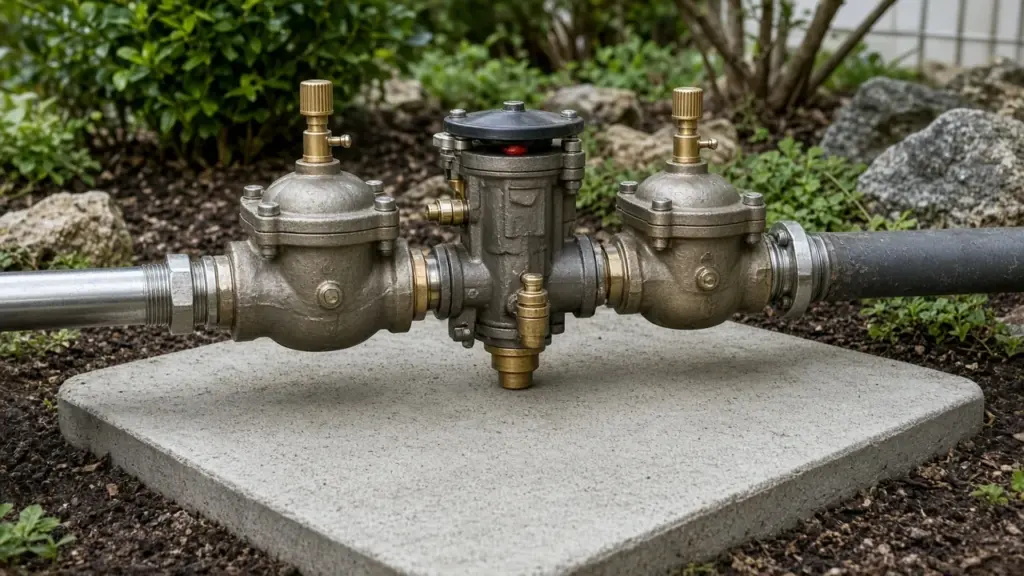
Every automatic sprinkler system connected to a public water supply needs backflow protection. The device you see near the front of many Dallas homes, a brass assembly with valves and small test cocks, is doing that job. But not all backflow devices are the same. The three types you are most likely to encounter on irrigation systems are the pressure vacuum breaker (PVB), the reduced pressure zone assembly (RPZ), and the double check assembly.
This guide explains how each works, where each is typically used, and what tends to fail on each. Which device is required for a given installation depends on the hazard level, the installation, and local rules, so always follow your utility’s requirements and a licensed professional’s guidance.
Why Backflow Protection Matters
Backflow happens when water flows the wrong direction, from your irrigation system back into the drinking water supply. It can happen through back-siphonage, when pressure in the supply drops, or backpressure, when downstream pressure exceeds supply pressure. Irrigation water can carry fertilizer, pesticides, soil, and bacteria. Backflow devices keep that water out of the public supply.
Our overview of what a backflow preventer does covers the basics.
Pressure Vacuum Breaker (PVB)
How it works
A PVB contains a spring-loaded check valve and an air inlet valve. Under normal flow, the check valve opens and the air inlet stays closed. If supply pressure drops, the check valve closes and the air inlet opens, breaking the vacuum so water cannot be siphoned back.
Installation
A PVB must be installed above the highest downstream head or outlet, by a specified height, so it can work against back-siphonage. That is why PVBs sit above ground on risers. PVBs protect against back-siphonage, not backpressure.
Common problems
- Water spitting from the air inlet, often from a worn seal or debris
- Freeze damage to the body or bonnet
- Leaking test cocks
- Worn check valve seals
Double Check Assembly
How it works
A double check assembly has two independent check valves in series. If one fails, the other still provides protection. Test cocks allow each check to be tested.
Installation
Double checks can often be installed below grade in a box or above ground, depending on local rules. They protect against both back-siphonage and backpressure but are generally used for lower-hazard applications. Whether a double check is acceptable for irrigation depends on local requirements.
Common problems
- Debris lodged in a check valve
- Worn rubber parts
- Leaking test cocks
- Freeze damage if above ground and unprotected
Reduced Pressure Zone Assembly (RPZ)
How it works
An RPZ has two check valves with a relief valve between them. The zone between the checks is kept at lower pressure than the supply. If either check leaks or pressure changes in a way that could allow backflow, the relief valve opens and discharges water to the atmosphere.
Installation
RPZs are installed above ground, with clearance for the relief valve to discharge. They offer a high level of protection and are used in higher-hazard applications. Because the relief valve can discharge a lot of water, placement matters.
Common problems
- Water discharging from the relief valve, often from debris or a worn check
- Freeze damage
- Worn relief valve parts
Comparing the Three
- PVB: protects against back-siphonage; must be installed above the highest outlet; common on residential irrigation where allowed.
- Double check: protects against back-siphonage and backpressure; can often be installed below grade; lower hazard applications.
- RPZ: protects against back-siphonage and backpressure with a relief valve; above ground; higher hazard applications.
How to Identify Your Device
- PVB: a single body with a bonnet on top (the air inlet), two ball valves, and test cocks; mounted on risers above ground.
- Double check: a longer body with two check sections, two ball valves, and several test cocks; may be in a box.
- RPZ: similar to a double check but with a relief valve port on the bottom or side.
If unsure, a technician can identify it quickly. The model and size are often cast or labeled on the body.
Testing
All three types have test cocks and are testable by a licensed backflow tester. Testing confirms each check and relief or air inlet works. Our guide to backflow testing explains who can test and when.
Freeze Protection
All three types can crack in a hard freeze when installed above ground. Insulated covers, enclosures, and draining before long freezes help. Our guide to protecting backflow preventers before a hard freeze covers the options.
Repair vs. Replacement
Many problems can be fixed with repair kits that replace seals, springs, and checks. Cracked bodies usually require replacement. After repair or replacement, testing may be required.
Code and Licensing
Backflow requirements come from state rules and local codes. In Texas, irrigation work is regulated, and backflow assembly testing is performed by licensed testers. Your utility may have specific requirements about which device types are acceptable. Our backflow prevention and irrigation code guide covers the broader picture.
Choosing a Device for a New or Replacement Installation
If your device needs replacing, you may wonder whether to switch types. The answer depends on:
- Hazard assessment: fertilizer injection or chemical systems can require higher protection
- Local rules: some utilities specify acceptable devices
- Installation site: height, space, and drainage for relief discharge
- Freeze exposure: above-ground devices need protection
A licensed irrigator can recommend the right device and handle any permits or testing.
Why Location and Clearance Matter
Each device type has installation requirements for height, clearance, and access. PVBs must sit high enough above the highest head. RPZs need room below the relief valve so discharge can drain away. Double checks installed in boxes need enough space for testing and repair. Devices crammed behind shrubs or against walls are harder to test, harder to protect from freezes, and more likely to be damaged. When a replacement is due, it is a good time to correct awkward placement.
What a Technician Checks During a Service Visit
When a backflow device is leaking or acting up, a technician will typically:
- Identify the device type, size, and model
- Check for visible damage, including cracks and bulges
- Observe where water is escaping: the air inlet, relief valve, test cocks, or body
- Shut off the supply and relieve pressure
- Inspect internal parts such as checks, seals, springs, and seats
- Clean debris or replace worn parts with a repair kit
- Restore water slowly and confirm the leak is gone
- Recommend testing if required after repair
Knowing what type of device you have, and when it was last tested or repaired, helps the visit go faster.
Signs Worth Acting On
Do not wait for a failed test to address these symptoms: continuous dripping or spraying, water discharging from the relief valve when the system is idle, visible cracks, or a sudden drop in pressure across all zones. Each can signal a part that is no longer sealing.
Frequently Asked Questions
What is the most common backflow device on residential irrigation?
It depends on local rules and the installation. PVBs are common on residential systems where allowed, but double checks and RPZs are used in many situations.
Why is water spitting from my PVB?
Often a worn air inlet seal or debris. It can also indicate freeze damage.
Why is my RPZ dumping water?
The relief valve may be responding to a leaking check valve, debris, or pressure fluctuations. Have it inspected.
Can I switch from one type to another?
Possibly, but device selection depends on hazard level, local rules, and installation requirements. Consult a licensed professional.
Get Backflow Help
We inspect, repair, and replace backflow assemblies on Dallas irrigation systems. See our sprinkler repair service, or contact us to schedule.
Request Service or call 214-227-7444
We serve homes throughout Dallas and nearby North Texas communities.