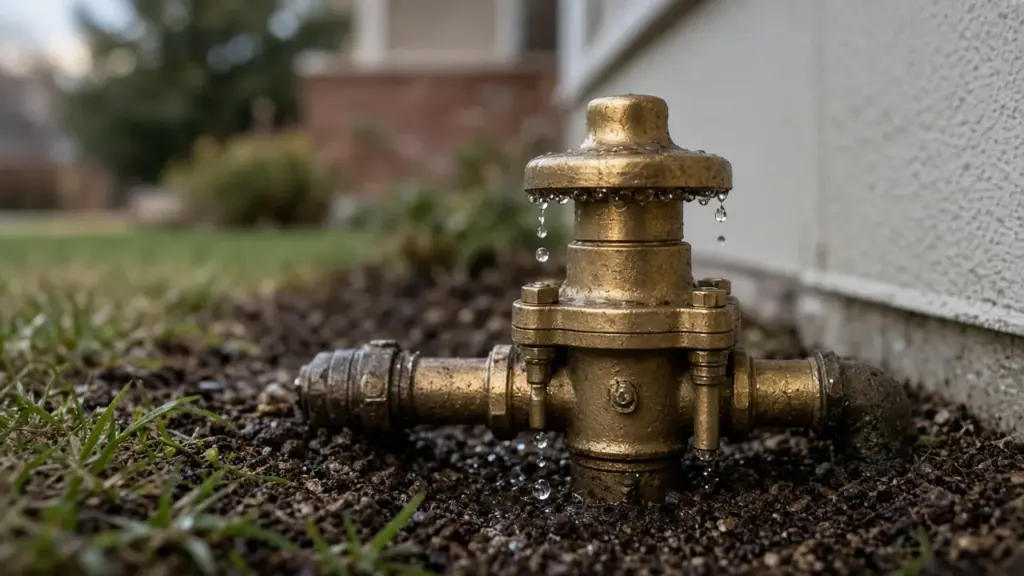
A backflow preventer that leaks from the top is one of the more common irrigation problems in Dallas. You might see water spitting from under the cap when the system turns on, a steady drip, or a spray that soaks the wall behind it. Some leaks are minor; others waste significant water and mean the device is not protecting the water supply as it should.
This guide explains the most common causes of leaks from the top of a backflow preventer, particularly the pressure vacuum breakers (PVBs) common on residential systems, and what to do about them.
What Kind of Device Do You Have?
Residential irrigation systems in Dallas commonly use one of these:
- Pressure vacuum breaker (PVB): an above-ground device with a bonnet or cap on top, two shutoff valves, and test cocks.
- Double check assembly: often installed in a box below ground.
- Reduced pressure zone assembly (RPZ): an above-ground device with a relief valve that discharges water when it senses a problem.
Leaks from the top are most associated with PVBs. Our guide to PVB vs. RPZ vs. double check assemblies explains the differences.
How a PVB Works
A PVB contains a spring-loaded check valve and an air inlet valve (sometimes called the poppet) under the bonnet. When the system is pressurized, the poppet seals the air inlet. If pressure drops, the poppet opens and lets air in, breaking any siphon that could pull irrigation water back into the drinking water supply.
Because the air inlet is on top, problems with the poppet or bonnet show up as leaks from the top.
Cause 1: Brief Spitting at Startup
A small amount of water discharging from the top for a moment when the system first pressurizes can be normal on some PVBs, as the poppet seats. If it stops within a second or two, it may not indicate a problem.
Cause 2: Worn or Dirty Poppet Seal
If water continues to leak from the top while the system is pressurized, the poppet seal may be worn, damaged, or held open by debris. Over time, rubber seals harden, crack, or lose their shape. Sand or grit from the water supply can lodge between the seal and seat.
Repair: Poppet assemblies and seals can often be replaced with a repair kit for the specific make and model.
Cause 3: Cracked Bonnet or Cap
The bonnet or cap on top of a PVB can crack, especially after a freeze. A cracked bonnet leaks whenever the device is pressurized.
Repair: Replacement bonnets are available for many models.
Cause 4: Freeze Damage
Freezing water can crack internal parts, the bonnet, or the body of the device. Freeze damage often shows up when the system is turned back on after a cold snap. Our guide to protecting backflow preventers before a hard freeze explains prevention.
Repair: Depending on the damage, parts may be replaceable, or the entire assembly may need replacement.
Cause 5: Failed Check Valve
If the internal check valve does not seal, water may backflow toward the air inlet and discharge from the top when pressure changes. A check valve problem is a more serious concern because it relates to the device’s core protective function.
Repair: Check valve components can often be replaced with a repair kit, followed by testing.
Cause 6: High or Fluctuating Pressure
Pressure surges or water hammer can stress seals and cause leaks. If you notice banging pipes when zones start or stop, or very high static pressure, address the pressure issue as well.
What About Test Cock Leaks?
Test cocks are small valves on the side of the device used during testing. If water drips from one, the test cock may be partly open or its seal may be worn. A test cock can often be tightened or replaced.
What to Do Right Away
- Close the irrigation shutoff valve upstream of the backflow preventer if the leak is significant.
- Note when the leak happens: only at startup, during watering, or constantly.
- Look for visible damage such as cracks in the bonnet or body.
- Schedule a repair.
Repairs and Testing
Backflow preventers protect the public water supply, so repairs are more than routine maintenance. After repair or replacement, backflow assemblies generally must be tested by a certified backflow prevention assembly tester, and results may need to be reported to the water utility. Our guide to backflow testing explains the requirements.
Repair or Replace?
Repair kits restore many devices. Replacement may be the better option when:
- The body is cracked
- The device is very old and parts are unavailable
- Multiple components have failed
- The device has been repeatedly damaged by freezing
Our guide to what a backflow preventer does explains why keeping this device working matters.
Preventing Future Leaks
- Protect the device from freezing with an insulated cover
- Close and drain the device before hard freezes if appropriate
- Keep debris away from the device
- Schedule testing as required
- Address high water pressure
Why a Leaking Backflow Preventer Matters
A leaking device wastes water, can soak foundations and walls, and may signal that the device is not providing full protection against backflow. It is worth fixing promptly.
Location and Splashing
PVBs are often installed near the house, sometimes against a wall. A leak from the top can spray water onto siding, windows, or the foundation, which over time can cause staining or moisture problems. If your device sprays toward the house when it leaks, closing the irrigation shutoff until repair limits the soaking.
Leaks From Other Parts of the Device
Not every leak on a backflow preventer comes from the top. Water can also leak from the shutoff valve handles, from threaded connections where the device joins the pipe, or from cracks in the body. Leaks at the handles are often caused by worn packing or seals and may be repairable. Leaks at threaded connections may need the joint redone. A cracked body usually means replacement. Noting exactly where water appears helps a technician bring the right parts.
Keeping Records
Keep a simple record of your backflow preventer: its make, model, size, installation date, and test dates. That information makes ordering repair kits easier and helps you keep up with testing. Many devices have a tag or casting marks with the model information. Our backflow prevention and irrigation code guide explains how backflow requirements fit together in Dallas.
Why Only Some Leaks Are Urgent
A brief spit at startup is not urgent. A constant stream, a spray against the house, or a leak that started right after a freeze deserves prompt attention. If you are not sure, close the irrigation shutoff between watering days until the device can be checked. The house water supply is not affected by closing the irrigation shutoff.
Frequently Asked Questions
Why is my backflow preventer leaking from the top?
Common causes include a worn or dirty poppet seal, a cracked bonnet, freeze damage, or a failed check valve.
Is it normal for a PVB to spit water at startup?
A brief discharge as the poppet seats can be normal on some models. A continuous leak is not.
Can a leaking backflow preventer be repaired?
Often, yes, with a repair kit or replacement bonnet. Severely damaged devices may need replacement.
Does a repaired backflow preventer need testing?
Generally yes. Backflow assemblies typically must be tested by a certified tester after repair or installation.
Get Help With a Leaking Backflow Preventer
We diagnose backflow leaks and coordinate repairs. See our sprinkler repair service, or contact us to schedule.
Request Service or call 214-227-7444
We serve homes throughout Dallas and nearby North Texas communities.