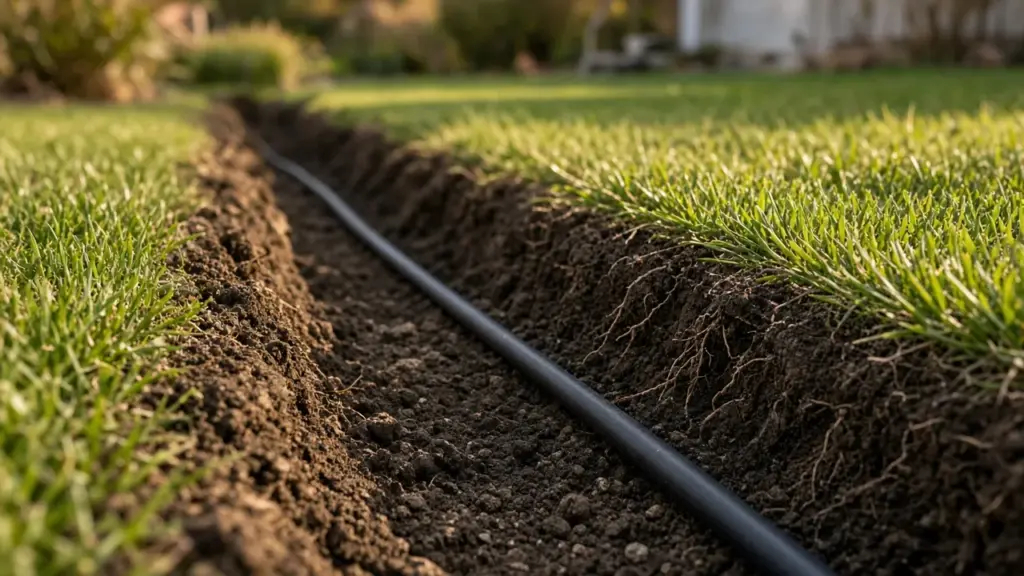
Narrow strips of grass are among the hardest areas to irrigate in any Dallas yard. Parkways between sidewalk and street, side yards between houses, strips between driveways, and medians next to patios are often just a few feet wide. Spray heads designed to throw water in circles or wide rectangles inevitably hit the pavement on either side.
Subsurface drip irrigation, sometimes called SDI, offers a different approach. Instead of spraying water through the air, it delivers water through drip tubing buried in the root zone. This guide explains how subsurface drip works in narrow turf strips, how it is installed, and what tradeoffs to consider.
Why Narrow Strips Are Hard to Water
- Overspray: even strip nozzles can hit sidewalks, curbs, and driveways, especially in wind.
- Runoff: clay absorbs water slowly, and water that lands near pavement runs off quickly.
- Evaporation: narrow strips next to hot pavement lose water fast.
- Head damage: heads in parkways and narrow strips are often hit by mowers, vehicles, and foot traffic.
Water that reaches the street is wasted and can lead to a violation under Dallas water waste rules. Our guide to replacing mower-damaged heads along parkway strips covers spray options for these areas.
How Subsurface Drip Works
Subsurface drip uses inline drip tubing, tubing with built-in emitters at regular intervals, buried beneath the turf. Rows of tubing run the length of the strip, spaced so their wetting patterns overlap. Water moves out of each emitter and spreads through the soil to reach grass roots.
Because water is applied below the surface:
- No overspray onto pavement
- Minimal evaporation
- No heads to damage
- Surface stays drier, which can reduce some weeds and disease
Components
A subsurface drip zone typically includes:
- Zone valve controlled by the irrigation controller
- Filter to prevent clogging, which is critical for buried emitters
- Pressure regulator to reduce pressure to drip levels
- Supply and flush headers connecting the rows at each end
- Inline drip tubing designed for subsurface use, often with root intrusion protection
- Flush valve or flush point to clear sediment from the lines
- Air relief valve at a high point, to prevent soil from being drawn into emitters when the zone shuts off
Our guide to drip filters and pressure regulators explains why filtration matters.
Layout for Narrow Strips
For a narrow strip, tubing usually runs lengthwise in parallel rows. The number of rows depends on strip width and the tubing’s spacing recommendations. Rows near the edges should be close enough to the pavement to water the edge of the turf, which is the area most prone to drying.
A supply header along one end feeds the rows, and a flush header at the other end connects them so they can be flushed together.
Installation Depth
Subsurface drip tubing for turf is buried shallow enough to reach grass roots but deep enough to avoid damage from aeration and normal lawn activities. Manufacturers provide depth recommendations. In Dallas clay, water spreads sideways well, which helps wetting patterns overlap between rows.
Take care with aeration over subsurface drip; aerator tines can puncture shallow tubing. Mark the area and avoid core aeration directly over the lines, or consider installing tubing deep enough to avoid tine depth.
Installing in an Existing Lawn
Retrofitting subsurface drip into an existing strip usually means removing sod, installing tubing, and replacing sod. It can also be done with specialized equipment that pulls tubing beneath turf. For new sod installations, installing subsurface drip before the sod goes down is easiest.
Establishing New Sod Over Subsurface Drip
Newly laid sod has shallow roots that may not reach buried emitters right away. During establishment, supplemental surface watering is often needed. In Dallas, hand watering is allowed on any day. Newly installed landscapes may qualify for a temporary variance for additional watering days. See our guide to watering new sod under Dallas rules.
Scheduling
Subsurface drip applies water slowly, so run times are longer than for spray zones. Deep, infrequent watering still applies. Because Dallas allows drip irrigation on any day, subsurface drip zones have more scheduling flexibility than spray zones. Check with Dallas Water Utilities if you have questions about how a specific subsurface system is classified.
Tradeoffs
Advantages
- Eliminates overspray and most runoff
- Reduces evaporation
- No heads to break
- Can be very water efficient
Disadvantages
- Higher installation effort
- Problems are hidden underground
- Requires good filtration and periodic flushing
- Susceptible to damage from digging and aeration
- Harder to verify coverage visually
- Root intrusion and soil ingestion must be managed
Maintenance
- Clean the filter regularly.
- Flush lines periodically to clear sediment.
- Watch for dry stripes, which can indicate a clogged or damaged row.
- Watch for soggy spots, which can indicate a leak.
- Protect the area from deep digging and aeration.
Our guide to drip emitters clogging explains causes of clogs.
Diagnosing Problems
Because tubing is hidden, problems appear as patterns in the turf. A straight dry stripe along a row suggests a clog or break upstream in that row. A wet spot suggests a leak. A zone that uses much more water than normal may have a damaged line. A flow meter or water meter test can help detect leaks.
Alternatives for Narrow Strips
- Strip nozzles and low-radius rotary nozzles on spray heads
- Converting the strip to a bed with surface drip
- Replacing turf with groundcover, mulch, or hardscape
- Artificial turf for some areas
Is Subsurface Drip Right for You?
It tends to make sense for narrow turf strips where overspray is persistent, where heads are repeatedly damaged, or where you are installing new sod anyway. For small strips where a strip nozzle works acceptably, spray may be simpler.
Planning Around Utilities
Parkways and side yards often contain utility lines. Before installing subsurface drip, call 811 to have utilities marked. Keep tubing away from utility lines and maintain access to meters and cleanouts. Record the layout so future work does not cut the lines.
Checking Coverage After Installation
After installing subsurface drip, run the zone and check soil moisture across the strip the next day. Push a soil probe or screwdriver into the soil between rows and near the edges. It should enter easily throughout. If edges are dry, rows may need to move closer to the pavement or run times may need adjusting. Over the first few weeks, watch the grass for stripes, which show whether wetting patterns overlap. Our drip irrigation repair guide covers other drip components and troubleshooting.
Combining With Existing Spray Zones
A subsurface drip strip should be on its own zone, not mixed with spray heads. Drip operates at lower pressure and needs much longer run times. If the strip was previously covered by heads on a larger spray zone, cap those heads and install a separate valve for the drip.
Frequently Asked Questions
Can subsurface drip water grass?
Yes. Inline drip tubing buried in the root zone can irrigate turf, especially narrow strips where spray causes overspray.
How deep is subsurface drip installed under turf?
Deep enough to avoid damage from normal lawn activities while reaching roots. Follow the manufacturer’s recommendations.
Does subsurface drip need a filter?
Yes. Good filtration is essential to prevent buried emitters from clogging.
Can I aerate over subsurface drip?
Aeration can damage shallow tubing. Mark the area and avoid core aeration directly over the lines.
Get Help With Narrow Strips
We install drip systems and rework coverage in narrow strips and parkways. See our sprinkler repair service, or contact us to schedule.
Request Service or call 214-227-7444
We serve homes throughout Dallas and nearby North Texas communities.