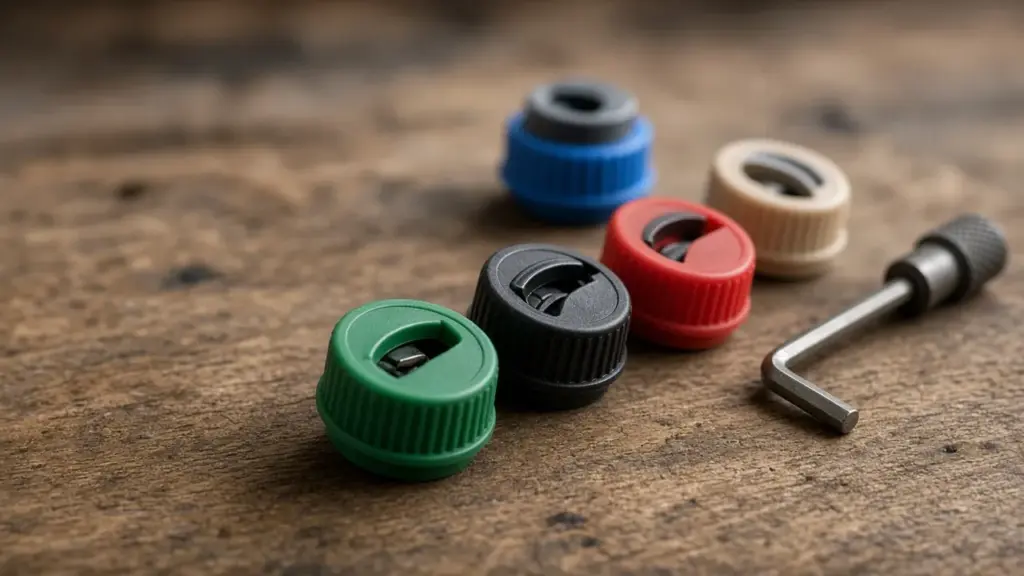
When a nozzle breaks or clogs, the easiest fix is to replace it with the same thing. But nozzles are small, and the markings on them are cryptic: a number, a letter or two, sometimes a color. Replacing a nozzle with the wrong one can throw off an entire zone, overwatering some spots while leaving others dry.
This guide explains the common marking systems on Rain Bird and Hunter nozzles, the two brands you are most likely to find in Dallas yards. Manufacturers update product lines, so always check the current product chart for your exact nozzle.
Why Nozzle Markings Matter
A nozzle controls three things:
- Radius: how far the water throws
- Arc: the pattern, such as a quarter circle, half circle, or full circle
- Flow: how much water it uses, which affects application rate
Heads on the same zone should apply water at similar rates. If you replace a quarter-circle nozzle with one that applies water much faster, that corner gets soaked. Our guide on spray heads versus rotors versus rotary nozzles explains why matching matters.
Common Spray Nozzle Markings
Radius numbers
Many fixed spray nozzles use a number to indicate nominal radius in feet at a standard pressure. A nozzle marked with 10, 12, or 15, for example, is designed to throw approximately that many feet. Actual throw depends on water pressure.
Pattern letters
Fixed-arc nozzles often use letters for pattern:
- Q: quarter circle (90 degrees)
- H: half circle (180 degrees)
- F: full circle (360 degrees)
- T or TQ: third circle or three-quarter circle on some lines
A nozzle marked 15Q, for instance, typically means a 15-foot quarter-circle nozzle. Check the manufacturer’s chart to confirm the meaning for your line.
Variable arc nozzles
Variable arc nozzles can be adjusted to any arc within a range. Rain Bird’s VAN line, for example, uses the radius number followed by VAN. These are handy, but their flow does not always scale with arc the way matched precipitation nozzles do.
Strip nozzles
Strip nozzles water narrow rectangular areas such as parkway strips. They often use codes like EST, SST, CST, or similar abbreviations for end strip, side strip, and center strip patterns, along with dimensions.
Rotary Nozzle Markings
Rotary nozzles, such as Hunter’s MP Rotator and Rain Bird’s R-VAN, fit on spray bodies but deliver rotating streams at lower application rates.
- Hunter MP Rotator: models are identified by a number series that corresponds to a radius range, with color-coded tops that indicate the model and arc range. The chart on Hunter’s site lists each color and its range.
- Rain Bird R-VAN: models are identified by a number that corresponds to radius range, and the arc and radius are adjustable.
Because rotary nozzles apply water much more slowly than standard sprays, do not mix them with standard spray nozzles on the same zone.
Rotor Nozzle Markings
Rotors use interchangeable nozzles that are often identified by numbers related to flow rather than radius. Hunter PGP and similar rotors come with a nozzle rack of numbered nozzles, and Rain Bird rotors such as the 5000 series use nozzles marked with flow numbers. Larger numbers generally mean more flow and longer throw.
For rotors, matching precipitation means choosing nozzles in proportion to arc. A half-circle rotor needs roughly half the flow of a full-circle rotor to apply water at the same rate. Charts from the manufacturer help you pick the right nozzle for each arc.
Matched Precipitation Nozzles
Matched precipitation rate (MPR) nozzles are designed so that a quarter, half, and full-circle nozzle of the same series apply water at the same rate. They do this by scaling flow with arc. Using MPR nozzles from the same series keeps a spray zone balanced. Mixing series, or mixing MPR with variable arc nozzles, can undo that balance.
How to Identify an Unmarked or Worn Nozzle
Markings wear off over time. If you cannot read a nozzle:
- Look at other heads on the same zone; they likely use the same series
- Measure the throw and note the arc
- Take the nozzle to a supplier for comparison
- Check old invoices or system records
Replacement Tips
- Replace with the same brand, series, radius, and arc when possible
- If upgrading, change a whole zone at once
- Flush the head before installing a new nozzle
- Adjust the radius screw after installation to fit the area
- Watch the zone run to confirm coverage
Our complete guide to sprinkler head repair covers nozzle replacement and adjustment.
Adjusting Radius and Arc
Most nozzles have a radius adjustment screw on top that reduces throw when turned. Reducing radius too much distorts the spray pattern and can cause dry spots, so choose a nozzle close to the needed radius rather than cranking one down. Variable arc and rotary nozzles adjust arc by turning the top or collar.
Pressure Changes Everything
Nozzle ratings assume a certain pressure. In many Dallas homes, pressure is higher than spray nozzles need, which causes misting, drift, and reduced throw. Pressure-regulating spray bodies or nozzles help. Too little pressure shortens throw and weakens coverage. If nozzles do not reach their rated radius, check pressure and look for leaks.
Keeping Zones Balanced
A zone works best when every head uses nozzles from the same family, sized for its arc, at appropriate pressure. When a nozzle breaks, resist the temptation to use whatever is on hand. That quick fix often becomes the dry spot or wet spot you chase for years.
Our guide to why a head keeps geysering covers related problems, and our guide to raising sunken sprinkler heads helps when a new nozzle still cannot reach because the head sits too low.
A Quick Nozzle Inventory
Before your next repair, make a simple inventory. Walk each zone, pull a nozzle from a quarter, half, and full-circle head, and note the markings. Photograph them. Keep the list with your controller and system map. When a nozzle breaks, you will know exactly what to buy, and you can keep a few spares of your most common sizes on hand.
Common Mistakes
- Swapping a spray nozzle for a rotary nozzle on one head. The zone becomes unbalanced.
- Using a variable arc nozzle to replace a matched precipitation nozzle. Flow may not scale correctly.
- Choosing a longer radius and turning it down. Distorts the pattern.
- Ignoring the filter screen. Many nozzles have a screen underneath that clogs.
Frequently Asked Questions
What does 15Q mean on a sprinkler nozzle?
On many fixed spray nozzles, it indicates a nominal 15-foot radius and a quarter-circle pattern. Confirm with the manufacturer’s chart.
What do the numbers on rotor nozzles mean?
On many rotors, nozzle numbers relate to flow rate. Higher numbers typically mean more flow and longer throw.
Can I mix nozzle brands on one zone?
It is best to keep one series per zone so application rates match.
What is a matched precipitation nozzle?
A nozzle designed so different arcs in the same series apply water at the same rate.
Get Help Balancing Your Zones
We identify, replace, and balance nozzles so every part of your lawn gets even coverage. See our sprinkler repair service, or contact us to schedule.
Request Service or call 214-227-7444
We serve homes throughout Dallas and nearby North Texas communities.