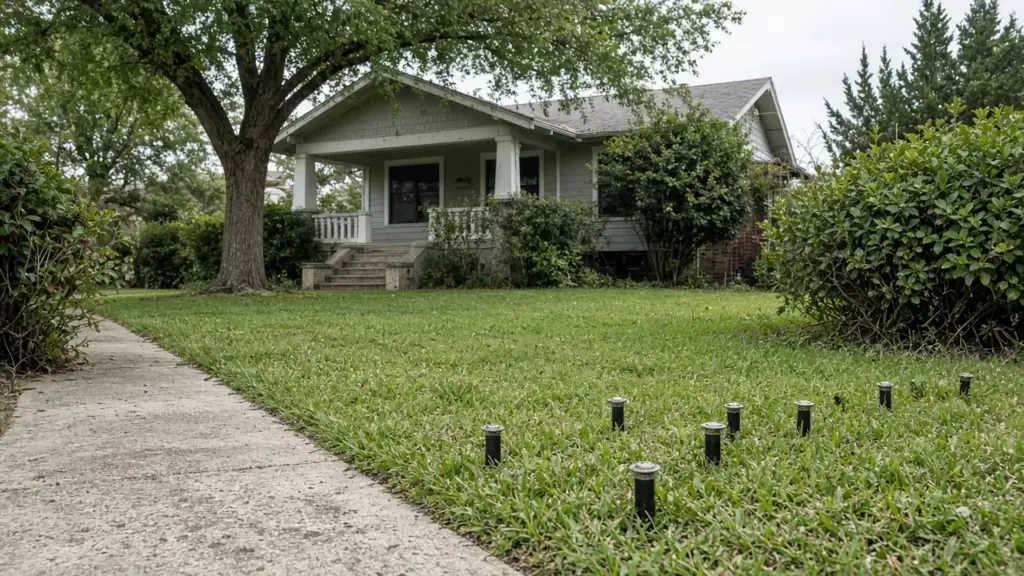
The M Streets are one of the most recognizable neighborhoods in East Dallas. Located within the city of Dallas near Lower Greenville and Lakewood, the area is known for streets whose names begin with the letter M, and for its many homes from the 1920s and 1930s, including Tudor-style cottages. Part of the area falls within the Greenland Hills conservation district.
Those older homes typically sit on compact lots with small front yards, narrow side yards, and established trees. That combination creates specific irrigation challenges. This guide covers practical ways to water tight historic lots well.
Small Front Yards
Many M Streets front yards are small, sometimes just a modest strip of lawn between the porch and the sidewalk, often with beds along the foundation. Small areas are surprisingly difficult to water efficiently with spray heads. Standard nozzles can throw water well past a small lawn onto the sidewalk, the street, or the house.
Tips for small front yards:
- Choose short-radius nozzles sized to the space.
- Use partial-arc nozzles along the sidewalk and foundation edges.
- Consider rotary nozzles, which apply water more slowly, giving clay time to absorb it.
- Separate lawn and beds so each can be watered appropriately.
Our guide to spray heads, rotors, and rotary nozzles explains which heads fit smaller lots.
Narrow Side Yards
Side yards between houses in older neighborhoods are often narrow and shaded. Grass in these areas can struggle, and spray heads easily hit siding, fences, and windows. Options include:
- Side strip nozzles designed for rectangular areas
- Drip irrigation if the side yard holds beds rather than lawn
- Converting the strip to mulch, groundcover, or stepping stones
Shaded side yards need less water than sunny areas. Our guide to shade lawns and irrigation adjustments explains why.
Parkways
The strip between the sidewalk and street is common along M Streets blocks. Parkways are notoriously hard to water without spraying pavement. Low-radius nozzles, strip nozzles, and careful head placement help. Some homeowners convert parkways to low-water plantings watered with drip. Check any applicable neighborhood or conservation district guidelines before making major changes to front yard landscaping.
Mature Trees
Older neighborhoods often have mature trees that shade lawns, send roots through irrigation lines, and block spray patterns. Tree roots can crack or crush older pipe and lift heads. When repairing irrigation near trees:
- Hand dig near large roots and avoid cutting major roots.
- Reroute lines around root zones when possible.
- Water trees deeply with drip rings or bubblers rather than relying on lawn spray.
Our guide to Lakewood sprinkler systems with mature trees and older lines covers similar conditions in a neighboring area.
Older Irrigation Systems
Many homes in established Dallas neighborhoods have irrigation systems that were added long after the house was built, sometimes decades ago. Those systems may have older heads, outdated controllers, and pipe that has been patched many times. If your system has frequent leaks, inconsistent coverage, and parts that are hard to find, it may be time to consider an upgrade. Our guide to retrofitting an old system with modern heads explains options.
Foundations and Clay
M Streets homes, like most of Dallas, sit on expansive clay soil. Older pier-and-beam and slab foundations can both be affected by soil moisture changes. Dallas allows foundation watering on any day and at any time with a hand-held hose, soaker hose, drip irrigation, or bucket. A soaker hose or drip line in foundation beds helps keep moisture more consistent.
Dallas Watering Rules Still Apply
Automatic sprinklers in the M Streets, like everywhere in Dallas, are limited to two assigned days per week:
- Even addresses: Sundays and Thursdays
- Odd addresses: Wednesdays and Saturdays
Sprinkler watering is prohibited between 10 a.m. and 6 p.m. year-round, and automatic systems must have working rain and freeze sensors. Small lots benefit from cycle and soak, which reduces runoff onto sidewalks and streets.
Small Lots, Fewer Zones
A compact lot might only need a few zones, but each zone matters. Grouping by conditions, such as sunny front lawn, shaded side yard, and beds, keeps watering efficient. Controllers with fewer stations can work well on small properties, and a smart controller can adjust for weather.
Working in Tight Spaces
Repairs in older, tightly built neighborhoods take some care. Utility lines, gas meters, and fences often sit close to irrigation components. Always call 811 before digging, and hand dig near utilities. Access can be limited, so valve boxes and backflow preventers should be kept visible and easy to reach.
Tips for M Streets Homeowners
- Size nozzles to small spaces to avoid overspray
- Separate lawn, beds, and shaded side yards into different zones
- Use drip in beds and narrow strips
- Protect tree roots when repairing lines
- Keep foundation soil moisture consistent
- Follow Dallas watering days and the daytime ban
- Check any conservation district guidelines before changing front landscaping
Backyards on Compact Lots
Backyards in older neighborhoods are often small and heavily shaded, sometimes with detached garages or alleys at the rear. Lawns may give way to patios, gardens, and beds. Drip often fits these spaces better than spray, and a small lawn area may need just one or two well-placed heads. If a backyard lawn struggles in deep shade, consider whether turf is the right choice for that spot.
Common Repairs on Older Lots
Homes in established neighborhoods tend to see the same handful of irrigation problems:
- Heads buried by decades of soil and turf buildup, which no longer pop up above the grass
- Brittle fittings that crack when disturbed
- Valve boxes lost under turf or covered by landscaping
- Controllers from an earlier era without weather adjustment or easy programming
- Wiring splices that corrode underground and cause zones to fail intermittently
Many of these are straightforward fixes once found. Raising sunken heads, replacing brittle fittings, and uncovering valve boxes restore a lot of performance to an older system. Our Dallas neighborhood sprinkler repair guide compares conditions across other parts of the city.
Water-Wise Landscaping on Small Lots
Small lots offer a good opportunity to reduce lawn area in favor of beds with native and adapted plants. Beds watered with drip use water efficiently and avoid overspray onto sidewalks and walls. If you are considering changes to a front yard, look at any conservation district guidance first, since some front yard changes in conservation districts may be subject to review. Backyards generally offer more freedom.
Seasonal Timing for Small Yards
Small, shaded yards often need less water than homeowners expect. In spring and fall, many compact lawns do well with one assigned day per week. In summer, both assigned days may be needed, especially for sunny front lawns. Adjust each zone separately, since a sunny front yard and a shaded side yard can have very different needs on the same property.
Frequently Asked Questions
Are the M Streets in Dallas proper?
Yes. The M Streets are an East Dallas neighborhood within the city of Dallas, so Dallas watering rules apply.
How do I water a small front yard without spraying the sidewalk?
Use short-radius and partial-arc nozzles sized to the space, and consider rotary nozzles or drip for beds.
Can tree roots damage sprinkler lines?
Yes. Roots can crack or crush pipe and lift heads, particularly in older systems.
What watering days apply in the M Streets?
Even addresses water on Sundays and Thursdays; odd addresses on Wednesdays and Saturdays.
Get Help in the M Streets
We repair and adjust sprinkler systems on compact lots across East Dallas. See our Dallas service area, or contact us to schedule.
Request Service or call 214-227-7444
We serve homes throughout Dallas and nearby North Texas communities.